

Asia Pacific School
Transform yourself, to lead the world.
0
Stories
0
Activities
0
Events
0
Photos
About Asia Pacific School
About Asia Pacific School
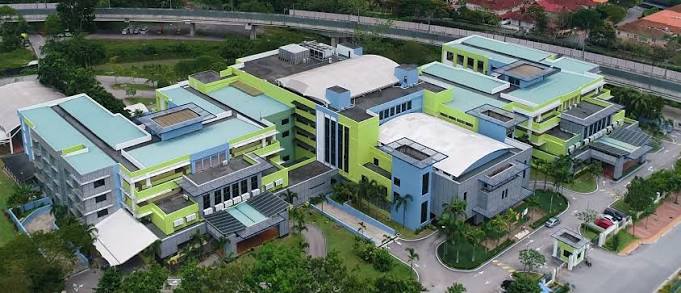
Asia Pacific School (APS) is a private educational institution located at Dhapasi, Tokha Road, Kathmandu. The school provides education from Playgroup to Grade 12, following the National Curriculum of Nepal while incorporating international approaches to teaching and learning.
The institution aims to provide an inspiring, inclusive and challenging learning environment that supports academic excellence and the overall development of students. Its educational philosophy encourages learners to become confident, enthusiastic and globally minded individuals who can respond to future opportunities and contribute positively to society.
Asia Pacific School divides its academic programmes into five educational wings to ensure age-appropriate instruction and effective monitoring of students' progress. These include Preschool, Elementary School, Upper Elementary School, High School (Grades 9–10) and Higher Secondary School (Grades 11–12).
The school emphasises quality education at an affordable cost through contemporary teaching methods, student participation and a supportive partnership among teachers, parents and students.
Its approach recognises that education is not limited to preparing students for employment. It also involves developing moral and ethical values that guide individuals throughout their lives.
Academic Programs
Asia Pacific School offers a full school-level education from Playgroup to Grade 12 under the National Curriculum of Nepal. Its academic structure is organised into five wings, each addressing the learning needs of students at different developmental stages.
Preschool: Playgroup to Senior Kindergarten
The Preschool programme follows a Montessori and Child-Centred Pedagogy (CPS)-based approach. It encourages young children to learn through participation, exploration and hands-on activities.
The programme focuses on developing:
Social and communication skills
Language development
Early learning and thinking abilities
Interactive and collaborative behaviour
Independence and confidence
Curiosity and creativity
Montessori-based activities provide opportunities for children to explore their surroundings, make discoveries and develop foundational skills in a structured yet engaging environment.
The programme aims to prepare children for the transition into elementary education while respecting their individual learning pace and developmental needs.
Basic School: Elementary Level (Grades 1–5)
The Elementary School programme follows Nepal's National Curriculum and incorporates selected international approaches to teaching and learning.
Students study core subjects such as English, Mathematics and Nepali, alongside Science, Social Studies, Computer Studies, Physical Education, Art and Music.
The school uses a thematic approach to introduce subjects and help students make connections between different areas of knowledge. Classroom activities include individual assignments, pair work, small-group activities and whole-class discussions.
Key learning priorities include:
Daily language and mathematics practice
Thematic learning in Science and Social Studies
Collaborative classroom activities
Team teaching in elementary grades
Development of communication and thinking skills
Community service activities beginning from Grade III
Basic School: Upper Elementary Level (Grades 6–8)
The Upper Elementary programme builds on the academic foundations established in the earlier grades. Students begin to study subjects in more specialised groupings, with instruction taking place in dedicated classrooms.
Alongside English, Mathematics, Nepali, Science and Social Studies, the curriculum includes Computer Studies, Occupation, Business and Technological Education (OBTE), Moral Studies, Health and Hygiene and other prescribed subjects.
This stage encourages students to develop greater academic independence, subject knowledge and the ability to understand connections between classroom learning and practical life.
High School: Grades 9–10
The High School programme follows the national curriculum prescribed for secondary education. Students study compulsory subjects and select two optional subjects according to the school's academic arrangements.
The programme prepares students for the Secondary Education Examination (SEE), conducted by the National Examinations Board.
In addition to the prescribed curriculum, the school identifies foreign-language learning opportunities in Spanish, French and Mandarin. These subjects are intended to broaden students' communication abilities and cultural awareness.
Higher Secondary School: Grades 11–12
Asia Pacific School extends its academic provision to Grades 11 and 12. The school advertises NEB-affiliated higher secondary programmes, including:
Science
Management
Humanities
Law
These programmes provide students with different academic pathways for higher education and future professional development.
Detailed subject combinations and programme-specific learning outcomes should be confirmed with the school's current higher secondary academic division.
Learning Beyond the Classroom
Asia Pacific School emphasises experiential and project-based learning. Its approach encourages students to become active participants in the learning process through questioning, investigation, experimentation and problem-solving.
The school integrates Science, Technology, Engineering, Arts and Mathematics (STEAM) into its teaching approach. These subjects provide opportunities for students to explore ideas across different disciplines and apply their understanding to practical challenges.
Important elements of learning beyond conventional classroom instruction include:
Project-Based Learning: Students work on projects that encourage creativity, collaboration and practical problem-solving.
Experiential Learning: Hands-on activities allow learners to construct knowledge through direct experience.
Community Service: Students from Grade III onwards are encouraged to participate in activities that develop social awareness and responsibility.
After-School Activities: Internal and external activities provide opportunities to explore sporting, technological, creative, relaxation and academic interests.
Collaborative Learning: Pair work, group assignments and classroom discussions strengthen communication and teamwork.
Research and Inquiry: Library resources and practical investigations support independent learning and exploration.
The school also encourages teachers to use progressive teaching methods and integrate classroom experiences with the objectives of the national curriculum.
Facilities & Student Life
Asia Pacific School provides facilities to support academic learning, practical education, student welfare and extracurricular participation.
Its published institutional information identifies the following facilities and services:
Science Laboratories: Laboratory resources support scientific experiments, practical demonstrations and inquiry-based learning.
Computer Laboratory: ICT facilities provide opportunities for students to develop digital literacy and technology skills.
Library: The school library contains books, magazines, periodicals and other printed resources, alongside access to digital publications. It also supports research and inquiry projects.
Cafeteria and Dining: The school provides a dining system with vegetarian and non-vegetarian meal options. Food preparation is supervised by a trained chef, with attention to hygiene and nutrition.
Health Care and Nursing: Qualified nurses are available during school hours and after school. The school also describes regular visits by a doctor and health-awareness programmes, including eye, dental and general health check-ups.
Transportation: School buses and vans operate with designated pick-up and drop-off arrangements. GPS tracking is identified as part of the school's transport safety system.
Hostel: Residential facilities are listed among the school's services. Hostel students are supervised by dedicated hostel parents and attendants.
After-School Care: The school describes arrangements for after-school care for younger students when requested by parents.
School Management Information System: Digital communication and school management facilities support the exchange of information between the school and families.
These facilities are intended to provide a supportive environment in which students can participate in academic, practical, physical and social activities.
Student Activities
Asia Pacific School encourages students to participate in activities beyond the regular academic curriculum. Its extracurricular and community programmes aim to develop confidence, creativity, communication and leadership.
Clubs and Community Service
The school identifies several student clubs, including:
Social Service Club
Environment Club
Book Club
These clubs provide opportunities for students to organise activities, collaborate with peers and develop communication and organisational skills.
Community service is introduced from Grade III. Students are encouraged to understand social needs, develop empathy and contribute positively to their communities.
Sports and Creative Activities
After-school activities provide opportunities for students to explore sporting, technological, creative and academic interests. The programme includes activities conducted by school teachers as well as external professionals.
The school's approach encourages participation in activities that help students discover their interests and develop skills beyond the classroom.
Model United Nations
The school organises its own Model United Nations programme under the name APS MUN. The event provides a platform for students to explore international issues, participate in debate and develop public speaking, negotiation and diplomatic skills.
The school has organised APS MUN events, including APS MUN 1.0 and APS MUN 2.0. The 2025 edition was organised around the theme Saving the World.
School and Community Events
Events such as APS Gala Day, parent–teacher workshops and academic progress meetings contribute to school life. These activities encourage interaction among students, parents, teachers and the wider school community.
Educational Approach
Asia Pacific School follows a progressive, inclusive and value-based educational approach. Its philosophy recognises that effective education should develop the mind, body and spirit while preparing students to participate responsibly in society.
The school's educational approach is shaped by several principles:
Holistic Development: The curriculum seeks to balance academic learning with physical education, arts, character development, moral judgment and social responsibility.
Experiential Learning: Students are encouraged to investigate, experiment, ask questions, solve problems and construct their own understanding through practical experiences.
STEAM Education: Science, Technology, Engineering, Arts and Mathematics are used as interconnected areas of learning to promote inquiry, dialogue and critical thinking.
Value-Based Education: The school emphasises traditional values such as community spirit alongside independence, individuality and personal responsibility.
Collaborative Learning: Students learn through teamwork, discussion, shared projects and constructive interaction with their peers.
Parental Involvement: Parents are considered important partners in education. Communication takes place through parent–teacher meetings, notices, email and the School Management Information System.
The school's core values are represented through the acronym ASIA:
Accountability: Taking responsibility for intellectual, social, personal, emotional and physical development.
Sincerity: Practising honesty, kindness and gratitude while supporting others.
Integrity: Demonstrating morality, determination, commitment and responsible decision-making.
Admiration: Respecting people, communities, cultures, traditions, the environment and individual differences.
The school also emphasises ongoing professional development for teachers. Workshops and training programmes are intended to help educators improve their teaching practices and remain familiar with contemporary educational approaches.
Admission Policy & Student Support
Asia Pacific School accepts applications for different academic levels, from early childhood education to Grade 12. Its website provides separate online application facilities for school-level admission and higher secondary admission.
Prospective parents and students can contact the administration to obtain information about programme availability, admission requirements, academic placement and the application schedule.
Admission to School Levels
The school provides admission opportunities across Preschool, Elementary, Upper Elementary and Secondary levels.
Parents can enquire about admission through the school administration or its online application facility. The institution's published information does not provide a complete, current list of age requirements, entrance assessment criteria or required documents for each grade.
Admission to Grade 11
The school advertises NEB-affiliated higher secondary programmes in Science, Management, Humanities and Law.
Students who have completed the SEE or an equivalent qualification can contact the higher secondary administration for information about stream selection, academic eligibility, entrance requirements and enrollment.
Student Support
Asia Pacific School recognises the importance of individual attention, parental involvement and a supportive school environment.
Its published student-support provisions include:
Health care and nursing services
Regular medical check-ups and health-awareness activities
Hostel supervision and residential care
Transportation safety arrangements
After-school care for younger children, where requested
Parent–teacher meetings and academic progress communication
Community and social development activities
The school also emphasises the importance of teachers understanding individual students' needs and helping them develop their potential.
Specific scholarship categories, scholarship amounts and detailed financial assistance policies are not clearly described in the school's general published information. Parents should confirm these provisions directly with the administration.
Community Engagement & Global Outlook
Asia Pacific School aims to develop globally minded learners who remain connected to their cultural values and social responsibilities.
Its educational philosophy combines an international approach to learning with an appreciation of Nepal's cultural heritage. The school encourages students to respect different perspectives, understand cultural diversity and develop the ability to participate in an interconnected world.
Community service is an important part of this approach. Students are encouraged to contribute their time and effort to activities that support people in need and address community concerns.
The school's language programme also identifies opportunities to study Spanish, French and Mandarin, broadening students' exposure to different languages and cultures.
APS MUN provides another opportunity for students to engage with international affairs, diplomacy and global challenges through discussion and debate.
Through these programmes, Asia Pacific School seeks to develop responsible individuals who can contribute to Nepal while understanding their place in the wider global community.
Asia Pacific School at a Glance
Particulars | Details |
|---|---|
Institution Name | Asia Pacific School (APS) |
Location | Tokha Road, Dhapasi, Kathmandu, Nepal |
Institution Type | Private School |
Academic Levels | Preschool to Grade 12 |
Preschool | Playgroup to Senior Kindergarten |
Elementary Level | Grades 1–5 |
Upper Elementary Level | Grades 6–8 |
Secondary Level | Grades 9–10 |
Higher Secondary Level | Grades 11–12 |
Curriculum | National Curriculum of Nepal |
Higher Secondary Affiliation | National Examinations Board (NEB) |
+2 Programmes Advertised | Science, Management, Humanities and Law |
Educational Approach | Progressive, inclusive, experiential and value-based learning |
Institutional Motto | Learning for Life Skills |
Learning Priorities | STEAM, inquiry, project-based learning and holistic development |
Core Values | Accountability, Sincerity, Integrity and Admiration |
Learning Activities | Group work, project-based learning, research, experimentation and community service |
Key Facilities | Science lab, computer lab, library, cafeteria, infirmary, hostel and transportation |
Student Activities | Social Service Club, Environment Club, Book Club, APS MUN and after-school activities |
Student Support | Nursing, medical check-ups, hostel supervision, after-school care and parent engagement |
Language Learning | Spanish, French and Mandarin are listed as additional language options |
Community Engagement | Community service programmes from Grade III |
Contact Numbers | 01-5159108, 01-5159128 |
Address | Tokha Road, Dhapasi, Kathmandu, Nepal |
Contact & Leadership
Latest from Asia Pacific School
Nothing published for this institution yet.