

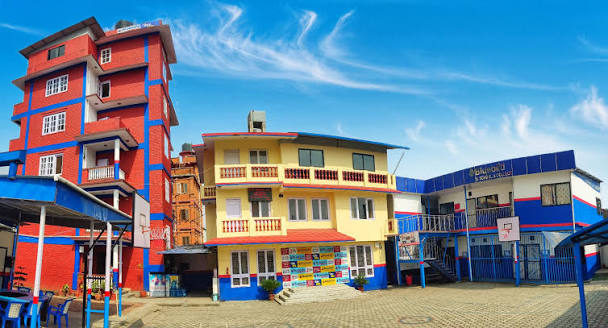

Bluebird Secondary School and College
Build Your Future, Start Here.
0
Stories
0
Activities
0
Events
0
Photos
About Bluebird Secondary School and College
Bluebird Secondary School and College
Education is most meaningful when it prepares students not only to succeed academically but also to understand the world around them, respond to challenges and contribute positively to society. A good educational institution should therefore provide opportunities for intellectual growth, practical learning, creativity, leadership and the development of strong personal values.
For students completing the Secondary Education Examination (SEE), choosing a +2 institution is an important step towards higher education and professional life. The academic programmes, teaching methods, learning environment, extracurricular opportunities and guidance available during these years can influence the direction of their future studies.
Located at Kumaripati, Lalitpur, Bluebird Secondary School and College is an educational institution offering higher-secondary education in Science, Management, Law and Humanities. The institution is part of Bluebird Education Network and has established its academic approach around analytical understanding, practical knowledge and the broader development of students.
The institution emphasises the development of academically competent, career-oriented and socially responsible individuals. Its educational philosophy recognises that students need more than subject knowledge to succeed in a changing world. They also require communication skills, creativity, adaptability, ethical values and the confidence to engage with different social and professional environments.
Bluebird's institutional approach is organised around three broad dimensions: Amenities, Activities and Academics. Together, these areas reflect its emphasis on providing appropriate learning resources, opportunities for student participation and an academically supportive environment.
Academic Programmes
Bluebird Secondary School and College offers Grade XI and XII programmes under the National Examination Board (NEB) framework. Its academic offerings include Science, Management, Law and Humanities.
The programmes are designed to provide students with subject-specific knowledge while developing analytical thinking, communication, practical understanding and preparation for further education.
Science: Developing Scientific Understanding and Analytical Thinking
The Science programme is intended for students interested in scientific investigation, medicine, engineering, information technology and other science-related disciplines.
Science education requires students to understand concepts, examine evidence, conduct experiments and apply mathematical reasoning to different problems.
The programme combines classroom instruction with laboratory-based learning, helping students connect theoretical knowledge with practical applications.
Students study compulsory subjects alongside specialised science subjects, with academic combinations involving Physics, Chemistry, Mathematics, Biology and Computer Science, according to the available subject structure.
The institution also identifies medical and engineering preparation classes for Science students as part of its academic support.
Laboratory activities and research-oriented learning can help students develop observation skills, scientific curiosity and the ability to approach problems systematically.
For students planning to pursue medicine, engineering, information technology, pharmacy and other scientific fields, the programme provides a foundation for further academic study, subject to the admission requirements of their chosen institutions.
Kumaripati, Lalitpur
Management: Understanding Business, Finance and Entrepreneurship
The Management programme is designed for students interested in business operations, accounting, economics, entrepreneurship and organisational administration.
Its academic structure introduces students to the principles that guide business activities and financial decision-making.
Students study subjects including Accounting, Economics and Business Studies, alongside compulsory and optional subjects according to the prescribed NEB curriculum.
Management education involves more than learning business terminology. It requires students to develop numerical reasoning, communication, analytical thinking and an understanding of how organisations operate.
Bluebird also identifies specialised accounting training for Management students as part of its academic support system.
The programme provides an academic foundation for students interested in further studies in business administration, management, accounting, finance, banking, marketing and entrepreneurship.
Law: Understanding Legal Systems and Social Responsibilities
The Law programme provides students with an opportunity to study legal principles and understand the relationship between law, society, institutions and citizenship.
Law is closely connected with individual rights, constitutional responsibilities, public administration and social justice. Studying legal subjects at the higher-secondary level can help students develop an understanding of how societies establish rules, resolve disputes and maintain institutional order.
The curriculum includes subjects such as Jurisprudence and Legal Theories, Procedural Law and Constitutional Law, followed by further study of the Nepalese Legal System, Legal Drafting, Civil and Criminal Law and Justice.
The programme introduces students to legal concepts while encouraging analytical thinking and an understanding of social and institutional responsibilities.
For students interested in further education in law, governance, public administration and related disciplines, the programme provides an early academic foundation.
Humanities: Exploring Society, Culture and Human Experience
Humanities education provides opportunities to understand individuals, communities, cultures and the social structures that shape human experience.
Bluebird includes Humanities among its +2 academic offerings. The programme provides a pathway for students interested in social sciences, communication, literature and related disciplines.
The Humanities stream is particularly relevant for students who want to explore social relationships, cultural developments, political institutions and economic issues.
Through the study of humanities and social sciences, students can develop communication skills, critical thinking and a broader understanding of society.
These abilities are valuable in a wide range of further academic and professional fields, including journalism, social sciences, development studies, public administration and education.
From Classroom Learning to Practical Experience
Academic knowledge becomes more meaningful when students have opportunities to apply it in practical situations.
Bluebird places emphasis on analytical and practical learning through project work, presentations, seminars, webinars, surveys, field visits and research-oriented classroom activities.
The institution's teaching approach encourages students to participate actively in academic discussions, explore ideas and develop the ability to communicate their understanding.
Its academic support includes:
Project-based learning and presentations.
Seminars, webinars and academic discussions.
Field and industrial visits.
Research-oriented classroom activities.
Continuous student assessment.
Remedial classes for students requiring additional academic support.
Special courses for academically advanced students.
Communication and professional skills training.
The college also identifies visiting faculty members from Nepal and abroad as part of its academic arrangements.
These activities can help students connect theoretical knowledge with practical experiences. A field visit introduces students to professional environments, while project work encourages them to investigate questions and develop solutions.
Such approaches recognise that education should prepare students to use their knowledge rather than simply reproduce information in examinations.
Kumaripati, Lalitpur+1
Laboratories, Technology and Academic Resources
An effective learning environment requires appropriate infrastructure and access to academic resources.
Bluebird identifies well-equipped laboratories, technology-supported classrooms, a computer laboratory and a library among its educational facilities.
Science Laboratories
The institution provides laboratory facilities to support practical learning in scientific subjects. Laboratory work allows students to observe scientific processes, conduct experiments and develop an understanding of the practical dimensions of scientific theories.
The college also identifies research laboratory facilities as part of its academic infrastructure.
Computer Laboratory and Digital Resources
The computer laboratory provides students with access to computers, broadband internet and Wi-Fi connectivity.
Technology-supported learning can help students conduct research, prepare assignments, develop presentations and become familiar with digital tools increasingly used in higher education and professional environments.
Library and E-library
Bluebird provides a library with textbooks, reference books and other academic materials. Its published facilities also include an e-library.
A well-resourced library can encourage independent reading, research and academic exploration. It also provides students with opportunities to develop learning habits beyond the classroom.
Classrooms and Campus Facilities
The institution identifies IT-friendly classrooms designed to support technology-enhanced teaching.
Other facilities listed by the college include transportation services, separate hostels for boys and girls, a hygienic cafeteria and CCTV monitoring.
These resources are intended to contribute to a comfortable and supportive educational environment.
Kumaripati, Lalitpur
Learning Beyond the Academic Timetable
Education extends beyond scheduled classroom instruction. Participation in extracurricular and co-curricular activities allows students to explore their interests, develop confidence and acquire skills that complement academic learning.
Bluebird organises a variety of activities designed to encourage creativity, social interaction, teamwork and leadership.
Its published activities include:
Music and dance.
Sports and recreational activities.
Talent Hunt programmes.
Freshers' and farewell events.
Graduation Day celebrations.
Social outings and student gatherings.
Creative and skill-oriented activities.
Personality development programmes.
The institution also identifies surveys and platforms for creative expression among its student-development activities.
Such opportunities can help students discover their abilities and participate more actively in the college community.
A student who learns to organise an event, participate in a competition, perform before an audience or work with a team develops skills that can remain valuable throughout university education and professional life.
Kumaripati, Lalitpur
Student Clubs and Leadership Development
Leadership is developed through participation, responsibility and experience.
Bluebird provides opportunities for students to become involved in different clubs and student-led activities. Its published institutional information identifies clubs related to music, sports and dance.
The institution also maintains a Student Council intended to prepare students for leadership responsibilities.
Participation in student organisations can help young people develop communication, organisational and decision-making skills.
A student council, for example, provides opportunities to understand collective responsibilities, coordinate activities and represent the interests of fellow students.
The college also organises leadership seminars and personality development programmes to help students strengthen their confidence and interpersonal abilities.
These activities contribute to a broader understanding of education in which students are encouraged to become active members of their learning community.
Kumaripati, Lalitpur
Career Guidance and Professional Development
Choosing an academic programme is only one part of preparing for a career. Students also need guidance to understand their interests, evaluate their abilities and identify possible future pathways.
Bluebird identifies personal and career counselling as part of its student-support services.
The institution also highlights communication skills training, skill-oriented programmes, personality development seminars and professional exposure through field and industrial visits.
Internship and job-placement opportunities are also listed among its institutional features.
These activities can help students understand the relationship between their academic choices and future professional opportunities.
For students entering Grade XI, career guidance is particularly important because the subjects selected at this stage can influence their eligibility for different university programmes.
Academic counselling can help students make informed decisions based on their interests, abilities and long-term ambitions.
Kumaripati, Lalitpur+1
Field Visits and Experiential Learning
Learning outside the classroom can introduce students to practical situations that are difficult to understand through textbooks alone.
Bluebird identifies field and industrial visits as part of its academic and student-development activities.
Such visits can expose students to professional workplaces, business operations, industrial processes and different aspects of society.
For Management students, industrial exposure can provide insights into organisational activities and business practices. Science students can benefit from observing practical applications of scientific knowledge, while Humanities and Law students can develop a broader understanding of social and institutional environments.
The institution's emphasis on experiential learning reflects the importance of connecting academic knowledge with the world beyond the classroom.
Community Engagement and Social Responsibility
Education also involves developing an understanding of society and the responsibilities individuals have towards their communities.
Bluebird includes community-based social work among its student-development activities.
Such engagement can provide students with opportunities to understand local challenges, interact with different groups and develop awareness of social issues.
Participation in community activities can also strengthen empathy, cooperation and a sense of responsibility.
These experiences are particularly valuable during adolescence, when students are developing their personal values and understanding of citizenship.
The college's stated educational philosophy emphasises producing responsible, productive and ethically grounded individuals who can contribute positively to society.
Kumaripati, Lalitpur+1
Scholarships and Financial Support
Access to quality education should not depend entirely on a student's financial circumstances. Scholarship programmes can help academically capable and deserving students continue their education.
Bluebird provides scholarships based on academic performance, entrance examination results, financial need and other recognised achievements.
Its published scholarship criteria include:
SEE or equivalent examination grades and percentages.
Performance in the entrance examination.
Support for physically challenged, marginalised, underprivileged, ethnic and indigenous students, subject to the prescribed recommendations.
National or international recognition in different fields.
Recommendations from relevant local communities, schools and educational authorities.
The institution also states that students must maintain satisfactory academic performance to retain their scholarship benefits.
According to its published scholarship information, students who fail a subject may lose their scholarship privilege for that term, while students who subsequently pass all subjects may regain it.
Scholarship awards are subject to institutional criteria and availability. Students and parents should confirm the current scholarship categories, benefits and application procedures before admission.
Kumaripati, Lalitpur+1
Higher Education: BBS and MBS
Alongside its higher-secondary programmes, Bluebird College also lists undergraduate and postgraduate management programmes affiliated with Tribhuvan University.
Bachelor of Business Studies (BBS)
The Bachelor of Business Studies programme provides undergraduate education in business administration and management.
It is intended for students interested in accounting, finance, marketing, business operations and organisational management.
The programme provides an academic foundation for professional opportunities in banking, business, financial services, administration and entrepreneurship.
According to the published admission information, applicants need at least 45 per cent aggregate marks in their +2 or equivalent qualification. Admission also involves an application and interview with the college authorities.
Master of Business Studies (MBS)
The college also lists Master of Business Studies among its postgraduate academic offerings.
The programme provides advanced academic study in business and management for graduates seeking further qualifications in the field.
MBS can be relevant to students interested in developing specialised management knowledge and preparing for professional responsibilities in business organisations and other institutions.
Prospective students should confirm the current intake, admission requirements and programme arrangements with the college.
Kumaripati, Lalitpur+1
A Supportive and Student-Centred Learning Environment
An effective educational institution recognises that students have different abilities, interests and aspirations. Providing a supportive environment means helping them identify their strengths while addressing the academic and personal challenges they encounter.
Bluebird's institutional philosophy emphasises academic competence, practical knowledge and the development of responsible citizens.
Its educational vision describes Bluebird as a learning community that encourages diversity, collaboration and innovation. Its mission focuses on responding to the needs of twenty-first-century learners who can initiate positive change.
The institution also places importance on values such as honesty, integrity, patience, adaptability and independent thinking.
Its approach recognises that students need both academic and personal preparation to face the uncertainties of contemporary society.
The message from Principal Bir Singh Chhetri highlights the importance of preparing students to understand technological developments, respect diverse values, conserve the environment and contribute to a better society.
This broader perspective places education within a social context, recognising that academic success should be accompanied by emotional maturity, ethical understanding and responsibility towards others.
Kumaripati, Lalitpur+1
Admission and Eligibility
Bluebird Secondary School and College offers Grade XI and XII programmes in Science, Management, Law and Humanities. Admission is based on the academic requirements of the selected programme and the institution's prescribed admission process.
Admission to +2
Students who have completed the Secondary Education Examination (SEE) or an equivalent qualification recognised by the relevant authorities can apply for admission.
The college's published admission information identifies the following academic requirements for selected streams:
Science: At least C+ grades in Mathematics, Science and English in SEE, along with the prescribed entrance examination requirements.
Management: At least D+ grades in English, Mathematics and Accountancy or Computer Science, subject to the prescribed entrance requirements.
Humanities: At least D+ grades in English and Social Studies, subject to the prescribed entrance requirements.
Law: Applicants should meet the academic eligibility criteria prescribed for the programme and confirm the current admission requirements with the college.
Admission Process
The published admission procedure generally involves:
Completing the college admission application form.
Appearing in the entrance examination.
Participating in an interview with parents or guardians, where required.
Submitting the necessary academic and personal documents.
Completing the enrolment process within the prescribed period.
Admission to BBS
Applicants seeking admission to BBS must have secured at least 45 per cent aggregate marks in their +2 or equivalent qualification. Admission also involves an application and interview.
Admission criteria, subject combinations, entrance requirements and available seats may change between academic sessions. Students should confirm the latest information with the college administration before applying.
More Than Academic Achievement
The purpose of education is not limited to obtaining examination results or academic qualifications. It is also about developing the ability to think independently, communicate effectively, understand society and respond responsibly to the challenges of the future.
For students entering Grade XI, the two years ahead represent an important transition. They begin to explore academic interests, consider professional possibilities and develop a clearer understanding of their strengths.
Bluebird Secondary School and College brings together academic programmes, practical learning, laboratory facilities, student activities, career guidance, scholarships and opportunities for personal development within its educational framework.
Its emphasis on the three dimensions of Amenities, Activities and Academics reflects an understanding that a meaningful educational experience requires more than classroom instruction.
For students and parents considering a +2 institution, the important question is whether the available programmes, teaching approach, facilities and student-support opportunities match the learner's interests and aspirations.
A good college should help students become confident learners, responsible citizens and capable individuals who can adapt to changing circumstances.
Bluebird's institutional philosophy reflects this broader understanding of education. Its focus on analytical and practical knowledge, professional preparation and moral values seeks to prepare students not only for further education but also for meaningful participation in society.
Bluebird Secondary School and College at a Glance
Particulars | Details |
|---|---|
Institution | Bluebird Secondary School and College |
Location | Kumaripati, Lalitpur, Nepal |
Network | Bluebird Education Network |
School Level | Grade XI and XII |
Academic Programmes | Science, Management, Law and Humanities |
Affiliation (+2) | National Examination Board (NEB) |
Higher Education Programmes | BBS and MBS |
Affiliation (Higher Education) | Tribhuvan University (TU) |
Teaching Approach | Analytical learning, practical activities, projects, presentations and research-oriented teaching |
Academic Facilities | Science laboratories, research laboratories, computer laboratory, library and e-library |
Student Development | Student Council, clubs, leadership seminars, personality development and communication training |
Practical Exposure | Field visits, industrial visits, internships and skill-oriented training |
Sports and Activities | Music, dance, sports, talent programmes and social activities |
Student Support | Career counselling, remedial classes and academic guidance |
Additional Facilities | Transportation, separate boys' and girls' hostels, cafeteria and CCTV monitoring |
Scholarships | Merit-based, entrance-based, need-based and achievement-based scholarships |
Principal | Bir Singh Chhetri (as identified in the published institutional information) |
Institutional Vision | A learning community fostering diversity, collaboration and innovation |
Institutional Motto | Meaningful Learning Matters |
Latest from Bluebird Secondary School and College
Nothing published for this institution yet.