

Budhanilkantha School
Centre of Excellence.
0
Stories
0
Activities
0
Events
0
Photos
About Budhanilkantha School
About Budhanilkantha School
Choosing a school is about more than academic results and classroom instruction. A student's educational experience is also shaped by the learning environment, institutional values, opportunities for independent development, extracurricular activities and exposure to different cultures and perspectives. Residential education, in particular, can provide opportunities to develop discipline, independence, teamwork and a sense of responsibility.
Located in Narayansthan, Budhanilkantha, Kathmandu, Budhanilkantha School (BNKS) is a government-designated National School of Nepal. Established in 1972 through a joint initiative of the governments of Nepal and the United Kingdom, the institution was founded with the objective of providing quality education to students from different socioeconomic backgrounds in an environment that promotes equality and shared learning.
Managed by the Budhanilkantha School Public Educational Trust, the institution operates as a fully residential, co-educational English-medium school. It provides education from Grade 5 to Grade 12, including the Cambridge International A Level programme.
Over the years, Budhanilkantha School has developed an institutional identity associated with academic achievement, residential education, scholarship opportunities, leadership development and extracurricular engagement. Its educational approach combines the national curriculum with international academic pathways and a broad range of activities designed to support students' intellectual, social and personal development.
Academic Programmes: From Grade 5 to Higher Secondary Education
Budhanilkantha School provides educational opportunities from Grade 5 through Grade 12. Its academic structure combines Nepal's national curriculum with internationally recognized Cambridge qualifications at the higher secondary level.
Basic and Secondary Education (Grades 5–10)
At the school level, BNKS follows the National Curriculum of Nepal. Students study a range of subjects covering languages, mathematics, science, social studies and other areas of general education.
The programme emphasizes foundational knowledge, academic discipline, critical thinking and independent learning. Students participate in classroom instruction, practical activities, assessments and co-curricular programmes throughout their school years.
At the secondary level, students prepare for the Secondary Education Examination (SEE). The school aims to establish a strong academic foundation before students proceed to higher secondary education.
National Examinations Board (+2 Science)
For students continuing through Nepal's national education system, the school offers the two-year Science programme under the National Examinations Board (NEB).
The programme covers major scientific disciplines, including Physics, Chemistry, Biology and Mathematics, alongside compulsory subjects.
It provides an academic pathway for students interested in medicine, engineering, biological sciences, physical sciences, information technology and other science-related fields.
Laboratory activities, practical assignments and academic assessments support the programme's theoretical instruction.
Cambridge International A Levels
Budhanilkantha School also offers the Cambridge International A Level programme, providing an international academic pathway for students who have completed their secondary education.
The A Level programme allows students to pursue subject combinations according to their academic interests and future university plans.
Its subject areas include sciences, mathematics, computer science, business, economics and social sciences.
The Cambridge curriculum emphasizes subject specialization, independent study, analytical thinking and academic research. It also provides an internationally recognized qualification for students planning to pursue higher education in Nepal or abroad.
Academic Excellence and International Learning
One of the distinguishing features of Budhanilkantha School is its combination of national education with international academic opportunities.
Students following the NEB curriculum and those pursuing Cambridge International A Levels study within the same institutional environment while following different academic pathways.
The school emphasizes academic discipline, subject knowledge, practical learning and independent thinking. Its academic environment encourages students to participate in discussions, assignments, examinations, laboratory activities and other learning experiences.
The Cambridge A Level programme provides opportunities for advanced subject specialization, while the national curriculum maintains continuity with Nepal's formal education system.
This combination allows students to explore different academic routes according to their interests, strengths and future educational plans.
Residential Education and Campus Life
Residential education is a central part of the Budhanilkantha School experience.
Unlike conventional day schools, BNKS provides a boarding environment in which students live on campus and participate in academic, recreational and social activities within a structured institutional setting.
The residential system is intended to develop independence, discipline, time management, cooperation and responsibility.
Students live in designated residential houses under the supervision of house staff and institutional authorities. The house system also provides opportunities for interaction among students from different geographical, cultural and socioeconomic backgrounds.
The school's residential environment encourages students to develop friendships, learn to share responsibilities and participate in collective activities.
For many students coming from different parts of Nepal, living and studying together also provides an opportunity to understand different communities, traditions and perspectives.
Scholarship Opportunities and Inclusive Education
One of the most significant aspects of Budhanilkantha School's institutional history is its commitment to providing educational opportunities to students from different economic backgrounds.
The school was established with the objective of offering quality education to both privileged and disadvantaged students.
Scholarships are an important component of its admission and educational structure. Government-supported scholarship opportunities are available for deserving students, particularly those who demonstrate academic potential and financial need.
According to institutional information reported by EduSanjal, approximately one-third of the school's students receive government-supported scholarships.
Admission to scholarship places is competitive and involves entrance examinations and selection procedures. Students from different parts of Nepal can compete for available opportunities.
The school also provides fee-paying admission places, subject to its admission policies and available seats.
This combination of scholarship and fee-paying arrangements contributes to the school's diverse student community.
Teaching and Learning Approach
Budhanilkantha School emphasizes academic learning alongside the development of independent thinking, discipline and practical abilities.
Its educational environment combines classroom instruction with laboratory work, assignments, group activities, academic discussions and extracurricular engagement.
Students are encouraged to participate in different learning activities that help them develop communication, analytical reasoning, problem-solving and collaborative skills.
The residential structure also contributes to learning beyond the classroom. Daily routines, shared responsibilities, house activities and interaction with peers provide opportunities for students to develop personal and social skills.
Through its combination of academic instruction and residential education, the school seeks to prepare students for higher education and the responsibilities of adult life.
Library, Laboratories and Learning Resources
Access to academic resources and practical learning facilities is an important part of the school's educational environment.
Budhanilkantha School has developed campus facilities intended to support different areas of academic study, research and student activities.
Its institutional and school-directory information highlights facilities including:
Library: Academic books, reference materials and reading resources to support independent study and research.
Science Laboratories: Facilities for practical learning in Physics, Chemistry and Biology.
Computer Laboratory: Resources for computer education, information technology and digital learning.
Multimedia Facilities: Technology-supported resources for classroom instruction and presentations.
Auditorium and Conference Facilities: Spaces for academic events, seminars, cultural programmes and institutional gatherings.
Health Care: Student health support and medical facilities within the residential environment.
Cafeteria and Dining Facilities: Food and dining arrangements for students living on campus.
Sports Infrastructure: Facilities supporting physical education, sports and recreational activities.
These resources support students' academic activities while providing opportunities to explore interests beyond regular classroom subjects.
Sports, Clubs and Extracurricular Activities
At Budhanilkantha School, student development extends beyond academic achievement. Sports, clubs, cultural programmes and other extracurricular activities form an important part of campus life.
The residential environment allows students to participate in activities outside regular classroom hours and develop interests through organized programmes.
The school promotes sports and physical activities as part of students' overall development. Participation in team games and individual sports provides opportunities to develop fitness, discipline, cooperation and sportsmanship.
Students also participate in academic and creative clubs, including activities related to science, mathematics, literature, technology and other areas of interest.
Academic competitions, debates, quizzes, cultural programmes, music, arts and student-led initiatives provide additional opportunities for creative expression and leadership development.
The school's extracurricular environment encourages students to discover their abilities, work with others and take responsibility for organizing and participating in different activities.
Student Leadership and Community Engagement
Leadership development is another important dimension of the Budhanilkantha School experience.
The institution provides opportunities for students to take responsibility through student councils, house activities, clubs and other student-led programmes.
Such activities encourage decision-making, teamwork, communication and organizational skills.
The school also has a strong connection with its alumni community through the Society of Ex-Budhanilkantha Students (SEBS).
Established in 1990, SEBS provides a platform for former students to maintain connections with the institution and contribute to its wider educational community.
The alumni network also reflects the school's long institutional history and the experiences of generations of students who have passed through its residential education system.
Campus Environment and Infrastructure
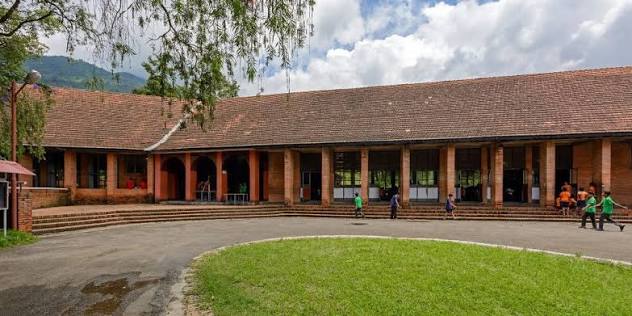
Budhanilkantha School is situated in the northern part of Kathmandu, near the foothills of Shivapuri.
The institution occupies an extensive campus of approximately 29 hectares, providing space for academic buildings, residential facilities, sports grounds and other student-oriented infrastructure.
Its campus environment supports residential education, allowing academic, recreational and social activities to take place within the same institutional setting.
The school's location also provides a relatively spacious learning environment away from the more densely developed central areas of Kathmandu.
The combination of residential facilities, academic infrastructure, sports spaces and natural surroundings contributes to the institution's distinctive campus identity.
Institutional Background and Educational Vision
Budhanilkantha School was established in 1972 through cooperation between the governments of Nepal and the United Kingdom.
The institution was founded with the objective of creating an educational environment where students from different economic and social backgrounds could receive quality education together.
During its early years, the school was managed by British headmasters, who helped establish its academic structure and institutional practices.
Initially established as a boys' residential school, Budhanilkantha School became co-educational in 1991, expanding educational opportunities for girls.
Since 2059 B.S., the institution has been governed through the Budhanilkantha School Public Educational Trust. Its governance structure includes representatives from government bodies, alumni, parents and other relevant educational and social sectors.
The school has continued to develop its academic programmes, residential facilities and student activities while maintaining its identity as a national educational institution.
Its institutional philosophy emphasizes academic excellence, equality, discipline, leadership and the development of responsible citizens.
Budhanilkantha School at a Glance
Particulars | Details |
|---|---|
School Name | Budhanilkantha School |
Short Name | BNKS |
Established | 1972 A.D. |
Location | Narayansthan, Budhanilkantha, Kathmandu |
Institution Type | Public, Non-profit Residential School |
Management | Budhanilkantha School Public Educational Trust |
Gender | Co-educational |
Medium of Instruction | English |
Academic Levels | Grade 5 to Grade 12 |
National Curriculum | Grades 5–10 |
NEB Programme | +2 Science |
International Programme | Cambridge International A Levels |
Academic Affiliations | National Examinations Board and Cambridge International Education |
Campus Area | Approximately 29 hectares |
Residential Facilities | Boarding and House System |
Scholarship | Government-supported scholarships for deserving students |
Learning Facilities | Library, Science Labs, Computer Lab, Auditorium and Multimedia Facilities |
Student Activities | Sports, Clubs, Cultural Programmes, Academic Competitions and Leadership Activities |
Alumni Association | Society of Ex-Budhanilkantha Students (SEBS) |
Institutional Identity | Government-designated National School of Nepal |
Contact & Leadership
Latest from Budhanilkantha School
Nothing published for this institution yet.