

Capital College and Research Center (CCRC)
Quest for Knowledge with Wisdom.
0
Stories
0
Activities
0
Events
0
Photos
About Capital College and Research Center (CCRC)
About Capital College and Research Center (CCRC)
Choosing a college after SEE is an important decision in a student's academic journey. Beyond selecting an academic stream, students need to consider teaching methods, academic resources, practical exposure, career guidance, extracurricular activities and opportunities for further education. A supportive learning environment can help students develop the knowledge, confidence and skills required to pursue their future ambitions.
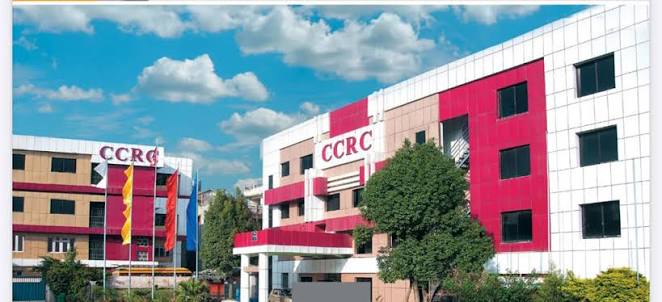
Located in Koteshwor, near Balkumari Bridge, Kathmandu, Capital College and Research Center (CCRC) is a private higher secondary educational institution established in 2001. Founded through the initiative of young academicians and education professionals, the college has developed its academic programmes around quality education, student support and preparation for higher studies.
Affiliated with the National Examinations Board (NEB), CCRC offers +2 programmes in Science, Management and Law. Its educational approach combines classroom instruction with laboratory work, research, academic counselling, entrance preparation and extracurricular activities.
The college describes its learning environment as student-centred, with an emphasis on helping students explore their potential through academic guidance and individual support. Its institutional maxim, Quest for Knowledge with Wisdom, reflects its broader educational philosophy of connecting knowledge with responsible thinking and personal development.
Over the years, CCRC has attracted students from Kathmandu Valley and different parts of Nepal. Its academic activities, competitive entrance-based admission, scholarship opportunities and university placement support form important aspects of its institutional identity.
Academic Programmes: +2 Science, Management and Law
Capital College and Research Center offers two-year higher secondary programmes under the National Examinations Board (NEB). Students who successfully complete SEE can apply for admission to Grade XI in their preferred academic stream.
The college currently offers three major programmes:
+2 Science
The Science programme is designed for students interested in scientific investigation, mathematics, technology and related disciplines.
The curriculum includes English, Nepali, Physics, Chemistry, Biology, Mathematics and Computer Science, with subject combinations determined by students' academic interests.
The programme emphasizes theoretical understanding alongside laboratory experiments, practical assignments and subject-based activities.
Students pursuing Science can prepare for further studies in medicine, engineering, biotechnology, computer science, physical sciences and other related fields.
+2 Management
The Management programme provides students with a foundation in business, accounting, economics and organizational studies.
The college offers subject areas including:
Accounting
Business Studies
Business Management
Economics
Business Administration
Hotel Management
Travel and Tourism Management
Computer Science
Business Mathematics
The programme combines theoretical knowledge with practical understanding of business and financial activities.
It is suitable for students interested in business administration, banking, finance, entrepreneurship, hospitality, tourism and other management-related disciplines.
+2 Law
The Law programme introduces students to the foundations of legal studies and the principles governing society, institutions and individual rights.
Its curriculum includes English, Nepali, Social Studies and Life Skills, alongside subjects related to legal education.
The programme provides students with an opportunity to develop an understanding of legal concepts, constitutional principles, social institutions and the role of law in society.
Students interested in pursuing further studies in law, political science, public administration, social sciences and related disciplines may consider this academic pathway.
Teaching and Learning Approach
CCRC emphasizes modern teaching methods that combine classroom instruction with participatory and research-oriented learning.
According to its academic information, the college employs qualified and experienced faculty members and uses different instructional approaches to support students' academic development.
Its teaching methods include:
Lectures and Tutorials: Regular classroom instruction supported by subject-based discussions and additional academic guidance.
Research: Opportunities for students to explore subjects, collect information and develop analytical understanding.
Participatory Learning: Encouraging students to engage in discussions, group activities and collaborative assignments.
Appreciative Inquiry: An approach that encourages learners to identify strengths, explore possibilities and develop constructive solutions.
The college describes its teaching philosophy as student-centred, with teachers expected to provide academic support and guidance throughout the learning process.
This approach aims to develop conceptual understanding, independent thinking, communication and problem-solving abilities.
Academic Assessment and Examination Preparation
Regular assessment is an important component of the academic structure at CCRC.
The college conducts internal examinations and evaluations to monitor students' progress and prepare them for NEB board examinations.
Its published academic information identifies the following assessment activities:
Weekly tests
Two term examinations
Pre-board examinations
Regular academic monitoring
Students are expected to participate in internal assessments and complete the required examinations as part of their academic programme.
Regular testing helps students identify areas requiring improvement, maintain academic discipline and become familiar with examination formats.
The college also emphasizes preparation for competitive entrance examinations, particularly for students planning to pursue medical and engineering education after completing their +2 studies.
Career Guidance and Entrance Preparation
Career guidance and preparation for higher education are important components of CCRC's student support system.
The college provides academic and career counselling to help students understand different educational pathways and make informed decisions about their future.
Its support services include guidance for students interested in medical, engineering, management and other professional disciplines.
The college also highlights entrance preparation classes for examinations such as the Institute of Medicine (IOM) and Institute of Engineering (IOE) entrance examinations.
Such preparation can help students become familiar with competitive examination formats and strengthen their subject knowledge before applying to universities and professional institutions.
The institution's result and placement section also highlights former students who have secured scholarships in medical and paramedical education, engineering, agriculture and international universities.
Library, Laboratories and Academic Facilities
Access to appropriate academic resources is essential for effective learning, particularly in science and technology-related programmes.
CCRC highlights several facilities intended to support classroom instruction, independent study and practical learning.
These include:
Science Laboratories: Specialized laboratories for Physics, Chemistry and Biology, equipped for practical experiments and scientific investigation.
Computer Laboratory: A technology-supported learning facility with computer resources for digital education and information technology.
Library: A collection of textbooks, reference books, journals, research reports, newspapers and electronic learning resources.
Internet Facilities: Access to digital resources to support academic research and information gathering.
Cafeteria: A spacious dining facility providing food and refreshments within the college premises.
Transportation: College-operated transportation services covering different areas of Kathmandu Valley.
Hostel: Separate accommodation arrangements for male and female students in hostels located within walking distance of the college.
The science laboratories provide students with opportunities to perform experiments under the guidance of subject instructors. The library and computer facilities further support academic preparation and independent learning.
Student Clubs and Societies
Student participation beyond classroom instruction is an important aspect of CCRC's educational approach.
The college operates several clubs and societies that encourage students to explore their interests, develop talents and participate in community-oriented activities.
Its institutional website identifies the following student organizations:
Eco Club
English Society
Prime Innovative Club
IT Club
Sports Club
Health Club
Art and Culture Club
Club of Humanity
Social Club
Scientific Circle
Literary Circle
Students can participate in clubs according to their interests and abilities. The college also provides opportunities for students with leadership interests to become involved in club committees and organizational responsibilities.
These organizations encourage communication, teamwork, public speaking, time management, leadership and social awareness.
The college considers clubs and societies important platforms for connecting academic learning with community engagement and personal development.
Sports, Cultural Activities and Student Development
At CCRC, student development extends beyond academic achievement. Sports, cultural activities, creative programmes and social engagement provide additional opportunities for students to explore their abilities.
The Sports Club offers a platform for students interested in physical activities and team-based participation.
Similarly, the Art and Culture Club and Literary Circle encourage creative expression through cultural programmes, literature and related activities.
The college also promotes activities through its scientific, environmental, social and technology-oriented clubs.
Participation in these programmes can help students develop confidence, discipline, cooperation and organizational skills.
Such activities also allow students to interact with peers who share similar interests and gain experiences that complement their formal education.
Scholarships and Financial Support
CCRC provides scholarship opportunities for students entering its +2 programmes.
According to the college's published scholarship information for the 2026/27 academic session, scholarships are primarily determined by:
SEE Grade Point Average (GPA)
Performance in the college entrance examination
Results of internal and terminal examinations
Scholarships are offered under different categories, subject to available quotas and the institution's admission conditions.
The college states that scholarship offers are mentioned in the admission acceptance letter. Students who receive scholarships in Grade XI may continue receiving them in Grade XII, provided they pass the required terminal examinations.
The college also mentions that scholarship opportunities are allocated on a first-come, first-served basis after admission acceptance, until the available quotas are filled.
Students and parents should consult the latest scholarship notice to understand the applicable categories, tuition concessions, eligibility requirements and continuation conditions.
Hostel, Transportation and Student Support
CCRC provides additional services intended to support students who travel from outside Kathmandu Valley or require accommodation during their studies.
Hostel Facilities
The college operates separate hostel arrangements for male and female students. The hostels are located within walking distance of the college and provide accommodation and meals.
The institution describes its hostel environment as supervised, with responsible wardens overseeing students' residential arrangements.
These facilities can be particularly useful for students coming from different districts of Nepal.
Transportation
The college provides transportation services within Kathmandu Valley. Its own buses operate on designated routes to help students travel between their homes and the college.
Counselling Services
CCRC maintains counselling services throughout the academic year. Its published facilities information identifies three areas of support:
Academic counselling
Career counselling
Personal and clinical counselling
These services are intended to help students address academic challenges, understand future study opportunities and receive guidance on personal concerns.
International Education and University Placement Support
CCRC also provides guidance to students interested in pursuing higher education outside Nepal.
Its Abroad Study Center assists students in exploring international academic opportunities, selecting appropriate study programmes and understanding university admission procedures.
The support services include information about overseas universities, scholarship opportunities, financial aid and application processes.
The college also mentions interaction with representatives and staff associated with the United States Educational Foundation in Nepal (USEF) to provide information about higher education opportunities in the United States.
Its result and placement section highlights former students who have secured scholarships in medical and engineering education in Nepal and admission opportunities at international universities.
These initiatives provide students with additional information when planning their academic and professional futures.
Institutional Background and Educational Vision
Capital College and Research Center was established in 2001 through the initiative of young, enthusiastic academicians and professionals who sought to contribute to Nepal's higher secondary education sector.
Located in Koteshwor, Kathmandu, the institution has focused primarily on +2 education, gradually developing its academic programmes, faculty resources, infrastructure and student support services.
Since its establishment, CCRC has attracted students from Kathmandu Valley and different districts of Nepal. Its selective admission process includes entrance examinations, with academic performance and available seats influencing admission decisions.
The college's educational philosophy emphasizes the development of knowledge, wisdom, academic discipline and individual potential.
Its institutional maxim, Quest for Knowledge with Wisdom, expresses the belief that education should extend beyond acquiring information and should also encourage thoughtful understanding, responsible decision-making and personal growth.
Through academic programmes, research activities, counselling, student organizations and university placement support, CCRC seeks to prepare students for higher education and future professional opportunities.
Capital College and Research Center at a Glance
Particulars | Details |
|---|---|
Institution Name | Capital College and Research Center |
Short Name | CCRC |
Established | 2001 A.D. |
Location | Koteshwor, near Balkumari Bridge, Kathmandu |
Institution Type | Private Higher Secondary Institution |
Academic Level | +2 (Grades XI and XII) |
Academic Programmes | Science, Management and Law |
Examination Board | National Examinations Board (NEB) |
Teaching Approach | Student-Centred, Participatory and Research-Oriented Learning |
Academic Assessment | Weekly Tests, Term Examinations and Pre-Board Examinations |
Learning Facilities | Science Labs, Computer Lab, Library and Internet |
Student Support | Academic, Career and Personal Counselling |
Residential Facilities | Separate Boys' and Girls' Hostels |
Student Organizations | Eco Club, English Society, IT Club, Literary Circle, Scientific Circle and Others |
Scholarships | Merit-Based and Entrance Examination-Based Scholarships |
Additional Opportunities | Entrance Preparation and Abroad Study Counselling |
Institutional Maxim | Quest for Knowledge with Wisdom |
Contact & Leadership
Latest from Capital College and Research Center (CCRC)
Nothing published for this institution yet.