


Chandbagh School
Build Your Future, Start Here.
0
Stories
0
Activities
0
Events
0
Photos
About Chandbagh School
About The Chandbagh School
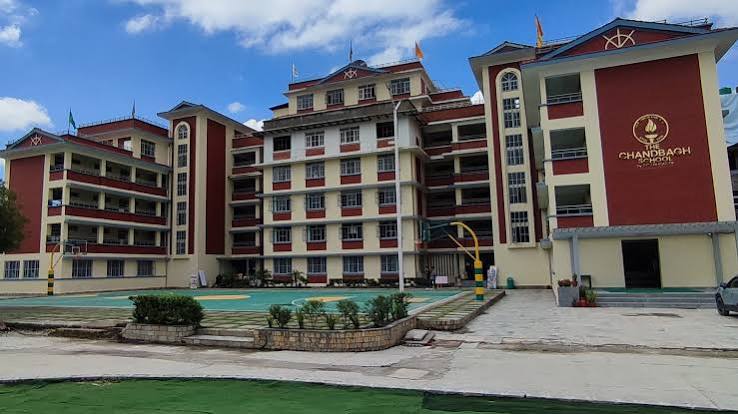
Established in 1996 by the Chaudhary Group, The Chandbagh School is a co-educational institution located in Gokarneshwor-6, Jorpati, Kathmandu. Managed by CG Education, the school was initially established as a primary day-boarding institution and has since expanded its academic programmes to include secondary and higher secondary education.
The school operates on a campus covering approximately 50,000 square feet. It offers education through different academic pathways, including the curriculum prescribed by the Government of Nepal, the Central Board of Secondary Education (CBSE), India, and higher secondary programmes under the National Examinations Board (NEB).
The institution aims to combine academic learning with practical experiences, discipline, extracurricular participation and character development. Its educational philosophy places importance on preparing students not only for academic achievement but also for responsible participation in society.
The school's approach is guided by the belief that students should develop academic competence, leadership abilities, communication skills, moral values, cultural awareness and an understanding of contemporary technology.
As part of CG Education, The Chandbagh School follows the Chaudhary Group Education Educational Model (CGEEM), a teaching and learning framework developed for the group's educational institutions. Its guiding principles are built around four pillars: Academics, Discipline, ECA/CCA, and Values and Beliefs.
Academic Programs
The Chandbagh School offers multiple academic pathways through its SEE, CBSE and higher secondary wings. These programmes provide students with different curriculum options and opportunities for academic progression.
SEE Curriculum: Grades 1–10
The SEE wing follows the curriculum prescribed by the Curriculum Development Centre of the Government of Nepal. The academic programme covers foundational subjects in language, mathematics, science, social studies, technology and value education.
Grades 1–2
Students study Nepali, English, Science, Mathematics, Social Studies, Value Education and Computer Science. The programme focuses on developing foundational literacy, numeracy, communication and basic understanding of the surrounding world.
Grades 3–5
The curriculum includes English, Nepali, Mathematics, Science, Social Science, Environment, Population and Health (EPH), Value Education and Computer Science. These subjects help students strengthen their academic foundations while developing awareness of social and environmental issues.
Grades 6–8
Students study English, Nepali, Mathematics, Science, Social Studies, EPH, Computer Science and other subjects. Occupation, Business and Technology Education and Naitik Shikshya are also included in the curriculum, with optional subjects introduced at the upper grades.
Grades 9–10
The secondary-level curriculum includes English, Nepali, Mathematics, Science, Social Studies and EPH. Students can select optional subjects such as Mathematics or Environmental Science, and Accountancy or Computer Science, according to the school's subject arrangements.
The programme prepares students for the Secondary Education Examination (SEE).
CBSE Curriculum: Grades 1–10
The CBSE wing follows the curriculum of India's Central Board of Secondary Education. It provides an alternative academic pathway for students seeking an internationally used school curriculum.
Primary Level: Grades 1–5
The primary curriculum includes English, Nepali or Hindi, Mathematics, Science, Social Studies, Hamro Serofero, Computer Science, General Knowledge and Moral Science.
Middle Level: Grades 6–8
Students study English, Nepali or Hindi, Mathematics, Science, Social Science, Computer Science and Moral Science. The programme also incorporates extracurricular and co-curricular activities.
Secondary Level: Grades 9–10
The curriculum includes English, Nepali or Hindi, Mathematics, Science, Social Science, Computer Science and Moral Science. Optional subjects include Mathematics, Social Studies and Accountancy.
The school also identifies activities such as art and craft, dance, instrumental music, karate, yoga, basketball, football, pottery and library sessions as part of the CBSE learning experience.
Higher Secondary Education: Grades 11–12
The Chandbagh School offers higher secondary programmes through its NEB and CBSE wings, with a focus on Management-related studies.
NEB Management Stream
The NEB Management programme offers three subject combinations:
General Management: Accountancy, English, Business Studies, Nepali and Economics.
Hotel Management: Accountancy, English, Business Studies, Nepali and Hotel Management.
Computer Science: Accountancy, English, Business Studies, Nepali and Computer Science.
These combinations provide students with academic foundations for further studies in business, finance, hospitality, information technology and related fields.
CBSE Management Stream
The CBSE higher secondary Management programme includes English, Economics, Accountancy and Business Studies as compulsory subjects. Mathematics or Computer Science can be selected as optional subjects, while Physical Education is listed as an additional subject.
The school's website also lists A-Level programmes under Science and Non-Science categories. However, detailed subject combinations and current programme availability are not clearly specified in the published academic information.
Learning Beyond the Classroom
The Chandbagh School emphasises practical and experiential learning as an important part of its educational approach. Students are encouraged to connect classroom knowledge with real-life experiences through educational visits, field trips, practical classes, presentations and collaborative activities.
For secondary-level students, the school organises educational visits, trekking, scout camping, Nepal and India tours, practical classes and school exchange programmes. These activities provide opportunities to explore geographical, cultural, historical and social environments beyond the classroom.
Higher secondary students participate in industrial visits, interaction classes, review sessions, presentations and other activities related to their academic programmes. Hotel Management students, for example, can gain exposure through hotel visits and training activities.
The school also incorporates multimedia-assisted teaching and learning. Digital resources and classroom technologies are used to support instruction, presentations and student engagement.
Through these experiences, the institution seeks to make learning more relevant, participatory and connected to the world students encounter outside school.
Facilities & Student Life
The Chandbagh School provides academic infrastructure and student facilities designed to support classroom instruction, practical learning, physical activities and personal development.
Its published facilities include:
Classrooms: Spacious, bright and well-ventilated classrooms designed to provide a comfortable learning environment.
Computer Laboratory: A furnished computer laboratory with individual computer arrangements and fibre-optic internet connectivity.
Library: A library containing books and periodicals from different areas of learning, supporting reading and independent study.
Audio-Visual Room: A dedicated space equipped with audiovisual resources for multimedia-assisted teaching and presentations.
Sports and Play Areas: Spaces for basketball, football and other physical activities under the supervision of the school's ECA team.
Cafeteria: A cafeteria providing meals planned with nutritional considerations.
Digital Learning Infrastructure: Internet connectivity, computers, televisions, interactive whiteboards and digital communication facilities.
School Management System: Integration of the Digital Nepal School Management System to support academic and administrative functions.
School Infirmary: First-aid facilities and nursing support for students, with arrangements for hospital referral in emergencies.
Counselling Support: Counselling classes to address students' psychological and personal needs.
Transportation: Shuttle services covering major residential areas of Kathmandu Valley and its suburbs.
The school also identifies CCTV cameras and digital communication systems as part of its campus management and security arrangements.
Student Activities
Co-curricular and extracurricular activities are considered essential components of student development at The Chandbagh School. The institution encourages students to participate in sports, creative programmes, cultural activities, social initiatives and leadership opportunities.
Sports and Physical Activities
The school offers opportunities to participate in football, basketball, badminton, table tennis, swimming, karate and yoga. Its EduSports programme provides structured physical activities designed to support students' physical, behavioural and mental development.
The programme is delivered by trained physical education teachers and coaches, with periodic assessments intended to monitor students' progress.
Arts and Creative Activities
Students can participate in art and craft, clay work, pottery, singing, dance and instrumental music. These activities encourage creative expression, artistic exploration and confidence.
The school also organises exhibitions and performances that provide opportunities for students to present their work and talents.
Scout and Outdoor Activities
Scout training, scout camping, trekking, educational tours and field visits form part of the school's wider activity programme. These experiences encourage teamwork, self-discipline, independence and an understanding of the natural and social environment.
Higher Secondary Activities
Higher secondary students participate in activities such as:
Internships and industrial visits
Bank and business organisation visits
Hotel visits and practical training
Career counselling
Digital marketing activities
Research and presentations
Dress etiquette orientation
Sports and recreational outings
Interaction and review classes
The school also organises social activities and special assemblies to encourage participation and a sense of community.
Educational Approach
The Chandbagh School follows the Chaudhary Group Education Educational Model (CGEEM), a teaching and learning framework developed for CG Education institutions. The model is designed around the educational needs of contemporary learners and aims to transform classrooms into active learning environments.
CGEEM is based on four foundational pillars:
Academics: Developing subject knowledge, academic competence, critical thinking and the ability to apply classroom learning.
Discipline: Encouraging responsibility, self-management, punctuality and respectful behaviour.
ECA/CCA: Providing opportunities for students to develop interests, talents, teamwork and leadership through activities beyond the regular curriculum.
Values and Beliefs: Nurturing moral character, empathy, integrity and awareness of social responsibilities.
The school also uses the V-Star programme as a motivational and character-development tool. Based on the principle of Universal Goodness, the programme promotes five habits: cleanliness, orderliness, punctuality, politeness and meditation.
Another feature of the school's educational approach is its emphasis on additional language learning. Newari is offered as an additional local language, while Mandarin or Chinese and French are identified as international language options. These opportunities are intended to develop communication skills and cultural awareness.
The institution also recognises that every child has individual strengths, interests and learning needs. Its approach to holistic development seeks to provide opportunities for students to explore their potential through academic, creative, physical and social activities.
Admission Policy & Student Support
The Chandbagh School maintains admission arrangements for its different academic programmes. Applicants are encouraged to contact the school administration to obtain information about available places, curriculum options and the requirements for their intended academic level.
Admission to Higher Secondary Level
The published admission procedure for the +2 wing includes the following stages:
Application Form: Applicants visit the school and obtain an admission application form.
Form Submission: The completed application form is submitted to the school.
Entrance Examination: Applicants appear for the school's entrance examination.
Interview: Candidates who pass the entrance examination attend an interview with the principal, accompanied by a parent or guardian.
Admission Confirmation: Applicants who meet the selection requirements can proceed with admission.
The stated eligibility includes SEE, O-Level, Grade 10 or an equivalent qualification.
The school lists the following documents for admission:
Admission grant letter
Completed application form
SEE certificate or equivalent qualification
SEE marksheet or equivalent academic record
Character certificate or transfer certificate
Migration certificate, where applicable for students from other examination boards
Student Support
The school identifies counselling, health support and parent–teacher interaction as important parts of student welfare.
Counselling classes are intended to address students' psychological needs, while the school infirmary provides first-aid assistance and nursing support. In emergencies, students can be taken to nearby hospitals.
Parent–teacher meetings and interaction programmes are conducted to discuss students' progress and support their overall development. The school also uses digital communication and its school management system to facilitate communication among parents, teachers and administrators.
Specific scholarship categories, eligibility conditions and current financial assistance provisions are not clearly detailed in the school's published general information.
Community Engagement & Global Outlook
The Chandbagh School places importance on developing students who understand their responsibilities towards their communities and the wider world. Its educational philosophy connects academic achievement with cultural awareness, social sensitivity and responsible citizenship.
The school encourages community participation through social activities, service-oriented initiatives and student engagement programmes. Its emphasis on values and beliefs is intended to help learners develop empathy, respect and an awareness of their role in society.
Language learning is another part of its international outlook. Opportunities to study Newari alongside international languages such as Mandarin and French encourage students to appreciate different cultures and communicate across linguistic boundaries.
Educational tours, field visits, school exchange programmes and Nepal and India tours provide further opportunities to explore different geographical and cultural settings.
Through these initiatives, the institution aims to develop learners who are academically prepared, culturally aware and capable of contributing positively to society.
The Chandbagh School at a Glance
Particulars | Details |
|---|---|
Institution Name | The Chandbagh School |
Established | 1996 |
Founder / Establishment | Chaudhary Group |
Management | CG Education |
Location | Gokarneshwor-6, Jorpati, Kathmandu, Nepal |
Institution Type | Co-educational school |
Campus Area | Approximately 50,000 sq. ft. |
Academic Levels | Primary to Higher Secondary |
SEE Curriculum | Government of Nepal curriculum |
CBSE Curriculum | Central Board of Secondary Education, India |
Higher Secondary Affiliation | National Examinations Board (NEB) and CBSE |
NEB Programmes | General Management, Hotel Management and Computer Science |
CBSE Higher Secondary Programme | Management |
Educational Model | Chaudhary Group Education Educational Model (CGEEM) |
Core Pillars | Academics, Discipline, ECA/CCA, Values and Beliefs |
Character Development | V-Star Programme |
Additional Languages | Newari, Mandarin/Chinese and French |
Learning Activities | Educational visits, field trips, practical classes, presentations and exchange programmes |
Key Facilities | Computer laboratory, library, audiovisual room, cafeteria, infirmary and sports areas |
Sports & Activities | Football, basketball, badminton, table tennis, swimming, karate, yoga, music and dance |
Student Support | Counselling, first aid, nursing support and parent–teacher meetings |
Transportation | Shuttle services across major areas of Kathmandu Valley |
Managing Organisation | CG Education, Chaudhary Group |
Contact Numbers | 01-4371628, 01-4371229, 01-4379066 |
Contact & Leadership
Latest from Chandbagh School
Nothing published for this institution yet.