

Creative Academy
Fostering Creativity, Critical Thinking and Holistic Development
0
Stories
0
Activities
0
Events
0
Photos
About Creative Academy
About Creative Academy
Education becomes meaningful when students learn not only to understand the world but also to question it, explore possibilities and develop the confidence to contribute to society. A good school provides a strong academic foundation while encouraging curiosity, creativity, independent thinking and responsible behaviour.
Creative Academy is a private, co-educational school located in Kirtipur, Kathmandu, Nepal. Established in 2003, the institution provides education from Grade 1 to Grade 10 and is affiliated with the National Examination Board (NEB) for its secondary-level education framework. The school describes itself as an institution committed to experiential learning, collaborative teaching, research-based education and the holistic development of students.
Creative Academy's educational philosophy emphasises active participation rather than relying exclusively on traditional classroom instruction. Its teaching approaches include project-based learning, flipped classrooms, self-reflection, gamification, visual, auditory and kinaesthetic learning strategies, and activities designed to develop critical thinking.
The institution's stated maxim is “Seek and You Shall Find,” reflecting its emphasis on inquiry, exploration and the pursuit of knowledge. Its educational approach encourages students to ask questions, investigate ideas and develop the ability to learn independently.
Creative Academy also highlights continuous assessment as part of its evaluation system. Rather than relying solely on final examinations, continuous assessment can help teachers monitor students' progress, identify learning difficulties and provide feedback throughout the academic year.
For parents considering a school, these approaches offer useful points of comparison. The quality of education depends not only on the curriculum but also on how students are taught, how their progress is evaluated and how effectively the school supports their academic and personal development.
Academic Programmes
Primary and Secondary Education: Building Strong Foundations
Creative Academy provides education from Grade 1 to Grade 10. Its academic programme is designed to help students develop essential knowledge and skills while preparing them for the next stages of their education.
The primary years are particularly important for developing literacy, numeracy, communication and social skills. As students progress through the grades, they encounter more specialised subjects and are expected to develop greater independence in their learning.
The school emphasises experiential teaching and collaborative learning. These approaches encourage students to participate actively in lessons, work with their peers and connect classroom knowledge with practical experiences.
Project work can help learners investigate a topic and organise information, while collaborative assignments encourage communication and shared responsibility. Self-reflection can also help students recognise their strengths, identify areas for improvement and become more conscious of their learning habits.
The institution's approach places importance on developing analytical ability, creativity and practical skills alongside academic knowledge. These qualities can help students prepare for the demands of secondary education and the transition to higher-secondary study.
Experiential and Research-Based Learning
Experiential learning allows students to develop understanding through activities, observation, investigation and reflection. It can make classroom learning more engaging by connecting theoretical knowledge with practical experiences.
Creative Academy identifies experiential teaching, research-based education and micro-projects among its educational approaches. These methods provide opportunities for students to investigate questions, collect information, test ideas and present their findings.
Research-based activities can encourage learners to examine evidence rather than accept information without question. Micro-projects can help students break larger tasks into manageable stages, develop planning skills and understand how ideas can be translated into practical work.
The school's approach also includes flipped-classroom methods. In a flipped classroom, students may explore learning materials before a lesson, allowing classroom time to focus more on discussion, problem-solving and guided activities.
Gamification is another approach identified by the institution. When appropriately integrated into teaching, game-based elements can make learning more interactive and encourage students to participate in academic tasks.
The effectiveness of these methods depends on their implementation, the suitability of activities for different age groups and the quality of guidance provided by teachers. When supported by constructive feedback, they can help students develop curiosity and more independent learning habits.
Teaching Methods and Continuous Assessment
The relationship between teaching and assessment plays an important role in a student's educational progress.
Creative Academy follows a continuous assessment approach, according to its institutional information. Continuous assessment involves monitoring students' progress through regular classroom activities, assignments, projects, tests and other forms of evaluation rather than depending exclusively on a final examination.
Such an approach can help teachers identify where students are progressing well and where additional support may be needed. It can also provide students with opportunities to understand feedback and improve their performance over time.
The institution also emphasises collaborative learning and self-reflection. Collaborative learning encourages students to exchange ideas, listen to different viewpoints and work towards shared goals. Self-reflection helps learners consider what they have understood, which challenges they have encountered and how they might improve.
These methods can support the development of communication, responsibility and problem-solving skills alongside subject knowledge.
Effective assessment should provide meaningful information about learning. It is most useful when teachers communicate expectations clearly, provide constructive feedback and use assessment results to guide further instruction.
Digital Learning and Technology Integration
Technology has become an important part of contemporary education. Digital resources can support research, communication, classroom activities and the presentation of information in different formats.
Creative Academy introduced its Digital Creative Academy initiative in 2017, according to its institutional profile. The initiative was intended to encourage the use of digital tools in teaching and learning through training and greater engagement with educational technology.
The school describes a blended approach to learning in which digital tools complement classroom teaching. Such an approach can provide additional ways for students to access learning materials, work on assignments and engage with academic content.
Digital learning is most effective when technology supports clear educational objectives rather than being used simply for its own sake. Students also need guidance in evaluating online information, using digital resources responsibly and developing appropriate technology skills.
The institution's wider emphasis on critical thinking and research-based learning can complement digital education by encouraging students to assess information carefully and use it to develop their understanding.
Parents considering the school may wish to confirm the current digital learning arrangements, devices and platforms used, and how technology is incorporated into different grade levels.
Library, Laboratories and Learning Resources
Access to appropriate learning resources can help students develop subject knowledge, explore interests and become more independent learners.
Creative Academy's published information and education directories identify a library, science laboratory, computer laboratory and multimedia-supported classrooms among its facilities. The school also highlights sports areas, transport services and spaces for student activities.
A library can support reading habits, research assignments and independent study. Access to books and reference materials allows students to explore topics beyond their regular textbooks and develop a broader understanding of different subjects.
Science laboratories provide opportunities for practical investigation. Students can observe scientific processes, conduct experiments and connect theoretical concepts with evidence.
Computer laboratories and digital resources can support research, assignments and the development of digital literacy. Multimedia-supported classrooms can also help teachers present information through visual and interactive formats.
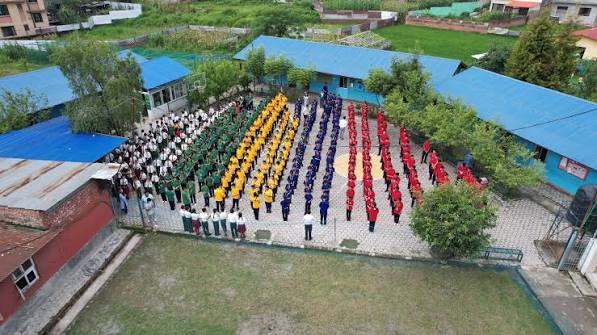
The school identifies separate playgrounds for different sections, including the Montessori, elementary, primary and senior blocks. These spaces can support assemblies, games, physical activities and other school programmes.
The institution also reports that it operates four large buses and a van for student transport, excursions and field visits. Parents should confirm current routes, schedules, fees and availability directly with the school.
Environmental Education and Biodiversity Activities
Environmental education can help students understand the relationship between human activities and the natural world. It also provides opportunities to develop observation, research and community-engagement skills.
Creative Academy has documented several student-led environmental initiatives, including birdwatching, school waste management, composting, plogging, biodiversity research and activities associated with environmental awareness.
Its work has included the Kirtipur Biodiversity Research Project, the preparation of herbariums, the development of a school museum and the publication of an electronic book about plants found in the Kirtipur area.
The institution has also reported student participation in birdwatching activities and the display of information about local bird species within the Tribhuvan University area.
These initiatives connect learning with the local environment. Birdwatching encourages careful observation, while biodiversity research can help students understand the variety of species found in their surroundings. Composting and waste-management activities can introduce practical approaches to environmental responsibility.
Such activities can also help students develop research skills by collecting information, documenting observations and sharing findings with others.
Environmental education is particularly valuable when it moves beyond awareness to meaningful participation. By investigating local ecosystems and engaging in practical projects, students can develop a more informed understanding of conservation and sustainability.
Co-curricular and Extracurricular Activities
Education extends beyond classroom lessons and examinations. Co-curricular and extracurricular activities provide students with opportunities to explore interests, develop confidence and learn how to work with others.
Creative Academy identifies activities such as sports, music, dance, educational tours, projects and other student programmes among its learning opportunities.
The school also reports student participation in environmental activities, writing, webinars and community-oriented initiatives. Such activities can complement academic learning by encouraging students to apply their skills in different settings.
Sports can help students develop discipline, teamwork and physical fitness. Music and dance provide opportunities for creative expression, while educational excursions can expose learners to places and experiences beyond their immediate surroundings.
Project work encourages research, planning and problem-solving. Student-led initiatives can also create opportunities to take responsibility, cooperate with peers and communicate ideas.
The value of these activities lies in the learning that takes place through participation. When students are encouraged to investigate, create, organise and reflect, extracurricular engagement can become an important part of their broader education.
Student Well-being and Communication
A supportive educational environment recognises that students' academic progress is influenced by their personal, social and emotional experiences.
Creative Academy has reported organising a two-day workshop on non-violent communication for teachers, focusing on communication in the classroom and beyond. Such training can support constructive interaction and encourage teachers to consider how communication affects relationships and learning.
The school also identifies counselling among its educational facilities and support provisions in external education listings. Counselling can provide students with opportunities to seek guidance on academic concerns, relationships and other challenges that may affect their learning.
Communication between teachers, students and parents is equally important. When families understand academic expectations and receive clear information about progress, they can work more effectively with the school to support students.
The effectiveness of student support depends on the availability of appropriate services and how well they respond to students' needs. A respectful and supportive environment can help learners develop confidence, manage challenges and participate more fully in school life.
Teacher Development and Educational Improvement
The quality of education depends not only on the curriculum and facilities but also on teachers' knowledge, skills and ability to respond to students' learning needs.
Creative Academy identifies professional development for teachers as part of its educational approach. Its institutional information describes training, seminars and workshops intended to support teachers' continuing development.
Teacher development can help educators explore new teaching methods, improve classroom communication and adapt their instruction to different learning needs.
The institution's emphasis on experiential learning, collaborative teaching and digital education also requires teachers to consider how students engage with information and how learning can be made more active.
Professional development is most effective when training is connected with classroom practice and supported by opportunities for reflection and collaboration among teachers.
Continuous improvement in teaching can contribute to a more responsive educational environment in which students receive guidance appropriate to their age, abilities and academic progress.
Awards and Educational Recognition
Creative Academy's published institutional profile records recognition associated with international and environmental education initiatives. These include the International School Award, the Duke of Edinburgh's Award and iEARN-related activities.
The school has also been recognised for its environmental and biodiversity-related work. A report published by the Federation of Ornithologists' Nepal records Creative Academy's involvement in student-led conservation activities and environmental education.
The institution has documented initiatives involving birdwatching, local biodiversity research, waste management, composting and environmental awareness. Such activities reflect an approach in which students engage with real-world questions through observation, practical work and community participation.
Awards and institutional recognition can provide useful context when assessing a school's activities. However, their significance depends on the scope, criteria and period of the award. Prospective parents should consider such recognition alongside teaching quality, student support, learning resources and the overall educational environment.
Preparing Students for the Future
The school years are a formative period in which students develop academic foundations, discover their interests and begin preparing for the next stage of education.
Creative Academy's educational approach brings together experiential learning, research-based activities, digital education, continuous assessment and environmental engagement. These elements are intended to support students' academic development while helping them develop skills relevant to a changing world.
The institution's emphasis on critical thinking, creativity and collaboration is particularly relevant to contemporary education. Students need to learn how to assess information, solve problems, communicate ideas and work with others.
For students approaching the end of Grade 10, the transition to higher-secondary education also requires careful consideration of subject choices and future goals. Students should seek guidance on available programmes and confirm admission requirements directly with the institutions they intend to attend.
For parents evaluating Creative Academy, useful considerations include the curriculum, teaching methods, assessment practices, facilities, student support, environmental initiatives and opportunities for participation.
Ultimately, a meaningful school education should help students become independent learners who can ask questions, explore ideas and take responsibility for their development.
Creative Academy's maxim, “Seek and You Shall Find,” expresses this spirit of inquiry. It reflects the value of approaching education as an ongoing process of discovery rather than simply a series of examinations.
Creative Academy at a Glance
Institution: Creative Academy
Established: 2003
Location: Kirtipur, Kathmandu, Nepal
Institutional Type: Private, co-educational school
Education Level: Grades 1–10
Affiliation: National Examination Board (NEB) for secondary-level education
Teaching Approach: Experiential learning, collaborative learning, flipped classrooms, research-based education, micro-projects, gamification and continuous assessment
Digital Learning: Digital Creative Academy initiative introduced in 2017, according to the school's published profile
Academic Facilities: Library, science laboratory, computer laboratory and multimedia-supported classrooms
Student Development: Sports, music, dance, educational tours, projects and environmental activities
Environmental Initiatives: Birdwatching, biodiversity research, waste management, composting, herbarium preparation and environmental awareness
Transport: Four large buses and one van, according to the school's published information
Awards and Recognition: International School Award, Duke of Edinburgh's Award and iEARN-related activities, as reported in institutional materials
Contact & Leadership
Latest from Creative Academy
Nothing published for this institution yet.