

Galaxy Public Secondary School
Aim High, Reach Higher.
0
Stories
0
Activities
0
Events
0
Photos
About Galaxy Public Secondary School
About Galaxy Public Secondary School
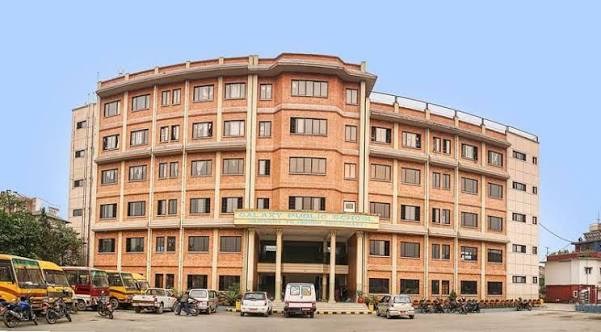
Established in 1986 AD, Galaxy Public Secondary School is a private, co-educational institution located at Radhe Marg, Gyaneshwor, Kathmandu. The school provides higher secondary education through the National Examinations Board (NEB), with academic programmes in Science and Management.
With a history spanning four decades, the institution focuses on academic development, practical learning, discipline and preparation for higher education. Its educational philosophy emphasises helping students understand academic concepts, develop independent thinking and acquire skills relevant to further study and professional life.
The school aims to provide an educational environment that combines classroom instruction with laboratory work, project-based learning, technology, extracurricular activities and career-oriented guidance.
Its academic programmes are designed to help students develop the knowledge and competencies needed for university education and future career pathways.
Academic Programs
Galaxy Public Secondary School offers two higher secondary programmes: Science and Management. Both are designed for students who have completed the Secondary Education Examination (SEE) or an equivalent qualification.
Science
The +2 Science programme provides a foundation for students interested in scientific study and careers in medicine, engineering, information technology and other science-related fields.
The programme is organised around the following subjects:
Grade XI and Grade XII
Physics
Chemistry
Mathematics
Nepali
English
Biology or Computer Science as an optional subject
The programme combines theoretical instruction with laboratory demonstrations, practical experiments and project-based activities. Students are encouraged to develop scientific observation, analytical thinking and problem-solving skills.
The school also emphasises regular revision, classroom assessment and guidance from subject-specialist teachers to strengthen students' understanding of scientific concepts.
Management
The +2 Management programme introduces students to business, organisational studies and the principles of management. It is intended for learners interested in business administration, entrepreneurship, finance, hospitality and related professional fields.
The programme offers subject combinations in:
Business Studies
Hotel Management
Computer Science
The Management programme aims to develop students' understanding of business concepts while strengthening communication, analytical thinking and decision-making abilities.
The Hotel Management option provides opportunities for students to explore hospitality-related knowledge and practical skills, while Computer Science introduces learners to information technology and its applications.
Both programmes follow the NEB curriculum and are structured around Grade XI and Grade XII academic requirements.
Learning Beyond the Classroom
Galaxy Public Secondary School emphasises practical and project-based learning, particularly in its Science programme. Students are encouraged to go beyond textbook knowledge through laboratory experiments, scientific observation, project assignments and participation in science exhibitions.
The school identifies several learning activities that support this approach:
Hands-on laboratory experiments and demonstrations
Practical assignments and laboratory reports
Science project exhibitions
Field visits and educational exploration
Guest lectures and workshops
Library and digital-resource-based learning
Laboratory skill-development sessions
Concept-focused teaching, visual demonstrations, regular revision and continuous classroom assessment are also used to strengthen students' understanding of academic subjects.
The school's approach seeks to develop curiosity, analytical thinking and the ability to apply scientific knowledge to practical situations.
Facilities & Student Life
Galaxy Public Secondary School provides academic and recreational facilities to support classroom learning, practical education and student participation.
Its published facilities and resources include:
Science Laboratories: Facilities for practical experiments and demonstrations that complement Science instruction.
Computer Laboratory: A dedicated space for developing computer and digital skills.
Hotel Management Laboratory: Practical learning facilities for students choosing the Hotel Management option under Management.
Indoor Sports Arena: Facilities for basketball, futsal, table tennis and other indoor games.
Auditorium: A large auditorium with a reported seating capacity of more than 500, supporting assemblies, presentations and institutional events.
Library and Digital Resources: Reading and digital learning resources for academic study and independent learning.
Smart Learning Resources: Digital and multimedia tools that support interactive teaching and classroom presentations.
These facilities provide opportunities for students to combine academic instruction with practical training, physical activity and creative participation.
Student Activities
The school encourages students to participate in extracurricular and enrichment activities that complement their academic programmes.
Academic and Scientific Activities
Science exhibitions, project presentations, workshops and laboratory skill-development sessions provide opportunities for students to explore scientific ideas and demonstrate their learning.
Guest lectures and academic discussions also expose students to perspectives beyond regular classroom instruction.
Social Clubs and Leadership
Student-led social clubs encourage participation in activities related to leadership, creativity, community service and teamwork. These initiatives provide opportunities for students to develop organisational skills and take responsibility for collaborative activities.
Sports and Recreation
The school provides opportunities for students to participate in basketball, futsal, table tennis and other indoor games. Annual sports events, intra-school competitions, regular practice sessions and skill-development workshops form part of its sports programme.
Such activities support physical fitness, cooperation, discipline and healthy competition.
Educational Approach
Galaxy Public Secondary School describes its educational philosophy through three broad priorities: academic development, career-oriented learning and values-based education.
Academic Development: The school emphasises structured teaching, experienced faculty, concept-focused instruction and regular assessments. Laboratory work and practical assignments help students strengthen their understanding of academic subjects.
Career-Oriented Learning: Its Future Fit programme is designed to help students explore career interests and develop skills for future professional pathways. The programme highlights AI-supported assessments, tutorial resources, recognised certifications and learning reports.
Student-Focused Learning: Individual guidance, mentorship, counselling and regular feedback are identified as important elements of student development.
Values-Based Education: The school aims to develop responsible learners through teamwork, leadership, creativity and community participation. It also highlights international exposure and opportunities to explore higher education pathways abroad.
Through these priorities, the institution seeks to prepare students not only for examinations but also for further education and changing professional environments.
Admission Policy & Student Support
Galaxy Public Secondary School accepts applications from students who have successfully completed the SEE or an equivalent examination recognised by the Ministry of Education, Science and Technology, Nepal.
The published admission criteria for the 2026/27 academic year are as follows:
Science
Applicants must meet these academic requirements:
Minimum overall GPA: 2.0
C+ in English, Mathematics and Science
D+ in other subjects
Management
Applicants must meet these academic requirements:
Minimum overall GPA: 1.6
D+ in all subjects
Admission Process
The school's admission process generally involves the following stages:
Enquiry and Registration: Students and parents obtain information about the available programmes and complete the registration process.
Academic Eligibility Review: The school reviews the applicant's SEE or equivalent academic results against the prescribed criteria.
Admission Confirmation: Eligible applicants proceed with the required enrollment formalities.
The school provides an online enquiry facility for prospective students and parents. Applicants should contact the administration to confirm the current admission schedule, required documents and enrollment arrangements.
Scholarships and Financial Assistance
Galaxy Public Secondary School offers scholarship opportunities under several categories:
Early Bird Registration: Benefits for students registering during the designated early admission period.
Galaxy Students: Scholarship opportunities for eligible students associated with the institution.
Academic Excellence: Recognition and financial support based on academic performance.
Sports Achievements: Opportunities for students with notable sporting achievements.
Scholarship applications are processed on a first-come, first-served basis, according to the school's published admission information. Students should confirm the eligibility conditions and available benefits directly with the administration.
Community Engagement & Global Outlook
Galaxy Public Secondary School aims to prepare students for participation in a wider and increasingly interconnected world. Its educational approach highlights international exposure, cultural understanding, career exploration and opportunities for further education abroad.
The school identifies student exchange programmes, cultural immersion activities, Chinese language training and preparation for the HSK Chinese language examination among its international learning opportunities. It also highlights pathways for university admission and scholarship opportunities in China.
The Future Fit programme further encourages students to explore different professional fields, identify their interests and understand the skills required for future careers.
Through social clubs, community service activities, collaborative projects and international learning opportunities, the school seeks to develop students who are confident, responsible and aware of their roles in society.
Galaxy Public Secondary School at a Glance
Particulars | Details |
|---|---|
Institution Name | Galaxy Public Secondary School |
Established | 1984 |
Location | Radhe Marg, Gyaneshwor, Kathmandu, Nepal |
Institution Type | Private, co-educational secondary school |
Academic Level | Higher Secondary (+2) |
Affiliation | National Examinations Board (NEB) |
Academic Programmes | Science and Management |
Science Subjects | Physics, Chemistry, Mathematics, Nepali, English and Biology or Computer Science |
Management Options | Business Studies, Hotel Management and Computer Science |
Educational Approach | Practical, project-based, career-oriented and values-driven learning |
Learning Activities | Laboratory experiments, project work, science exhibitions, workshops and field visits |
Key Facilities | Science laboratory, computer laboratory, Hotel Management laboratory, library and auditorium |
Sports Facilities | Basketball, futsal, table tennis and indoor games |
Student Activities | Social clubs, science exhibitions, sports competitions and workshops |
Career Development | Future Fit programme, career exploration and AI-supported assessments |
International Exposure | Student exchanges, Chinese language training and HSK preparation |
Admission Eligibility – Science | Minimum GPA 2.0 |
Admission Eligibility – Management | Minimum GPA 1.6 |
Scholarship Categories | Early Bird Registration, Galaxy Students, Academic Excellence and Sports Achievements |
Contact Numbers | 01-4535188, 01-4537188 |
Address | Radhe Marg, Gyaneshwor, Kathmandu, Nepal |
Contact & Leadership
Latest from Galaxy Public Secondary School
Nothing published for this institution yet.