

Global College of Management
Driven by Excellence.
0
Stories
0
Activities
0
Events
0
Photos
About Global College of Management
About Global College of Management
Choosing a college after the Secondary Education Examination (SEE) is an important step in a student's academic journey. It is a time when interests begin to develop into ambitions, classroom learning starts to connect with real-world challenges, and young people begin to consider the professional paths they may wish to pursue. A good college education, therefore, should offer more than preparation for examinations. It should also encourage students to think critically, communicate confidently, understand society and develop the skills needed for their future.
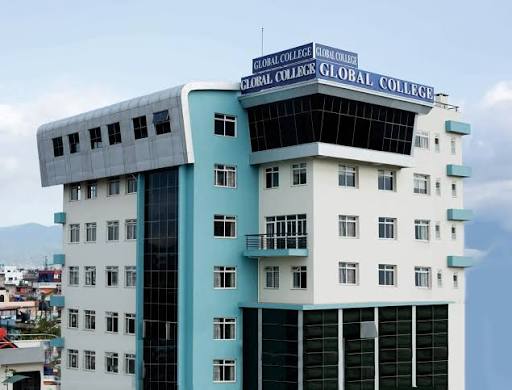
Global College of Management (GCM), located in Kathmandu, Nepal, is an English-medium, co-educational institution known for its focus on management education. Operating under Professional Holdings Limited, the college has developed an academic environment center on business and management studies, academic discipline, professional development and student engagement. Its educational approach emphasizes the development of knowledge, practical skills, leadership abilities and ethical values alongside academic achievement.
The college's stated vision is to establish itself as a nationally and internationally recognised center of excellence in teaching, learning and research in business and management studies. Its mission focuses on preparing students for higher education, leadership, entrepreneurship and the changing demands of the professional world.
For students interested in business, finance, accounting, economics and entrepreneurship, management education can provide a useful foundation for understanding how organizations operate, how economic decisions are made and how ideas can be transformed into practical initiatives. Global College of Management seeks to connect this academic foundation with the broader development of students as responsible and capable individuals.
Academic Programmes
+2 Management: Building a Foundation for Further Study
The +2 Management programme is a central part of Global College of Management's academic identity. Designed for students entering higher-secondary education after SEE, the programme introduces learners to key concepts in business, economics, accounting and organizational management.
The curriculum includes core management subjects such as Accountancy, Economics and Business Studies, alongside compulsory subjects and optional courses determined by the applicable National Examination Board (NEB) curriculum and available subject combinations.
Accountancy helps students understand financial transactions, record-keeping and the preparation of financial statements. Economics introduces the principles underlying markets, resource allocation, production, consumption and economic decision-making. Business Studies examines how organizations function, how businesses are managed and how commercial activities contribute to the wider economy.
Together, these subjects provide students with an understanding of the financial and organizational principles that influence businesses and institutions.
Management education also develops transferable skills. Working with numerical information strengthens analytical ability, while presentations and group assignments encourage communication and collaboration. Case studies and project-based activities can help students connect theoretical concepts with practical situations.
After completing Grade 12, students may consider further studies in areas such as Bachelor of Business Administration (BBA), Bachelor of Business Studies (BBS), accounting, finance, economics, information technology and other related disciplines, subject to the admission requirements of the respective institutions and programmes. Students interested in professional qualifications such as Chartered Accountancy (CA) or the Association of Chartered Certified Accountants (ACCA) may also explore the relevant entry requirements and progression pathways.
Preparing Students for a Changing Business Environment
Business and management are evolving alongside technological advancement, changing consumer behaviour, global economic developments and new forms of entrepreneurship.
Students entering these fields need more than the ability to reproduce textbook information. They must learn to interpret data, evaluate alternatives, solve problems and communicate ideas clearly. An understanding of business ethics, financial responsibility and the social consequences of organizational decisions is equally important.
Global College of Management's stated educational objectives emphazise market-oriented learning, critical thinking, professional development and the preparation of students for higher education and future business challenges.
These priorities are relevant for learners who wish to understand both the technical and human dimensions of management. Organizations depend not only on financial resources and operational systems but also on people who can lead teams, respond to challenges and make informed decisions.
A strong foundation at the higher-secondary level can help students approach these subjects with greater confidence as they progress towards university education and professional training.
Learning Beyond Textbooks
Education becomes more meaningful when students have opportunities to apply what they learn. Classroom discussions can introduce concepts, but presentations, projects, collaborative assignments and practical activities allow students to examine those concepts from different perspectives.
Global College of Management emphasizes student-centered learning, mentorship, critical thinking and academic engagement. Its institutional objectives also highlight collaboration between students and faculty, personal development and the cultivation of independent thinking.
These approaches can support learning in several ways. A group assignment encourages students to divide responsibilities and work towards a shared outcome. A presentation develops the ability to organize information and communicate an argument. Research-based work encourages learners to identify relevant information, assess evidence and develop their own understanding of a subject.
For management students, such experiences are particularly valuable. Business decisions often require people to interpret incomplete information, consider competing priorities and explain their reasoning to others. Learning to approach these challenges systematically can help students prepare for further study and professional responsibilities.
The value of these activities ultimately depends on how effectively they are integrated into teaching and how consistently students are encouraged to participate, reflect and improve.
Academic Facilities and Learning Resources
An effective learning environment requires appropriate infrastructure, access to information and opportunities for academic interaction.
Global College of Management identifies modern classrooms, a library and learning resource center, computer and information technology laboratories, academic departments, research facilities and seminar spaces among its institutional resources.
The college states that its classrooms are digitally equipped to support interactive teaching and learning. Technology-supported classrooms can help teachers present information in different formats and give students additional ways to engage with academic material.
Its computer and IT laboratories are intended to support computing, data analysis, programming and research-related activities. These resources are relevant in contemporary management education, where digital literacy and the ability to interpret information are increasingly important.
The library and learning resource center provide an academic setting for reading, study and research. Access to relevant books and other learning materials can help students develop independent study habits, strengthen subject knowledge and explore topics beyond the prescribed curriculum.
The institution also identifies research and innovation facilities, academic departments and faculty offices as part of its infrastructure. These spaces are intended to support academic guidance, research activities and interaction between students and faculty members.
Auditorium and seminar facilities provide settings for academic events, workshops and other institutional programmes. Such activities can complement regular classroom instruction by creating opportunities for discussion, presentation and the exchange of ideas.
Student Clubs and Extracurricular Activities
A student's college experience is shaped not only by academic programmes but also by the opportunities available outside regular classes. Student clubs can provide space for learners to explore interests, develop confidence and build relationships with peers.
Global College of Management features several student-led clubs and activities, including the Global Debate Club, the Avant-garde Literary Club, the GCM Music Club, the GCM Social Club and Global College Model United Nations (GCM MUN). Its website also features Team Explore Idea.
These activities represent different dimensions of student engagement.
Debating encourages students to examine issues from multiple perspectives, construct arguments and respond thoughtfully to opposing views. Literary activities provide opportunities for reading, writing, discussion and creative expression. Music offers a platform for artistic participation, while social activities can strengthen relationships and encourage cooperation.
Model United Nations introduces students to international affairs, diplomacy, negotiation and public speaking through simulations of international decision-making. Participation can help learners become more familiar with global issues while developing research and communication skills.
Student-led initiatives also give participants opportunities to organize activities, take responsibility and work collaboratively. Such experiences can contribute to the development of leadership, initiative and interpersonal skills that remain useful beyond college.
Research, Innovation and Entrepreneurship
Management education is closely connected with the ability to identify problems, evaluate opportunities and develop workable solutions.
Global College of Management identifies research, innovation and entrepreneurship among its institutional priorities. Its stated objectives include encouraging critical thinking, supporting collaborative projects and developing students who can respond to changing business conditions.
Research provides a way for students to investigate questions systematically. Rather than accepting information at face value, learners can examine evidence, compare explanations and develop reasoned conclusions. In management studies, this may involve understanding consumer behaviour, examining business practices, interpreting financial information or exploring economic trends.
Entrepreneurship introduces another dimension of learning: the process of turning an idea into a potential product, service or business. It requires an understanding of customer needs, resource management, financial planning, risk and the practical challenges involved in establishing an enterprise.
The college highlights research and innovation facilities, as well as an entrepreneur center, as part of its learning environment. These initiatives are intended to encourage inquiry and the development of business-oriented ideas.
For students, exposure to research and entrepreneurial thinking can broaden their understanding of management beyond conventional classroom topics. It can also help them recognize that business knowledge is useful not only for employment but also for identifying opportunities and responding creatively to social and economic needs.
Personal Development, Values and Academic Discipline
Academic achievement is an important part of education, but it is not the only measure of a student's development.
Professional environments require individuals who can communicate respectfully, work with others, act responsibly and make decisions guided by sound judgement. These qualities develop through a combination of learning, experience, reflection and consistent practice.
Global College of Management identifies integrity, respect, responsibility, cooperation and academic discipline among the values underpinning its institutional culture. Its stated educational philosophy emphasizes the development of knowledgeable professionals who also possess ethical values and a sense of social responsibility.
The college's approach recognizes the importance of preparing students for a world in which professional competence must be accompanied by sound judgement. A manager, accountant or entrepreneur may need technical knowledge, but professional success also depends on reliability, honesty, communication and the ability to work effectively with different people.
The higher-secondary years can provide an early opportunity to develop these habits. Meeting academic responsibilities, participating constructively in group work, respecting different viewpoints and learning from mistakes can all contribute to a student's personal growth.
A supportive educational environment can help young people become more independent while understanding the responsibilities that accompany greater freedom and opportunity.
Leadership, Career Awareness and Future Opportunities
For students considering management education, the transition from school to higher education can raise important questions. Which subjects suit their interests? What further qualifications might they pursue? What skills will be useful in their chosen field?
Global College of Management states that its educational mission includes preparing students for higher studies, leadership, entrepreneurship and contemporary business challenges. Its academic focus is intended to help learners build a foundation for further study and future professional development.
Management education can lead towards a variety of academic and career pathways. Depending on subsequent qualifications, individual interests and professional requirements, these may include accounting, banking, finance, marketing, human resource management, business administration, entrepreneurship and related fields.
Students may also explore opportunities in information technology and other interdisciplinary areas where business knowledge is useful. However, specific careers require different combinations of education, professional training and practical experience.
Career planning is therefore best approached as an ongoing process rather than a single decision made at the end of Grade 12. Students benefit from understanding their strengths, exploring different fields and seeking reliable academic guidance before committing to a particular pathway.
The role of a college is not simply to direct students towards a predefined career. It is also to help them acquire the knowledge and confidence needed to make informed decisions about their own futures.
A College Experience Beyond Examination Results
Academic results remain important indicators of student performance, and Global College of Management highlights achievements by students in the NEB examinations. Its website also presents alumni who have pursued careers in different professional and creative fields.
Such achievements can provide examples of the varied directions students may take after completing their education. At the same time, the broader value of a college experience lies in the learning habits, intellectual interests and personal qualities students develop along the way.
For students and parents considering a +2 institution, it is useful to look beyond examination results alone. Teaching quality, subject combinations, academic support, learning resources, student activities, discipline and the overall educational environment should all be considered when making a decision.
Prospective students should also confirm current admission criteria, subject availability, fees, scholarship provisions and other practical details directly with the college before applying.
Global College of Management's stated approach brings together management education, technology-supported learning, student clubs, research, entrepreneurship and personal development. These elements reflect a broad understanding of the preparation students need as they move towards higher education and professional life.
Ultimately, the purpose of management education is not merely to teach students how businesses function. It is also to help them understand how decisions are made, how organizations affect society and how knowledge can be used responsibly.
For students beginning their academic journey after SEE, these lessons can provide a foundation for further study, professional growth and a more informed understanding of the world around them.
Global College of Management at a Glance
Institution: Global College of Management (GCM)
Location: Kathmandu, Nepal
Ownership: Professional Holdings Limited
Educational Focus: Management education
Medium of Instruction: English
Academic Programme: +2 Management under the National Examination Board (NEB)
Academic Resources: Digitally equipped classrooms, library and learning resource center, computer and IT laboratories, research facilities, seminar halls and auditorium
Student Activities: Debate, literature, music, social activities, Model United Nations and student-led initiatives
Areas of Emphasis: Academic achievement, critical thinking, leadership, research, entrepreneurship, professional development and ethical values
Contact & Leadership
Latest from Global College of Management
Nothing published for this institution yet.