

Kathmandu Model Secondary School
Academic Excellence through Quality Education.
0
Stories
0
Activities
0
Events
0
Photos
About Kathmandu Model Secondary School
About Kathmandu Model Secondary School
Choosing a college after the Secondary Education Examination (SEE) is an important step in a student's academic journey. It is a time when interests begin to take shape, future ambitions become clearer and young people start exploring the academic pathways that may influence their professional lives. A meaningful higher-secondary education should therefore offer more than examination preparation. It should encourage students to think independently, develop practical skills, build confidence and understand the responsibilities that come with knowledge.
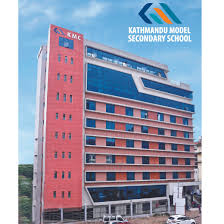
Kathmandu Model Secondary School (KMSS), widely associated with the name Kathmandu Model College (KMC) in its higher-secondary programmes, is an educational institution located in Bagbazar, Kathmandu, Nepal. The institution offers Grade 11 and Grade 12 programmes in Science, Management and Law under the National Examination Board (NEB) framework. Its academic approach emphasises subject knowledge, academic discipline, competitive examination preparation and the broader development of students.
The institution's stated educational objectives include encouraging academic and professional excellence, helping students become self-reliant and promoting harmonious relationships among people from different cultural, linguistic, religious and ethnic backgrounds. These objectives reflect an understanding of education as both an academic process and an opportunity for personal and social development.
For students entering Grades 11 and 12, the two years ahead represent a transition from general education towards more specialised study. The subjects they choose, the learning habits they develop and the academic guidance they receive can influence their options for further education.
KMSS seeks to support this transition through its three principal academic streams, learning facilities, counselling and motivational activities, student achievements and co-curricular and extracurricular programmes.
Academic Programmes
Science: Developing Knowledge Through Inquiry and Practice
Science education provides students with a foundation for understanding the natural world, examining evidence and applying scientific principles to practical problems. It is particularly relevant to students interested in medicine, engineering, agriculture, forestry, information technology and scientific research.
Kathmandu Model Secondary School offers a +2 Science programme under the NEB framework. According to the institution's official website, the programme aims to provide comprehensive scientific knowledge and a practical understanding of scientific concepts and principles.
Science requires more than the memorisation of formulas, definitions and theories. Students must learn to observe carefully, analyse information, interpret evidence and develop logical conclusions. Laboratory work and practical exercises can help them connect theoretical knowledge with scientific investigation.
The school highlights its Science programme as a foundation for further study in medicine, engineering, agriculture, forestry and other scientific disciplines. It also presents preparation for competitive entrance examinations as an important part of its academic approach.
For students aspiring to enter medical or engineering programmes, this preparation can be particularly relevant. Admission to such programmes depends on the eligibility requirements and entrance examinations specified by the respective institutions and regulatory bodies.
A sound Science education can also develop analytical thinking, precision, problem-solving and intellectual curiosity. These abilities are valuable not only in scientific professions but also in many other areas of higher education and professional life.
Students considering the Science stream should review the available subject combinations and select those that align with their interests and intended university programmes.
Management: Understanding Business, Finance and Economic Activity
Management education introduces students to the principles that influence businesses, financial decisions, markets and organisations. It can be a suitable pathway for students interested in accounting, finance, economics, entrepreneurship, marketing and business administration.
KMSS offers a +2 Management programme designed to provide students with a foundation in management studies. The institution states that its Management department aims to prepare students for further education and professional pathways, including business management and Chartered Accountancy (CA).
The programme follows the applicable NEB curriculum while the institution also highlights preparation for competitive entrance examinations associated with further study in management.
Management education helps students understand how organisations use resources, make decisions and respond to economic and commercial challenges. Accounting introduces the principles of recording and interpreting financial information. Economics examines the allocation of resources, markets and economic behaviour. Business-related studies help students understand organisational structures, management practices and commercial activity.
These subjects can develop numerical reasoning, analytical ability, communication and decision-making skills. Presentations, assignments and collaborative projects can also help students organise information and communicate their ideas effectively.
After Grade 12, students may pursue further education in fields such as business administration, business studies, accounting, finance, economics and related disciplines, subject to the admission requirements of the institutions they choose.
For students considering professional qualifications such as CA, it is important to understand the relevant eligibility criteria and progression requirements before selecting a particular pathway.
Law: Understanding Justice, Rights and Society
Law provides a framework for understanding the rights, responsibilities and institutions that shape society. Studying legal concepts can help students examine how rules are established, how disputes are addressed and how justice operates within a constitutional and legal system.
The Law programme at KMSS introduces students to legal studies at the higher-secondary level. According to the institution's official website, its Law department was established in 2019, with the aim of providing students with a foundation in legal knowledge and preparing them for further study in the field.
The programme follows the applicable NEB curriculum and also emphasises preparation for competitive entrance examinations for bachelor's-level legal studies.
Legal education involves more than learning laws and legal terminology. Students must develop the ability to interpret information, examine different arguments, evaluate evidence and communicate conclusions clearly. These skills are relevant to legal studies as well as public administration, governance and other disciplines concerned with society and institutions.
For students interested in becoming legal professionals, the +2 Law programme can provide an early introduction to legal reasoning and related concepts. Further study and professional practice require the appropriate qualifications and must meet the relevant admission and professional requirements.
An understanding of law can also contribute to informed citizenship by helping students appreciate the relationship between rights, duties, justice and social responsibility.
Beyond the Prescribed Curriculum
Academic learning becomes more meaningful when students have opportunities to apply what they learn, explore unfamiliar questions and connect theoretical concepts with practical situations.
KMSS emphasises academic achievement while also identifying practical learning, competitive examination preparation, research, presentations and student development as elements of its educational approach.
These activities can support different aspects of learning. Research encourages students to investigate questions and assess information. Presentations help them organise ideas and communicate findings. Group assignments develop cooperation, while problem-solving exercises encourage learners to consider alternative approaches before reaching a conclusion.
For Science students, practical work can help clarify scientific principles. Management students can benefit from examining business problems and interpreting financial information. Law students can strengthen their reasoning by considering legal questions and evaluating competing arguments.
The value of these activities depends on how effectively they are incorporated into teaching and supported by appropriate academic guidance. When students receive constructive feedback and opportunities to improve, they can develop a more independent and active approach to learning.
Such habits are particularly important during the higher-secondary years, when students begin preparing for the academic expectations of university education.
Academic Facilities and Learning Resources
A supportive learning environment requires appropriate infrastructure, access to information and opportunities for both individual study and academic interaction.
KMSS identifies laboratories, computer facilities, a library, a seminar hall and other learning spaces among its institutional resources. Its official facilities page also describes hostel accommodation, a cafeteria, sports facilities, transportation services and student support provisions.
The school's Science and computer facilities are intended to support practical learning alongside classroom instruction. Laboratory activities can help students observe phenomena, conduct experiments and develop familiarity with scientific procedures. Computer facilities provide opportunities to work with digital tools and access information relevant to academic tasks.
The library provides students with access to books and other learning materials. Reading and independent study are important parts of academic development, helping students deepen their understanding of prescribed subjects and explore topics beyond the classroom.
KMSS also identifies a seminar hall with a stated capacity of 200 seats. Such a space can support presentations, workshops, training sessions, meetings and other academic events.
The institution's facilities page describes a medical room, first-aid provision and a full-time nurse as part of its student health support. It also highlights campus security arrangements, including security personnel and surveillance cameras.
These facilities are intended to contribute to an environment in which students can focus on their studies while accessing the resources and support available at the institution.
Prospective students and parents should confirm the current availability and arrangements for individual facilities during the admission process.
Counselling, Motivation and Student Support
The transition into higher-secondary education can bring new academic expectations and personal challenges. Students may need guidance in managing their studies, adjusting to a new environment or making decisions about their future education.
KMSS identifies counselling and motivational classes among its student support services. According to its official facilities information, counselling sessions are intended to help students address personal, emotional and study-related challenges.
Motivational activities, including sessions with guest speakers and counsellors, are designed to encourage students to approach their responsibilities with greater confidence and commitment.
Academic guidance can help students identify areas where they need improvement, develop more effective study habits and understand the requirements of their chosen programmes. Personal support can also provide an opportunity to discuss challenges that may affect learning and well-being.
These services are particularly relevant during Grades 11 and 12, when students are preparing for board examinations and considering future academic pathways.
The effectiveness of student support depends on the availability of appropriate guidance and the willingness of students to seek help when needed. A supportive educational environment can encourage learners to recognise difficulties early and take constructive steps towards addressing them.
Co-curricular and Extracurricular Activities
Education extends beyond scheduled lessons and examinations. Activities outside the classroom can help students discover their interests, develop confidence and learn to work with others.
KMSS organises a range of co-curricular and extracurricular activities, including excursions, debates, elocution, art competitions, hiking, dance, industrial visits, quizzes, cultural programmes and creative writing.
These activities provide different opportunities for student development. Debating encourages logical reasoning and the ability to consider alternative viewpoints. Elocution develops public speaking and communication skills, while creative writing gives students opportunities to express ideas and strengthen their written expression.
Art, dance and cultural programmes create space for creativity and artistic participation. Excursions and industrial visits can expose students to environments beyond the classroom, helping them connect academic learning with real-world settings.
Such activities can also help students develop teamwork, organisational ability and responsibility. When learners participate in planning and executing programmes, they gain opportunities to practise cooperation and leadership.
The school's approach recognises the importance of complementing academic instruction with activities that contribute to students' social, creative and personal development.
Sports, Recreation and Hostel Life
Physical activity is an important part of student life. Sports can help learners develop discipline, teamwork, confidence and respect for shared rules while providing a balance to demanding academic schedules.
KMSS identifies basketball, table tennis, chess and badminton among the sports facilities available to students. The institution also states that it organises regular sporting competitions.
Participation in sports can help students develop perseverance and learn to work towards shared goals. It can also provide opportunities to build relationships with peers and engage in healthy competition.
The school also describes separate hostel accommodation for boys and girls, with wardens responsible for supervision. Its hostel information highlights organised routines, hygienic living conditions and opportunities for recreational activities.
The institution states that hostel activities can include indoor and outdoor games, cultural programmes, outings, picnics and leisure time alongside regular academic classes.
For students who live away from home, hostel life can be an important part of the educational experience. It requires adaptation to shared living arrangements, daily routines and greater personal responsibility.
Students and parents considering hostel accommodation should confirm the current arrangements, supervision, fees, rules and available facilities directly with the school.
Academic Achievement and Further Education
Academic results can provide an important indication of student performance, particularly when learners are preparing for competitive entrance examinations and university admission.
KMSS highlights student achievements in NEB examinations and reports that its students have secured high positions in Science, Management and Law. Its website also features students who have pursued pathways towards medicine, engineering, Chartered Accountancy and legal studies.
The institution has highlighted scholarship achievements among students entering further education, including students receiving full scholarships in its published accounts of previous academic years.
Such achievements can illustrate the academic pathways available to students who continue their studies after Grade 12. However, individual outcomes depend on academic performance, entrance examination results, eligibility requirements and the opportunities available at the time of application.
For prospective students, achievement records are best considered alongside other factors, including teaching quality, academic support, subject combinations, learning resources and the overall educational environment.
Students planning to pursue competitive university programmes should familiarise themselves with current admission criteria and prepare according to the requirements of their intended institutions.
International Relations and Global Academic Exposure
Education increasingly involves opportunities to engage with ideas, institutions and perspectives beyond national boundaries. International academic relationships can help broaden students' understanding of higher education and introduce them to different educational environments.
KMSS's official website lists international relationships with institutions including Georgia Southwestern State University in the United States, Qtec Learning Solutions in the United Kingdom, Mokpo National University in South Korea, Tongren Polytechnic College in China, the University of Missouri and Stony Brook University in New York.
The website also describes achievements by students who gained admission to international universities and liberal arts colleges in 2022, highlighting scholarship support associated with those opportunities.
International academic connections and overseas admissions can be valuable for students exploring higher education abroad. However, the nature and current status of institutional partnerships, as well as the opportunities available to individual students, should be confirmed directly with the school.
For students considering international education, academic preparation, language proficiency, programme eligibility and scholarship requirements remain important factors in planning the next stage of study.
More Than Two Years of Examination Preparation
The higher-secondary years are an important period in which students develop academic interests, refine their study habits and begin making decisions about university education and future careers.
KMSS brings together three academic pathways—Science, Management and Law—while highlighting examination preparation, academic support, learning facilities and student activities as parts of its educational approach.
For students and parents considering the institution, the most important question is not simply how many facilities or activities a school offers. It is whether the teaching approach, academic programme, student support and learning environment suit the student's abilities, interests and aspirations.
A meaningful higher-secondary education should help students understand their subjects, recognise their strengths and develop the confidence to explore new questions. It should also encourage them to become responsible, independent learners who can adapt to the demands of further education and professional life.
The role of a school extends beyond preparing students for their final examinations. It should help them build a foundation for lifelong learning and develop the judgement needed to make informed decisions.
For KMSS students, the two years of higher-secondary education can become an opportunity to strengthen academic knowledge, explore future pathways and develop the skills and habits that support continued growth.
Kathmandu Model Secondary School at a Glance
Institution: Kathmandu Model Secondary School (KMSS)
Common Name: Kathmandu Model College (KMC), used in connection with its higher-secondary programmes
Location: Bagbazar, Kathmandu, Nepal
Education Level: Higher Secondary (+2)
Academic Programmes: Science, Management and Law
Affiliation: National Examination Board (NEB)
Programme Duration: Two years, Grades 11 and 12
Academic Facilities: Science laboratories, computer laboratories, library and seminar hall
Student Support: Counselling, motivational classes, health-care provision and academic guidance
Sports Facilities: Basketball, table tennis, chess and badminton
Student Activities: Debating, elocution, creative writing, art competitions, hiking, dance, quizzes, cultural programmes, excursions and industrial visits
Hostel Facilities: Separate accommodation for boys and girls, according to the school's published facilities information
Academic Emphasis: Academic achievement, competitive examination preparation, practical learning, discipline and personal development
Contact & Leadership
Latest from Kathmandu Model Secondary School
Nothing published for this institution yet.