

L.R.I. School
Transform yourself, to lead the world.
0
Stories
0
Activities
0
Events
0
Photos
About L.R.I. School
Education is not simply a process of acquiring knowledge or preparing for examinations. It is a journey through which children discover their abilities, develop their interests and gradually understand their place in society. A meaningful educational experience should therefore combine academic learning with creativity, discipline, emotional development, practical skills and social responsibility.
For students and parents choosing a school, the learning environment matters as much as the curriculum. The quality of teaching, availability of educational resources, opportunities for participation, extracurricular activities and institutional values all contribute to a student's development.
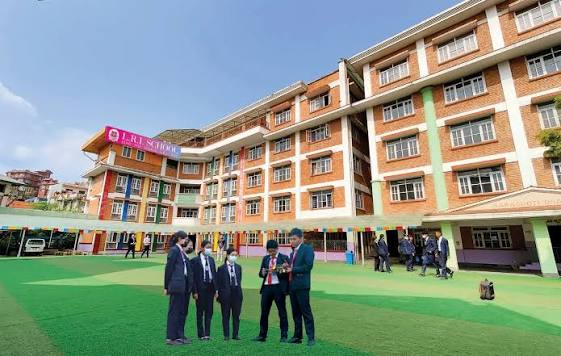
Established on February 24, 1988 (Falgun 12, 2044 B.S.), L.R.I. School (Learning Realm International School) is a trust-run, co-educational English-medium institution located at Kalanki, Kathmandu. Founded by educationist Shiv Raj Pant under the L.R.I. Education Foundation, the institution has developed an educational approach that emphasises academic achievement, individual potential, character development and preparation for a changing world.
The institution's educational philosophy focuses on developing both the intellectual and emotional abilities of students. It seeks to nurture individuals who can think independently, communicate effectively, demonstrate resilience and contribute responsibly to society.
L.R.I. School offers school-level education alongside higher-secondary programmes in Science, Management and Law. Its academic environment is supported by specialised laboratories, ICT facilities, a resource centre, a library, sports infrastructure, student clubs and opportunities for academic and cultural engagement.
The institution expresses its educational aspiration through the motto, "Lead the World L.R.I. Way," reflecting its emphasis on preparing students for wider academic and social responsibilities.
LAWDiscovering talents;+1
Academic Programmes
L.R.I. School provides education across different stages, with its higher-secondary division offering programmes in Science, Management and Law under the National Examination Board (NEB) framework.
The institution's academic approach emphasises the development of subject knowledge alongside analytical thinking, practical learning, communication and individual growth.
School-Level Education: Building a Strong Academic Foundation
The school-level years are important in shaping a child's intellectual abilities, habits and understanding of the world.
L.R.I. School's institutional philosophy places importance on identifying students' individual potential and providing an environment in which their abilities can develop.
Its educational objectives include strengthening academic competence, encouraging creativity, developing physical and social abilities and preparing students to respond to real-life situations.
The school calendar identifies academic and developmental activities across Grades 1–10, including handwriting competitions, creative art and craft contests, spelling competitions, storytelling, book talks, debates, quizzes, science exhibitions and special assemblies.
Such activities provide opportunities for students to develop communication skills, creativity, confidence and an interest in learning beyond prescribed textbooks.
The institution's approach recognises that early education should provide more than academic instruction. It should also help children develop discipline, curiosity, social awareness and the confidence to explore their abilities.
LAWDiscovering talents;+1
Science: Exploring the Foundations of Scientific Knowledge
The +2 Science programme is designed for students interested in scientific investigation and further studies in medicine, engineering, technology and related disciplines.
Science education requires students to understand theories, examine evidence, conduct experiments and apply mathematical reasoning to different problems.
At L.R.I., the Science programme combines theoretical instruction with practical learning through laboratory activities.
Grade XI subject composition:
Compulsory English
Compulsory Nepali
Compulsory Mathematics
Physics
Biology or Computer Science
Chemistry
Grade XII subject composition:
Compulsory English
Compulsory Nepali
Compulsory Mathematics
Physics
Biology or Computer Science
Chemistry
The programme provides students with a foundation in the physical and biological sciences while developing their analytical and problem-solving abilities.
Laboratory activities are an important part of scientific education. They allow students to observe scientific principles in practice, understand experimental procedures and connect classroom theories with real-world phenomena.
For students planning to pursue medicine, engineering, information technology and other scientific disciplines, the programme offers an academic foundation for further study, subject to the admission requirements of their chosen institutions.
LAWDiscovering talents;
Management: Understanding Business and Organisational Practices
The +2 Management programme is intended for students interested in business, accounting, economics, entrepreneurship and organisational administration.
Management education introduces students to the principles that guide businesses and institutions. It also develops numerical reasoning, analytical thinking, communication and decision-making abilities.
Grade XI subject composition:
Compulsory English
Compulsory Nepali
Compulsory Social Studies and Life Skill Education or Mathematics
Accounting
Business Studies or Computer Science
Economics
Business Mathematics
Grade XII subject composition:
Compulsory English
Compulsory Nepali
Compulsory Social Studies and Life Skill Education or Mathematics
Accounting
Business Studies or Computer Science
Economics
Business Mathematics
The programme provides students with an understanding of financial activities, business operations and economic relationships.
Management education is relevant to a wide range of professional fields, including banking, finance, accounting, marketing, entrepreneurship and administration.
By studying these subjects, students can develop an academic foundation for further education in business and management-related disciplines.
LAWDiscovering talents;
Law: Understanding Legal Systems and Society
The +2 Law programme offers students an opportunity to explore legal principles and understand the relationship between law, institutions and society.
Law is closely connected with citizenship, constitutional responsibilities, individual rights, public administration and social justice. Studying legal subjects at the higher-secondary level can therefore help students develop an understanding of how societies organise relationships and resolve disputes.
Grade XI subject composition:
Compulsory English
Compulsory Nepali
Compulsory Social Studies and Life Skill Education
Jurisprudence and Legal Theories
Procedural Law
Constitutional Law
Grade XII subject composition:
Compulsory English
Compulsory Nepali
Compulsory Social Studies and Life Skill Education
Nepalese Legal System
Legal Drafting
Civil and Criminal Law and Justice
The programme introduces students to the theoretical and practical dimensions of legal education.
Through subjects such as constitutional law, jurisprudence, procedural law and legal drafting, students can begin to understand the structure of legal institutions and the principles that guide the administration of justice.
L.R.I. also identifies court-practice sessions as part of the academic exposure provided to Law students. Such activities can help students connect legal concepts with practical procedures.
For those interested in pursuing further studies in law, public administration, governance and related fields, the programme offers an early academic foundation.
LAWDiscovering talents;
From Classroom Learning to Practical Experience
An effective educational environment encourages students to participate actively in the learning process rather than remain passive recipients of information.
L.R.I. School emphasises collaboration, cooperation and what it describes as the spirit of friendship and growth through competition.
The institution organises a range of academic and co-curricular activities designed to encourage students to communicate ideas, work in teams and develop confidence.
These activities include:
Case study presentations
Panel discussions
Public speaking and elocution
Debates and poetry writing
Art and handicraft activities
Quiz competitions
Singing, dance and orchestra
Drama and mimicry
Educational excursions
Anchoring and event presentations
Such activities allow students to develop abilities that are not always measured through written examinations.
A debate encourages students to examine different perspectives. A case study requires them to understand a situation and consider possible solutions. Public speaking develops confidence and communication, while creative activities provide opportunities for self-expression.
The institution also participates in inter-school, national and international competitions in areas including sports, oratory, poetry recitation, quizzes, art, music, dance and swimming.
These experiences can help students understand the value of teamwork, discipline, preparation and healthy competition.
LAWDiscovering talents;+1
Laboratories, Technology and Academic Resources
Practical learning requires appropriate facilities and resources. For students to understand scientific concepts, develop technological skills and explore new ideas, educational institutions need to provide spaces that support experimentation and independent learning.
L.R.I. School identifies several specialised facilities designed to support different academic disciplines.
Science Laboratories
The institution maintains three dedicated laboratories for Physics, Chemistry and Biology. These laboratories provide spaces for practical activities and experimental learning.
For Science students, laboratory experience is important in understanding scientific principles, developing observation skills and becoming familiar with experimental procedures.
ICT Laboratories
The school identifies three ICT laboratories designed to support technology-based learning.
Computer education has become increasingly important across academic disciplines. Access to digital resources can help students conduct research, prepare presentations, develop technological skills and understand the applications of computing.
Robotics and Artificial Intelligence Laboratory
The Robotics Lab provides students with opportunities to explore robotics, programming and artificial intelligence.
These fields are increasingly relevant to contemporary education, particularly as automation, intelligent systems and digital technologies continue to influence different professional sectors.
A dedicated learning environment for robotics and AI can encourage students to approach technology through experimentation, design and problem-solving.
Mathematics Laboratory
The Mathematics Lab is designed to support the teaching and learning of mathematics through hands-on activities, interactive tools and real-world applications.
Such an environment can help students understand mathematical concepts beyond numerical exercises and explore their practical relevance.
L.B. Chand Media Resource Centre
The institution also identifies the L.B. Chand Media Resource Centre as an academic resource.
The centre provides access to literature across different subjects, reference materials, recreational reading books and English and Nepali newspapers.
A resource centre can encourage students to develop independent reading habits, expand their knowledge and explore subjects beyond their prescribed curriculum.
Together, these facilities support an educational environment in which theoretical learning can be complemented by practical activities, research and exploration.
LAWDiscovering talents;
Learning Through Leadership and Student Participation
Leadership is not developed through academic instruction alone. Students need opportunities to participate in decision-making, express opinions, organise activities and understand the responsibilities associated with collective action.
L.R.I. School provides a Student Parliament as a platform for developing leadership, communication and civic understanding.
The institution describes the Student Parliament as an opportunity for students to explore areas related to policymaking, diplomacy, governance and public administration.
Its activities include:
Model United Nations (MUN) sessions
Model parliamentary sessions
Orientation sessions with visiting delegates
Academic lectures and discussions
Presentations and institutional interactions
These activities can introduce students to democratic processes, international affairs, public institutions and the importance of informed participation.
The institution also organises court-practice sessions for Law students, creating opportunities to become familiar with legal procedures and professional practices.
Such platforms can help students understand that leadership involves more than holding a position. It requires responsibility, critical thinking, communication and the ability to work with others.
LAWDiscovering talents;
Student Clubs and Co-curricular Activities
Students have different interests, abilities and creative inclinations. A school environment that provides opportunities to explore these interests can contribute significantly to personal development.
L.R.I. School identifies several student clubs that encourage participation in academic, creative, environmental and social activities.
Its published clubs include:
Nature Club: Encourages awareness of the natural environment and environmental responsibility.
Innovative Club: Provides opportunities to explore ideas, creativity and innovation.
Creative and Arts Club: Supports artistic interests and creative expression.
Baa-gi-naa Club: Provides a platform for musical and cultural engagement.
Literary Club: Encourages literary interests, writing and creative expression.
Sports Club: Promotes sports participation and physical development.
Social Club: Encourages social interaction and collective activities.
Interact Club: Provides opportunities for service-oriented engagement and student participation.
Youth Red Cross Circle: Encourages humanitarian awareness and social responsibility.
These clubs are organised around students' interests and provide opportunities to explore abilities outside the regular academic timetable.
Participation in clubs can help students develop teamwork, organisational skills, confidence and a sense of responsibility towards their communities.
LAWDiscovering talents;
Music, Performing Arts and Creative Expression
Education should provide space for creativity alongside academic achievement.
L.R.I. School recognises music and performing arts as important elements of student development. Its specialised facilities include the Amber-Minami Music Conservatory and the Swojan Raghubansi Dance Studio.
The music conservatory is intended to support musical education and performing arts training. The dance studio provides a dedicated space for structured dance learning, including different styles such as modern, hip-hop, cultural and folk dance.
The school also includes music, singing, dance, orchestra, drama and other performing arts activities among its co-curricular offerings.
These opportunities can help students develop confidence, creativity, discipline and an appreciation of artistic traditions.
Creative education is valuable because it allows students to explore different forms of expression and discover abilities that may not become visible through conventional classroom activities.
Sports and Physical Development
Physical development is an essential part of a balanced educational experience. Sports encourage students to maintain fitness while developing discipline, perseverance, teamwork and respect for others.
L.R.I. School provides sports opportunities through its Sports Club, multipurpose ground and specialised playing areas.
Its published activities and competition records include:
Basketball
Volleyball
Football
Karate
Marathon
Swimming
Other indoor and outdoor sporting activities
The institution also identifies a specialised sports and play area with artificial turf, intended to provide opportunities for students to develop their sporting interests.
L.R.I. participates in different inter-school, national and international competitions. Its published institutional information highlights achievements in sports as well as cultural and academic competitions.
Such participation allows students to experience competition, learn from challenges and understand the importance of consistent practice.
Sports can also create a balance between academic responsibilities and physical well-being, contributing to a healthier school experience.
LAWDiscovering talents;
Technical and Vocational Learning
One of the distinctive features identified in L.R.I. School's institutional prospectus is its Technical and Vocational Centre.
The centre provides students with opportunities to explore practical skills in areas beyond conventional academic subjects.
Its listed areas include:
Culinary Arts
Fashion Designing
General electrical techniques
Plumbing skills
Technical and vocational education can help students understand how knowledge and practical skills are applied in everyday life and professional settings.
Introducing students to different vocational fields at an early stage can also broaden their understanding of career possibilities.
Such exposure is particularly relevant in a world where professional success increasingly requires a combination of academic knowledge, technical competence and practical problem-solving abilities.
LAWDiscovering talents;
International Collaboration and Global Exposure
Education increasingly requires students to understand cultures, ideas and developments beyond their immediate surroundings.
L.R.I. School identifies international collaboration as one of its institutional priorities. Its published prospectus lists academic and cultural partnerships with institutions in several countries.
The countries and institutions identified include:
China: Confucius Institute Headquarters, Beijing International Chinese College, Beijing No. 80 High School and other educational institutions.
Japan: Everest International School, Tokyo; Kumon Institute of Education, Osaka; and Gunma Symphony Orchestra, Tokyo.
India: Jain International Residential School, Bengaluru, and Seth Anandram Jaipuria School, Kanpur.
Malaysia: Chung Hua High School and SEGi University.
Indonesia: Sekolah Tinggi Desain Institute, Bali.
Thailand: Several schools and educational institutions.
South Korea: Schools and educational organisations in Daegu and other locations.
Russia: Educational institutions and teacher-development organisations.
United Kingdom: English in Chester Institute.
The institution also identifies the Confucius Classroom as a specialised facility established with cooperation from Chinese educational institutions. It supports foreign-language and cultural learning and provides access to online HSK and YCT examinations.
International educational relationships can provide opportunities for cultural exchange, language learning and exposure to different educational practices.
Such experiences can help students develop a wider understanding of the world and prepare them to engage with increasingly interconnected academic and professional environments.
LAWDiscovering talents;
Scholarships, Awards and Recognition
Recognising student achievement can encourage academic commitment, creativity and participation.
L.R.I. School has established different awards and scholarship schemes to acknowledge students' academic performance, extracurricular achievements and overall development.
Its published recognition programmes include:
Class Topper Award
Students securing the highest positions in different academic faculties are recognised with gold medals and commendation letters.
The institution's prospectus also describes tuition scholarships for the top three ranking students, with different levels of fee support.
L.R. Ratna
The L.R. Ratna is identified as one of the institution's prestigious awards. It recognises outstanding performance in board examinations and professional life.
Principal Award
This award recognises a student considered outstanding in academics, games and co-curricular activities during an academic year.
The institution also identifies several named awards established in recognition of individuals who have contributed to school development.
Scholarship Opportunities
L.R.I. identifies several scholarship categories, including:
Outstanding Merit Scholarship: 100 per cent tuition-fee waiver.
Merit Scholarship: 50 per cent tuition-fee waiver.
Privilege Scholarship: 25 per cent tuition-fee waiver.
Underprivileged Scholarship: 10 per cent waiver on tuition and registration fees.
Local Resident and Out-of-Valley Scholarship: 10 per cent tuition-fee waiver.
The institution also describes financial support for economically disadvantaged students and states that more than 10 per cent of pupils may receive full or partial fee support under its applicable arrangements.
Scholarship conditions and availability are subject to institutional policies and annual review.
LAWDiscovering talents;
A Supportive and Holistic Learning Environment
A student's development involves intellectual, emotional, physical and social dimensions. An effective educational institution should therefore provide an environment in which students can develop these abilities together.
L.R.I. School's educational philosophy places importance on both Intelligence Quotient (IQ) and Emotional Quotient (EQ).
The institution emphasises values such as integrity, resilience, empathy, cooperation and responsible citizenship.
Its stated educational objectives include developing competent human resources, nurturing individual talents, encouraging global perspectives and preparing students for the realities of a rapidly changing society.
The school is founded under the leadership of educationist Shiv Raj Pant, who established the institution in 1988. Its published +2 prospectus identifies Dr. Devkant Joshi as Principal.
The institution's approach to student development recognises that academic performance is only one dimension of education. Communication, creativity, emotional maturity, leadership and social responsibility are equally important in preparing young people for their future.
A supportive school environment can help students develop confidence, seek guidance and gradually become more independent in their academic and personal decisions.
LAWDiscovering talents;
Admission and Eligibility
L.R.I. School provides school-level education and higher-secondary programmes in Science, Management and Law.
For admission to Grade XI, the institution's published prospectus states that students who have passed the Secondary Education Examination (SEE) or an equivalent examination recognised by the Government of Nepal are eligible to apply.
Admission and programme selection are subject to the institution's prescribed procedures and applicable academic requirements.
Students considering the +2 programmes should pay particular attention to subject combinations, as the academic choices made in Grade XI and Grade XII can influence eligibility for further university studies.
The Science programme is relevant for students planning to pursue scientific and technological disciplines. Management offers a foundation for business-related studies, while Law provides an introduction to legal systems and institutions.
Prospective students and parents should confirm current admission schedules, subject combinations, scholarship conditions and fee structures directly with the school's administration.
LAWDiscovering talents;
More Than Academic Achievement
The purpose of school education extends beyond examination results. It is about helping children discover their abilities, develop confidence and acquire the knowledge and values needed to participate responsibly in society.
For students, the school years are a formative period. They are the years when curiosity develops into academic interests, personal abilities become more visible and young people begin to understand their responsibilities towards others.
L.R.I. School brings together academic programmes, specialised laboratories, technology-based learning, student leadership platforms, creative activities, sports, technical education and international exposure within its educational framework.
Its Student Parliament, academic clubs, music conservatory, vocational centre and specialised laboratories represent different dimensions of its approach to student development.
For parents evaluating a school, the important consideration is not simply the number of facilities or activities an institution offers. It is how effectively those resources contribute to a student's learning, confidence, interests and long-term development.
A good educational environment should allow students to ask questions, explore ideas, learn from mistakes and gradually recognise their potential.
L.R.I. School's institutional philosophy reflects this broader understanding of education. Its emphasis on intellectual and emotional development, leadership, creativity and global citizenship seeks to prepare students for responsibilities that extend beyond the classroom.
The school's motto, "Lead the World L.R.I. Way," captures its aspiration to develop individuals who can approach the future with knowledge, confidence, resilience and a sense of responsibility.
L.R.I. School at a Glance
Particulars | Details |
|---|---|
Institution | Learning Realm International (L.R.I.) School |
Established | February 24, 1988 |
Founder | Shiv Raj Pant |
Location | Kalanki, Kathmandu, Nepal |
Management | L.R.I. Education Foundation / Trust |
Institution Type | Co-educational, English-medium |
Educational Levels | School Level and +2 |
+2 Programmes | Science, Management and Law |
Affiliation | National Examination Board (NEB) |
Academic Approach | Classroom learning, practical activities, projects, presentations and collaborative learning |
Academic Facilities | Physics, Chemistry and Biology laboratories, ICT labs, Mathematics Lab, Robotics and AI Lab, Media Resource Centre |
Specialised Facilities | Amber-Minami Music Conservatory, Dance Studio, Technical and Vocational Centre |
Student Development | Student Parliament, Model United Nations, clubs, debates, competitions and leadership activities |
Sports | Basketball, volleyball, football, karate, marathon and swimming |
Creative Activities | Music, dance, drama, poetry, art and orchestra |
International Exposure | Educational collaborations with institutions in China, Japan, India, Malaysia, Indonesia, Thailand, South Korea, Russia and the UK |
Scholarships | Merit-based, privilege and need-based scholarships |
Principal (as identified in the published +2 prospectus) | Dr. Devkant Joshi |
Institutional Motto | Lead the World L.R.I. Way |
Latest from L.R.I. School
Nothing published for this institution yet.