

Little Angels’ School
Nurturing Knowledge, Character and Future Potential
0
Stories
0
Activities
0
Events
0
Photos
About Little Angels’ School
About Little Angels’ School
Education is more than the acquisition of knowledge or preparation for examinations. It is a process through which young people develop their abilities, discover their interests and learn to engage thoughtfully with the world around them. A meaningful education should provide a strong academic foundation while encouraging curiosity, creativity, confidence, discipline and a sense of responsibility.
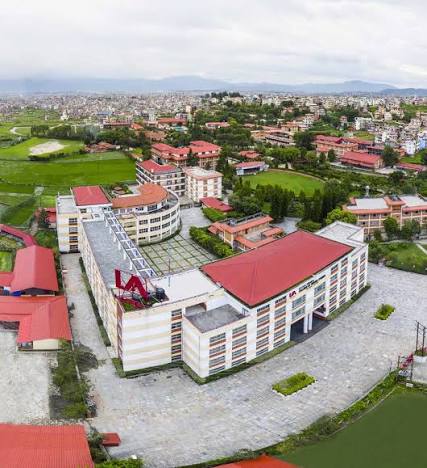
Little Angels’ School (LAS), located in Hattiban, Lalitpur, Nepal, is a private educational institution established in 1981. Founded by educationists Bidya Limbu and her colleague, the institution began with 65 day scholars in a rented house. Over the years, it has expanded into a major educational establishment offering schooling and higher-secondary education through different divisions under the wider Little Angels’ Education Group.
The institution's educational philosophy emphasises academic excellence, personal development and the cultivation of knowledge, skills and positive attitudes. Its stated vision is to create an educational environment in which children from diverse communities can acquire the knowledge and skills needed to meet the challenges of a technology-supported modern world.
The school follows a balanced educational approach that combines academic learning with extracurricular activities. It seeks to promote students' cognitive, social, physical and emotional development through a structured curriculum, qualified teaching staff, learning resources and opportunities for participation beyond the classroom.
The institution's motto, “Wisdom is Divine,” reflects its emphasis on the broader value of learning and the development of thoughtful, capable individuals.
For students and parents, choosing a school involves more than examining examination results or available facilities. It also requires considering the teaching approach, academic environment, student support and opportunities available for individual growth. Little Angels’ School seeks to bring these elements together through its academic programmes, campus resources and emphasis on holistic education.
Academic Programmes
School-Level Education: Building a Strong Foundation
The school years provide the foundation for a student's academic journey. During this period, children develop essential literacy, numeracy, communication and problem-solving skills while gradually discovering their interests and abilities.
Little Angels’ School offers education from Grade 1 to Grade 10. Its educational approach focuses on developing subject knowledge and conceptual understanding, helping students gain confidence in their abilities and prepare for subsequent stages of education.
Effective school education requires more than memorising information. Students need opportunities to ask questions, explore ideas, participate in discussions and apply what they learn to practical situations.
Little Angels’ School emphasises a well-rounded curriculum that combines classroom instruction with co-curricular and extracurricular activities. Such activities can encourage students to develop communication skills, creative thinking, teamwork and self-confidence alongside their academic knowledge.
The school also highlights technology-supported teaching and modern infrastructure as elements of its learning environment. These resources can provide additional ways to present information and support students' engagement with different subjects.
A strong school-level education can help students develop the habits of independent learning, discipline and curiosity that become increasingly important as they progress towards secondary and higher-secondary education.
Day Boarding: Combining Academic Learning with Structured Activities
Little Angels’ Day Boarding provides an educational option that combines regular schooling with an extended daily schedule and structured activities.
The institution describes its day-boarding programme as offering both Nepal's national curriculum and Cambridge curriculum options to meet students' educational needs. Its academic structure includes primary, lower-secondary and upper-secondary stages, with the specific subjects and age groups determined by the relevant programme.
Day boarding can provide students with additional time for guided learning, creative activities, sports and personal development within a structured environment. Such arrangements may also offer opportunities for students to participate in activities that complement their regular classroom education.
The institution highlights music, sports, dance, robotics-related activities and student well-being programmes among its wider learning opportunities. Its published information also identifies counselling and communication with parents as parts of student support.
For families considering day boarding, it is important to confirm the current schedule, curriculum, activities and applicable fees directly with the institution.
+2 Science: Developing Scientific Understanding
Science education provides students with a foundation for understanding the natural world through observation, experimentation, evidence and logical reasoning. It is particularly relevant to students interested in medicine, engineering, information technology and other scientific and technological disciplines.
Little Angels’ Secondary School offers a +2 Science programme under the National Examination Board (NEB) framework. According to its published programme information, the programme includes compulsory English and Nepali, Mathematics, Physics, Chemistry and a choice between Biology and Computer Science.
The programme aims to develop students' understanding of scientific principles while preparing them for further academic study. Science requires learners to interpret information, examine evidence and apply knowledge to unfamiliar problems.
Laboratory work is an important part of this process. Practical activities can help students connect theoretical concepts with observation and experimentation, while problem-solving exercises encourage systematic reasoning.
The institution highlights its Science laboratories, experienced teaching staff and computer facilities as resources supporting the programme. It also identifies preparation for further study in scientific and professional disciplines as part of its academic provision.
After completing Grade 12, students may explore further education in fields such as medicine, engineering, computer science, agriculture and other scientific disciplines, subject to their subject choices and the admission requirements of the institutions they select.
For students considering the Science stream, reviewing subject combinations and understanding the requirements of intended university programmes are important steps in academic planning.
+2 Management: Understanding Business and Economic Activity
Management education introduces students to the principles that shape businesses, organisations, financial activities and economic decisions. It can provide a useful foundation for learners interested in accounting, finance, marketing, economics, entrepreneurship and business administration.
Little Angels’ Secondary School offers a +2 Management programme under the NEB framework. Its published curriculum identifies subjects including Accountancy, Economics, Business Studies, Computer Science, Business Mathematics and Social Studies.
These subjects provide different perspectives on how organisations function. Accountancy introduces students to financial recording and reporting, while Economics examines markets, resource allocation and economic behaviour. Business Studies helps students understand organisational structures and commercial activities.
Computer Science and Business Mathematics can support the development of digital and quantitative skills relevant to contemporary business environments.
Management education also encourages analytical thinking, communication and decision-making. Assignments, presentations and group work can help students organise information, explain ideas and work collaboratively.
After Grade 12, students may pursue further education in fields such as business administration, business studies, accounting, finance, economics and related disciplines, subject to the admission requirements of the respective institutions.
For students interested in business and entrepreneurship, Management can provide an academic foundation for understanding both the financial and organisational dimensions of professional life.
+2 Hotel Management: Exploring Hospitality and Service
Hospitality is an important field of study for students interested in hotels, tourism, food services and related industries. Hotel Management introduces learners to the principles and practices involved in providing hospitality services and managing service-oriented organisations.
Little Angels’ Secondary School identifies Hotel Management among its +2 programme offerings. Its published subject structure combines hospitality-related study with subjects such as Accountancy, Economics, Business Studies and Business Mathematics, alongside compulsory subjects.
The programme can provide students with an introduction to the operational and organisational aspects of hospitality. Understanding service standards, customer expectations, financial management and organisational practices can be useful for students considering further study in hospitality and tourism.
Practical learning is particularly relevant in this field because hospitality work involves the application of knowledge in real-world situations. Students benefit from opportunities to understand service procedures, communicate effectively and recognise the importance of teamwork.
After completing Grade 12, students may explore further education in hotel management, hospitality management, tourism and related disciplines, depending on programme eligibility and admission requirements.
Students should confirm the current subject combinations and the practical components offered by the college before enrolling.
Cambridge International A Levels: An Alternative Academic Pathway
In addition to its NEB programmes, the wider Little Angels’ educational network offers Cambridge International A Levels through its A-Level division.
A Levels provide an internationally recognised qualification administered by Cambridge International Education. The programme allows students to concentrate on selected subjects according to their academic interests and future plans.
The A-Level pathway can suit students considering university education in Nepal or abroad. Subject selection is particularly important because universities may specify particular A-Level subjects and grades for admission to different disciplines.
The programme places emphasis on subject knowledge, analytical ability and independent learning. Students are expected to develop a deeper understanding of their chosen subjects and apply their knowledge to different questions and problems.
Prospective students should consult the current A-Level prospectus to confirm the subjects available, programme structure, admission criteria and examination arrangements.
It is also important to distinguish the A-Level division from the NEB-affiliated +2 programme, as the qualifications follow different curricula and assessment systems.
Teaching and Learning: A Balanced Educational Approach
Little Angels’ School describes its educational approach as a combination of a rigorous curriculum, qualified teaching, modern learning resources and extracurricular activities.
The institution emphasises conceptual understanding rather than relying solely on memorisation. This approach is intended to help students develop a clearer understanding of their subjects and become more confident in applying their knowledge.
Teaching can become more meaningful when students have opportunities to ask questions, participate in discussions and work on projects. Practical activities allow learners to explore how concepts operate beyond the textbook, while presentations and group assignments encourage communication and cooperation.
Technology-supported teaching can also provide different ways of presenting information and engaging with academic material. Digital resources can support research, classroom discussions and independent learning when integrated appropriately into the curriculum.
The effectiveness of any teaching approach depends on how consistently it is implemented and how well it responds to students' learning needs. Constructive feedback, regular assessment and access to academic guidance can help learners identify areas for improvement.
Little Angels’ stated approach seeks to bring together academic discipline and wider development, helping students strengthen their knowledge while building the skills needed for further education.
Library, Laboratories and Learning Resources
An effective educational environment requires access to information, appropriate facilities and spaces that support both individual study and collaborative learning.
Little Angels’ School identifies a spacious library, computer laboratories, Science laboratories, an auditorium and other academic facilities among its resources.
The library provides access to books across different genres, including academic materials, reference books and literature. Such resources can support classroom learning, independent study and the development of reading habits.
Reading beyond prescribed textbooks can help students expand their knowledge, encounter different perspectives and develop a broader understanding of subjects. It can also encourage curiosity and strengthen language and communication skills.
The institution's computer laboratories are intended to support students' academic work and digital learning. Access to computers and internet resources can assist with research, assignments, presentations and the development of digital literacy.
Science laboratories provide opportunities for students to conduct practical activities and connect theoretical concepts with observation and experimentation. Such facilities are particularly relevant for learners pursuing Science at the higher-secondary level.
The school also identifies an auditorium with a seating capacity of 500. Its published facilities information describes the auditorium as a venue for assemblies, celebrations, award ceremonies, drama and other school activities.
Together, these facilities are intended to support a learning environment in which students can develop academic knowledge, practical skills and wider interests.
Sports and Physical Development
Physical activity is an important part of a student's education. Sports can help young people develop fitness, discipline, teamwork and confidence while providing a balance to academic study.
Little Angels’ School places importance on sports and identifies a range of activities and facilities within its educational environment. Its published information includes basketball, football, futsal, volleyball, cricket, table tennis, lawn tennis, swimming, karate and other sporting activities.
Participation in sports can help students learn to work towards shared goals, follow rules and respond constructively to success and setbacks. Team sports encourage cooperation, while individual activities can help develop concentration and personal responsibility.
The institution also reports that its students have achieved recognition in sporting events at national and international levels. Such achievements are presented by the school as part of its wider record of student participation and development.
The value of sports extends beyond competition. Regular participation can contribute to healthy habits, social interaction and the development of qualities that remain useful throughout life.
Little Angels’ approach recognises physical activity as a complement to academic learning rather than a separate concern.
Creative Arts, Music and Cultural Activities
Education also involves opportunities for creative expression. Music, dance, drama and visual arts can help students explore their interests, communicate ideas and develop confidence in their abilities.
Little Angels’ School offers a range of creative and performing arts activities. Its published information identifies instrumental and vocal music, dance, drama, singing competitions, talent programmes and poetry recitation among its student activities.
The music programme includes instruments such as the violin, flute, guitar, drums and other traditional and contemporary instruments. Dance activities include cultural, modern and classical forms.
Participation in the arts can help students develop concentration, discipline and an appreciation of different forms of expression. Performing before an audience can also encourage confidence and communication skills.
Cultural programmes provide opportunities for students to engage with artistic traditions and learn to appreciate diverse forms of cultural expression.
These activities can contribute to a more balanced educational experience by allowing students to develop interests and abilities beyond conventional academic subjects.
Co-curricular Activities and Student Engagement
Co-curricular activities complement classroom learning by giving students opportunities to investigate questions, express ideas and apply their knowledge in different settings.
Little Angels’ School identifies general knowledge quizzes, debates, declamation competitions, art and poster competitions, science exhibitions, spelling competitions, creative writing and project work among its school activities.
Debating and declamation encourage structured thinking and effective communication. Science exhibitions provide opportunities for students to present investigations and demonstrate scientific concepts, while creative writing allows learners to develop their written expression.
Projects encourage students to research a topic, organise information and present their findings. Fundraising and charity events can also provide opportunities to participate in community-oriented activities.
The wider Little Angels’ educational network highlights initiatives involving robotics, technology, student well-being and international programmes. Availability varies across the institution's divisions and should be confirmed with the relevant campus.
Such activities can support the development of teamwork, organisation, leadership and independent thinking. They also help students discover interests that may influence their future academic choices.
The value of co-curricular participation depends on students having meaningful opportunities to contribute, receive guidance and learn from their experiences.
Student Well-being and Counselling
A supportive educational environment should recognise that students' academic progress is influenced by their social, emotional and personal circumstances.
Little Angels’ School identifies counselling as part of its wider student support approach. Its published school-life information describes counselling services intended to support students' academic progress, personal development and social relationships.
Counselling can help students address study-related challenges, develop better time-management habits and seek guidance when they experience difficulties with peers or other aspects of school life.
The institution also emphasises communication between teachers and parents or guardians. Such communication can help families understand students' progress and work with the school to address areas requiring attention.
Student well-being is particularly important during periods of transition, when learners are adapting to new academic demands and developing greater independence.
A balanced educational approach recognises that academic achievement and personal development are closely connected. Appropriate guidance and a supportive environment can help students develop confidence and resilience.
Boarding Facilities and Residential Life
Little Angels’ Secondary School offers residential facilities for students who require accommodation during their studies. The institution describes separate hostel facilities for boys and girls, along with dining, recreation and academic support arrangements.
Its published boarding information identifies supervised accommodation, dining facilities, a water treatment plant, access to learning resources and opportunities for sports and extracurricular activities.
Residential life can provide students with opportunities to develop independence, responsibility and cooperation. Living alongside other students also requires learners to respect shared spaces, follow routines and develop constructive relationships.
The institution highlights access to sports facilities, including tennis, football, basketball, table tennis and other activities, alongside cultural programmes, outings and excursions.
Its boarding information also refers to academic assistance and counselling support for resident students.
For families considering residential education, it is important to confirm the current hostel arrangements, fees, supervision, food provision, health support and rules directly with the institution.
Admission and Scholarships
Admission to a school or college is an important step for students and families. Understanding the eligibility criteria, required documents and available financial support can help applicants make informed decisions.
Little Angels’ School states that admission involves a written examination followed by an interview with parents or guardians for the relevant school-level programmes. Its published information identifies merit-based and need-based scholarships for deserving students.
Admission procedures differ across the institution's divisions and academic levels. The requirements for Grades 1–10 may not be the same as those for +2 Science, Management, Hotel Management or Cambridge A Levels.
Prospective students should therefore consult the relevant division for current admission criteria, subject combinations, application dates, required documents, fees and scholarship conditions.
Scholarship availability and eligibility may also vary by programme and academic session. Families should confirm the application process and any conditions attached to financial assistance before making enrolment decisions.
Clear information about admission and scholarships helps students choose a programme that matches their interests, academic preparation and circumstances.
Preparing Students for Further Education and Future Opportunities
The purpose of education is not simply to complete a curriculum or obtain a qualification. It is also to help students develop the knowledge, skills and confidence needed to continue learning and make informed decisions.
Little Angels’ School provides educational pathways through school-level education, higher-secondary programmes and the wider group's A-Level provision. Its academic approach emphasises conceptual understanding, practical learning, student participation and personal development.
Students completing +2 Science may consider further studies in scientific, medical, engineering and technological disciplines. Management students may explore business, accounting, finance and related fields, while Hotel Management can support progression towards hospitality and tourism studies.
Students following the Cambridge A-Level pathway can explore university options according to their chosen subjects and examination results.
The opportunities available to individual students depend on their academic performance, subject combinations, entrance examinations and the admission requirements of the institutions they select.
Academic guidance can help students understand these requirements and explore the options that best match their interests and abilities.
The development of transferable skills is equally important. Communication, research, collaboration, problem-solving and independent study can support students across a wide range of university programmes and professional settings.
More Than Examination Results
Academic results are an important part of a school's record, but they do not represent the entirety of a student's education.
Little Angels’ School highlights its academic achievements, modern infrastructure and extracurricular activities as key elements of its institutional identity. Its educational philosophy emphasises the development of students' intellectual abilities alongside their social, physical and emotional growth.
For parents and students considering the institution, it is useful to examine the teaching approach, available academic programmes, student support, facilities and opportunities for participation. Current admission requirements, fees and programme details should also be confirmed directly with the relevant division.
A meaningful educational environment should help students recognise their strengths, address their weaknesses and develop the confidence to explore new ideas. It should also encourage them to respect others, take responsibility and become independent learners.
Little Angels’ School's motto, “Wisdom is Divine,” reflects an educational ideal that extends beyond academic qualifications. Knowledge becomes more valuable when students learn to apply it thoughtfully, use it responsibly and continue learning throughout their lives.
For students, the years spent at school and college can become a foundation for further education, personal growth and responsible participation in society.
Little Angels’ School at a Glance
Institution: Little Angels’ School (LAS)
Established: 1981
Location: Hattiban, Lalitpur, Nepal
Educational Network: Little Angels’ Education Group
School-Level Education: Grades 1–10
Higher-secondary Programmes: Science, Management and Hotel Management
International Qualification: Cambridge International A Levels through the group's A-Level division
Affiliation: National Examination Board (NEB) for +2 programmes; Cambridge International Education for A Levels
Academic Facilities: Library, computer laboratories, Science laboratories, auditorium and e-library resources
Sports and Recreation: Basketball, football, futsal, volleyball, cricket, table tennis, lawn tennis, swimming and martial arts
Creative Activities: Music, dance, drama, singing, talent programmes and poetry recitation
Student Development: Debates, quizzes, science exhibitions, creative writing, project work, cultural programmes and counselling
Boarding: Separate hostel facilities for boys and girls, according to the school's published information
Scholarships: Merit-based and need-based scholarships
Contact & Leadership
Latest from Little Angels’ School
Nothing published for this institution yet.