

National College
For Those Who Think Differently.
0
Stories
0
Activities
0
Events
0
Photos
About National College
About National College
Kathmandu — Choosing a college involves more than selecting a degree. The nature of its academic programmes, opportunities for practical learning, exposure to different perspectives, and encouragement of independent thinking all contribute to a student's educational experience. For students interested in understanding society, development, human behaviour, finance and international affairs, an interdisciplinary learning environment can provide a valuable foundation for further study and professional life.
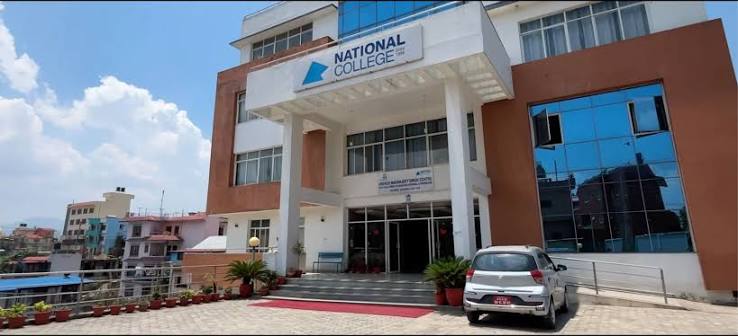
Located in Pragati Tol, Dhumbarahi, Kathmandu, National College is a higher education institution offering specialised undergraduate programmes affiliated with Kathmandu University (KU). The college focuses on academic disciplines that examine social transformation, economic development, financial systems, human behaviour and international relations. Its current academic portfolio includes five bachelor's-level programmes: Development Studies, Development Finance, Social Sciences, Psychology, and International Relations and Diplomacy.
National College emphasises interdisciplinary education, research, field studies and practical engagement. Its academic approach encourages students to examine contemporary issues from different perspectives and connect classroom knowledge with the realities of communities, institutions and the wider world.
Academic Programs
National College offers five undergraduate programmes affiliated with Kathmandu University. Each programme has a distinct academic focus, providing students with opportunities to pursue their interests in development, finance, social sciences, psychology and international affairs.
Bachelor's-Level Programs
Bachelor in Development Studies (BDevS)
The Bachelor in Development Studies is a four-year interdisciplinary programme focusing on social, economic and environmental development. It examines the policies, institutions and interventions that influence social change and people's quality of life.
The curriculum integrates subjects such as Economics, Sociology, Environmental Studies, Development Management and Research Methods. Students explore issues including poverty, inequality, gender and social inclusion, climate change, community development, governance, migration and sustainable development.
The programme also emphasises field engagement, research, case studies and project work. It is intended for students interested in working in development organisations, government agencies, NGOs, INGOs, research institutions and community-based organisations.
Bachelor in Development Finance (BDFin)
The Bachelor in Development Finance is a four-year undergraduate programme designed to connect financial knowledge with economic and social development. It examines how financial institutions, policies and financial services can contribute to inclusive and sustainable economic growth.
The programme combines foundations in Economics, Finance and Management with specialised areas such as microfinance, development economics, digital finance, financial technology, climate finance and green financing. Its curriculum also includes emerging areas such as blockchain applications, artificial intelligence and data science in development.
Through case studies, applied projects and data-based analysis, students develop an understanding of financial systems and their role in addressing development challenges. The programme is relevant to students interested in careers in financial institutions, development banks, microfinance organisations, impact investment, public-sector agencies and research.
Bachelor of Social Sciences (BoSS)
The Bachelor of Social Sciences is a four-year multidisciplinary programme that examines individuals, communities, institutions and society through different academic perspectives.
The programme integrates Sociology, Anthropology, Cultural Studies, Political Science and Psychology with Public Policy and research methods. Students study issues related to social structures, culture, identity, governance, citizenship, inequality, migration, gender, social justice and contemporary social change.
The curriculum encourages students to develop analytical and research skills through qualitative and quantitative methods, fieldwork, case studies and community engagement. It is suitable for students interested in social research, public policy, community development, media and communication, human resources, NGOs and INGOs, and further academic study in the social sciences.
Bachelor of Psychology (BPsych)
The Bachelor of Psychology is a four-year undergraduate programme focusing on the scientific study of human behaviour, cognition, emotions and mental processes. It introduces students to different branches of psychology while developing their understanding of individuals and human relationships.
The curriculum covers areas such as Cognitive Psychology, Social Psychology, Developmental Psychology, Abnormal Psychology, Counselling, Psychological Research and Statistics. Students also engage in research projects, counselling-related practical work, community projects and internship activities.
The programme places emphasis on ethical practice, research skills, communication and an understanding of psychological issues within social and cultural contexts. Graduates may pursue further studies in clinical, counselling, educational, organisational or research psychology. The academic foundation may also be relevant to work in education support, human resources, community organisations and well-being services.
Bachelor in International Relations and Diplomacy (BIRD)
The Bachelor in International Relations and Diplomacy is a four-year interdisciplinary undergraduate programme designed to develop students' understanding of international affairs, global politics and diplomatic relations. The programme comprises 120 credits.
Its academic areas include international relations theory, global governance, international law, international political economy, foreign policy and diplomacy. It also examines contemporary issues such as climate change, migration, cybersecurity, international cooperation and global security.
The programme encourages students to analyse the changing international environment and understand how political, economic, legal and institutional factors shape relations between countries. It is particularly relevant to students interested in diplomacy, international organisations, public policy, international development, research and postgraduate study in global affairs.
Teaching Approach & Academic Development
National College describes its educational philosophy as interdisciplinary and research-oriented. Its approach brings together academic perspectives from different fields to help students understand complex social, economic and institutional issues.
The college emphasises classroom discussions, independent research, assignments, field studies, workshops and seminars. Students are encouraged to examine contemporary issues, question established assumptions and develop analytical approaches to real-world challenges.
Field-based learning is an important part of the college's academic approach, particularly in programmes related to development and social sciences. Students have opportunities to engage with communities, institutions and different geographical settings as part of their learning experience.
The institution also highlights interaction between students and faculty members, group work, independent project work and exposure to national and international academic activities. These approaches are intended to strengthen research capabilities, communication, critical thinking and practical understanding.
Learning Beyond the Classroom
Student learning at National College extends beyond regular classroom activities through field studies, educational visits, guest lectures, workshops, cultural programmes and exchange opportunities.
The college's published activities include field studies in locations such as Pokhara and Chitlang, heritage walks to Patan Durbar Square, discussions on democracy and public affairs, and interactions with professionals from different sectors. Such activities provide opportunities for students to connect academic concepts with social and institutional realities.
The college also organises guest sessions and knowledge-sharing programmes. Examples include discussions on banking and financial technology with professionals from eSewa, sessions on journalism and development communication, and academic interactions with researchers and practitioners.
International exposure is another part of its student-development activities. The college lists exchange opportunities involving institutions and academic partners in different countries, including programmes connected with Erasmus+ and Japan-related academic exchanges.
These activities encourage students to develop broader perspectives, engage with different communities and understand issues beyond the boundaries of their individual disciplines.
Facilities & Student Life
National College provides an academic environment focused on undergraduate education, research and student engagement. Its published institutional information highlights several resources and opportunities supporting academic and extracurricular activities.
Academic Resources: The college supports students through academic materials, research-oriented learning and access to institutional publications. Its academic approach encourages independent study and engagement with contemporary research.
Field Study Opportunities: Field visits and community engagement form part of the learning experience, particularly for students studying development and social sciences. These activities help students observe social, economic and environmental issues in practical settings.
Workshops and Seminars: The college organises academic discussions, guest lectures, workshops and seminars involving faculty members, researchers, professionals and invited speakers.
Student Clubs: The college provides student-led clubs and opportunities for participation in extracurricular activities. These activities encourage students to engage in areas beyond their academic programmes and develop organisational and interpersonal skills.
International Exchange: Exchange programmes provide opportunities for academic interaction and cross-cultural learning. The college's published information identifies international partnerships and student exchange activities involving institutions in different countries.
Research and Publication: Research is an important part of the college's academic identity. The institution has published Samriddhi: Journal of Development Studies, providing an academic platform for research and discussions on development-related subjects.
These opportunities contribute to an educational environment in which students can combine academic study with research, field experience and wider engagement.
Student Support & Career Preparation
National College emphasises research, practical exposure and academic guidance as part of its approach to student development. Its programmes are designed to provide subject-specific knowledge while developing analytical, communication, research and problem-solving skills.
The college's academic programmes also offer different professional pathways according to students' interests.
Development Studies graduates may explore opportunities in development organisations, NGOs, INGOs, government agencies, community development and research. Development Finance provides an academic foundation for work in financial institutions, development finance, microfinance, public-sector organisations and research. Social Sciences offers pathways in social research, public policy, community engagement, media and communication, and human resources.
Psychology graduates may pursue further academic qualifications or explore opportunities in research, education support, community services, human resources and well-being-related organisations. International Relations and Diplomacy provides a foundation for further study and professional interests in international affairs, diplomacy, policy analysis and global institutions.
The college's 2026 admission information also highlights scholarship support for eligible students. Applicants should contact the admissions office for details about available scholarships, selection criteria and financial support.
Admission
National College follows an admission process for its Kathmandu University-affiliated undergraduate programmes. The college provides an online enquiry and application facility through which prospective students can seek information about programme suitability, eligibility, required documents and scholarships.
The published admission process generally includes the following stages:
Application: Prospective students submit an application or admission enquiry.
Entrance Examination: Applicants are required to appear in the Kathmandu University School of Arts Admission Test (KUSAAT), according to the applicable admission requirements.
Interview: Candidates who meet the entrance requirements may be invited for an interview.
Result: The college publishes or communicates the selection result to applicants.
Enrolment: Selected students complete the required documentation and admission formalities.
For bachelor's-level programmes, applicants are generally required to have completed Grade 12 or an equivalent qualification from a recognised educational board. The college's programme information specifies a minimum aggregate of 40% or an equivalent qualification for the Bachelor in International Relations and Diplomacy. A-Level applicants are required to meet the stated subject-grade requirements. Entrance examination and merit-based selection requirements also apply.
Eligibility criteria may differ by programme and admission year. Prospective students should contact the college to confirm the current KUSAAT requirements, application deadlines, required documents, tuition fees, scholarship provisions and available seats before applying.
National College at a Glance
Feature | Details |
|---|---|
Established | 1996 |
Location | Pragati Tol, Dhumbarahi, Kathmandu, Nepal |
Institution Type | Private higher education institution |
University Affiliation | Kathmandu University (KU) |
Academic Level | Bachelor's Degree |
Academic Programmes | Development Studies, Development Finance, Social Sciences, Psychology, International Relations and Diplomacy |
Programme Duration | Four years |
Academic Focus | Development, finance, social sciences, psychology and international relations |
Teaching Approach | Interdisciplinary, research-oriented and field-based learning |
Student Development | Field studies, workshops, seminars, guest lectures and exchange programmes |
Research Publication | Samriddhi: Journal of Development Studies |
International Exposure | Student exchange and international academic partnerships |
Admission Test | Kathmandu University School of Arts Admission Test (KUSAAT) |
Scholarships | Scholarship support available; conditions apply |
Contact Number | 01-4520871, +977-9844186272 |
Website |
Contact & Leadership
Latest from National College
Nothing published for this institution yet.