

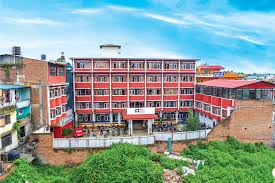

New Summit Secondary School
Aim High, Reach Higher.
0
Stories
0
Activities
0
Events
0
Photos
About New Summit Secondary School
New Summit Secondary School: A Progressive Approach to Child-Centred Education
Education during childhood lays the foundation for a person's intellectual, emotional, social and creative development. The early years of schooling are particularly important because they shape how children communicate, explore ideas, interact with others and understand the world around them.
A meaningful school experience should therefore extend beyond textbooks and examinations. It should encourage curiosity, creativity, independent thinking, teamwork and the confidence to explore new possibilities. The learning environment, teaching approach, teachers' expertise and opportunities for participation all contribute to this development.
Located at Shantinagar Gate, New Baneshwor, Kathmandu, The New Summit Secondary School is an educational institution that follows Nepal's national curriculum while drawing inspiration from the Early Years Foundation Stage (EYFS) framework of the United Kingdom.
The school describes itself as a progressive model institution that places children's learning at the centre of its educational practices. Its approach emphasises designing activities that allow students to participate actively, explore their interests and develop leadership abilities through collaborative learning.
The institution's educational philosophy recognises that children learn in different ways and at different stages of development. Providing opportunities for exploration, participation and individual growth is therefore an important part of its approach.
The school also identifies trained educators, learning-focused classroom practices and co-curricular and extracurricular activities as important elements of its educational environment.
Academic Approach: Learning Through a Progressive Model
The New Summit Secondary School follows Nepal's national curriculum while incorporating educational ideas inspired by the Early Years Foundation Stage (EYFS) framework.
EYFS is an educational framework originating in the United Kingdom that emphasises children's development through purposeful activities, exploration, interaction and play-based learning.
The approach recognises that early childhood education should support several dimensions of development, including communication, language, physical abilities, social interaction and intellectual growth.
The New Summit School identifies this framework as an inspiration for its early-years educational practices.
Its progressive educational model places emphasis on keeping children's learning at the centre of classroom activities. Rather than relying exclusively on conventional instruction, the school describes an approach in which activities are designed to encourage participation, teamwork and opportunities for students to lead their groups.
Such an approach can help children develop confidence, curiosity and a willingness to explore ideas independently.
The school also follows the national curriculum, providing an academic foundation within Nepal's formal school education system.
Child-Centred Teaching and Learning
Children develop knowledge and skills through different experiences. Some learn effectively through observation, others through discussion, practical activities, creative expression or collaborative tasks.
A child-centred educational approach recognises these differences and seeks to create opportunities for students to participate actively in the learning process.
The New Summit Secondary School states that its teaching practices are designed around the child's learning needs.
Its institutional approach emphasises activities that provide students with opportunities to lead teams and participate in collaborative experiences.
Team-based activities can help children develop communication, cooperation and problem-solving abilities. They also introduce students to the importance of sharing responsibilities, listening to others and respecting different perspectives.
The school identifies classroom teaching and pedagogical practices as important elements of its educational approach.
This focus on learning-oriented teaching recognises that the quality of education depends not only on what students study but also on how they experience the learning process.
Early Childhood Education and the EYFS Approach
Early childhood is a formative period during which children begin developing the foundations of communication, social interaction, physical coordination and independent thinking.
The Early Years Foundation Stage framework provides an educational perspective that recognises the importance of holistic development during these early stages.
The New Summit School identifies EYFS as an inspiration for its educational model, combining this approach with Nepal's national curriculum.
An educational environment influenced by EYFS generally gives importance to:
Communication and language development.
Personal, social and emotional development.
Physical development.
Early literacy and numeracy.
Creative expression and imagination.
Exploration and understanding of the surrounding world.
Through purposeful activities and interaction, children can gradually develop the confidence to express ideas, ask questions and engage with their surroundings.
The school's stated emphasis on child-focused activities and progressive classroom practices reflects the importance it places on early learning and individual development.
Learning Beyond the Classroom
Education becomes more engaging when students have opportunities to participate in activities beyond regular academic lessons.
The New Summit Secondary School considers co-curricular activities (CCAs) and extracurricular activities (ECAs) integral to student life.
Its approach recognises that these activities allow children to discover interests, develop talents and acquire skills that complement their academic learning.
The school identifies a variety of activities, including:
Football and basketball.
Karate and yoga.
Music and dance.
Scout activities.
Table tennis and badminton.
Swimming.
Clay work.
Art and craft.
These activities provide different forms of learning and participation.
Sports can help children develop physical coordination, discipline and teamwork. Music and dance encourage creative expression, while art and craft activities allow students to explore imagination and develop practical abilities.
Activities such as scouting can introduce students to teamwork, responsibility and community participation.
The inclusion of different activities also provides students with opportunities to explore interests beyond conventional academic subjects.
Sports and Physical Development
Physical development is an important part of childhood education. Participation in sports and physical activities helps children develop coordination, fitness, discipline and confidence.
The New Summit Secondary School identifies several sports and physical activities within its co-curricular and extracurricular offerings.
These include football, basketball, karate, yoga, table tennis, badminton and swimming.
Different activities provide different learning experiences. Team sports encourage cooperation and collective responsibility, while individual activities can help children develop concentration, self-discipline and perseverance.
Yoga can introduce students to physical awareness and controlled movement, while martial arts can encourage discipline and structured practice.
Providing opportunities for physical activities alongside academic learning can contribute to a more balanced educational experience.
Creative Expression Through Music, Dance and Art
Creativity is an important dimension of childhood development. Opportunities to engage in music, dance and visual arts can help students express ideas, explore emotions and develop confidence.
The New Summit Secondary School includes music, dance, art and craft among its extracurricular activities.
These activities allow students to explore different forms of creative expression and discover interests that may not emerge through conventional classroom learning.
Art and craft activities can strengthen imagination, observation and practical skills. Music encourages listening and creative participation, while dance combines movement, coordination and artistic expression.
Clay work also offers opportunities for children to engage with materials through hands-on creative activities.
Such experiences can contribute to the development of patience, concentration, imagination and confidence.
Teamwork and Student Leadership
One of the notable aspects of the school's stated educational strategy is its emphasis on providing students with opportunities to lead teams.
Leadership during childhood does not necessarily involve holding formal positions. It can begin with small responsibilities, such as organising a group activity, sharing ideas, helping classmates or coordinating a team task.
The New Summit School describes designing activities in ways that give students opportunities to take leadership roles.
This approach can help children gradually develop communication, decision-making and collaborative skills.
Working in teams also teaches students how to listen, negotiate, resolve disagreements and respect the contributions of others.
These experiences can become valuable foundations for leadership and responsible participation in later academic and professional life.
Teachers and Academic Support
Teachers play an important role in shaping the educational experiences of children. Their ability to understand individual learning needs, create engaging activities and provide appropriate guidance can influence students' confidence and academic progress.
The New Summit Secondary School identifies trained experts as one of its institutional strengths.
Its published team information identifies Mrs. Lajita Sharma Dahal as Academic Planner and Mr. Rupendra Pokhrel as Principal.
The institution also highlights classroom teaching and pedagogical practices as important elements of its educational approach.
A team of trained educators can contribute to a supportive learning environment by helping students understand academic concepts, participate in classroom activities and develop their individual abilities.
The school's child-centred philosophy also places importance on designing activities that focus on students' learning experiences rather than simply completing academic content.
Classrooms and Learning Environment
The physical learning environment can influence how children interact with teachers, classmates and educational materials.
The New Summit Secondary School showcases classroom spaces as part of its institutional facilities and identifies well-equipped facilities and trained educational professionals among its priorities.
Its emphasis on progressive classroom practices suggests an educational environment designed to support participation and active learning.
For young learners, classroom environments can become spaces for exploration, communication, creative activities and collaborative experiences.
The effectiveness of such environments ultimately depends on how learning resources, teaching practices and student activities are brought together to support educational objectives.
Admission and Eligibility
The New Summit Secondary School provides school-level education under Nepal's national curriculum.
Its published admission information has included admissions from Playgroup to Grade 8. Prospective parents should confirm the current grade availability and admission schedule directly with the school.
The admission process generally requires parents or guardians to contact the school administration, obtain the application information and complete the prescribed enrolment procedures.
Parents considering admission may wish to understand the school's curriculum, early-years approach, classroom practices, extracurricular activities, transportation arrangements and available facilities before making a decision.
Confirming the appropriate grade placement, admission requirements, fee structure and necessary documents with the administration is recommended.
More Than Academic Learning
The purpose of school education extends beyond helping children complete their prescribed curriculum. It is also about nurturing curiosity, developing confidence and preparing young individuals to understand and participate in the world around them.
The early years of education can influence how children approach learning throughout their lives. A supportive environment can encourage them to ask questions, express ideas, explore interests and gradually become more independent.
The New Summit Secondary School brings together Nepal's national curriculum and an educational approach inspired by EYFS. Its emphasis on child-centred learning, team leadership, trained educators and extracurricular participation reflects a broader understanding of children's development.
Its range of activities, including sports, music, dance, art, scouting, yoga and swimming, provides opportunities for students to explore different interests alongside their academic studies.
For parents evaluating a school, the important consideration is not simply the number of activities or facilities an institution offers. It is how effectively its teaching approach, learning environment and educational resources contribute to the child's overall development.
A good school should help children develop not only academic knowledge but also curiosity, creativity, confidence, cooperation and a sense of responsibility.
The New Summit Secondary School's progressive educational philosophy places children's learning at the centre of this journey, recognising that meaningful education begins when students are encouraged to participate, explore and discover their potential.
The New Summit Secondary School at a Glance
Particulars | Details |
|---|---|
Institution | The New Summit Secondary School |
Location | Shantinagar Gate, New Baneshwor, Kathmandu |
Educational Level | School Level |
Curriculum | Nepal's National Curriculum |
Educational Approach | Progressive, child-centred learning |
International Educational Inspiration | Early Years Foundation Stage (EYFS), United Kingdom |
Academic Leadership | Mrs. Lajita Sharma Dahal, Academic Planner |
Principal | Mr. Rupendra Pokhrel |
Teaching Approach | Activity-based learning, classroom engagement and teamwork |
Student Development | Team leadership, collaboration and creative exploration |
Sports Activities | Football, basketball, karate, yoga, table tennis, badminton and swimming |
Creative Activities | Music, dance, clay work, art and craft |
Other Activities | Scout and co-curricular and extracurricular programmes |
Institutional Focus | Child-centred education and holistic development |
Latest from New Summit Secondary School
Nothing published for this institution yet.