

Nisarga Batika School
Bringing the best together.
0
Stories
0
Activities
0
Events
0
Photos
About Nisarga Batika School
About Nisarga Batika School
Founded in 2012, Nisarga Batika School is an educational institution located in Rabibhawan, Kathmandu. Established by a group of educators seeking to bring meaningful change to the lives of students and teachers, the school was founded on the belief that education should be engaging, practical and connected to real-life experiences.
The school follows the national curriculum prescribed by the Government of Nepal while incorporating experiential learning into its teaching and educational activities. Its approach focuses on nurturing independent, lifelong learners who can explore their interests, develop their abilities and take responsibility for their own learning.
Nisarga Batika School is organised into four academic levels: Preschool, Junior Elementary, Senior Elementary and High School. The institution aims to create an environment in which academic learning, personal development, creativity and human values complement one another.
The school's educational philosophy is reflected in its guiding idea: Explore, Evolve and Grow. Through this approach, students are encouraged to understand themselves, discover their potential and develop the confidence to shape their future.
Academic Programs
Nisarga Batika School offers education from Playgroup to Grade 12 through four distinct academic divisions. Each level is designed to address the developmental and learning needs of students at different stages.
Preschool: Playgroup to Kindergarten
The Preschool division introduces children to a structured learning environment through age-appropriate activities and experiences. The emphasis is on developing curiosity, communication, social interaction and early learning skills.
The school aims to provide opportunities for young learners to explore their surroundings, express themselves and become comfortable with learning through participation and discovery.
Junior Elementary: Grades 1–4
The Junior Elementary division focuses on building strong foundations in essential academic areas while encouraging creativity, independent thinking and practical engagement.
Learning activities are designed to help students connect classroom concepts with their surroundings. Project-based activities and exploration support the development of observation, problem-solving and communication skills.
Senior Elementary: Grades 5–8
The Senior Elementary division builds on the foundations established in the earlier grades. Students are encouraged to develop greater independence, engage with broader academic concepts and apply their knowledge through projects and practical experiences.
The school integrates different subject areas around themes, topics and real-world issues. Field trips, investigations and collaborative activities provide opportunities to deepen understanding beyond conventional classroom instruction.
High School: Grades 9–12
The High School division prepares students for higher education, professional pathways and adult life. It combines the national curriculum with experiential learning, academic guidance and opportunities for personal development.
The High School is further organised into Junior High School and Senior High School divisions. Students in Grades 9 and 11 receive academic counselling to help them select subjects according to their interests, abilities and future goals.
The school follows the government curriculum at both levels, with students appearing in the Secondary Education Examination (SEE) at Grade 10 and the Grade 12 examination conducted by the National Examinations Board (NEB).
Its high school programme also incorporates career and college counselling, internships, student exchanges, conferences and other activities intended to prepare learners for life beyond school.
Learning Beyond the Classroom
Experiential learning is central to the educational approach at Nisarga Batika School. The school seeks to make classroom learning relevant to real-life situations by encouraging students to investigate, observe, explore, analyse and apply what they learn.
Rather than treating subjects as entirely separate areas of knowledge, the school integrates its curriculum around themes, issues and topics. This allows students to understand connections between different disciplines and develop a broader perspective on the world.
Project-based learning is introduced from the early years and continues through higher grades. Activities such as constructing model bridges and tools, participating in cultural programmes, undertaking regional field trips and exploring STEAM-based projects provide opportunities for practical learning.
Students are also given extended schedules for selected projects and investigations, allowing them to explore subjects in greater depth and work at their own pace.
Facilities & Student Life
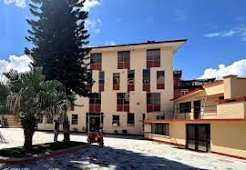
Nisarga Batika School has developed a campus designed to support academic learning, physical development and creative activities. The school occupies approximately 125,000 square feet of land, with more than 40,000 square feet of built-up space dedicated to classrooms and activity areas.
The campus has separate infrastructures for preschool, elementary school and high school students. Its facilities include:
Swimming pools: Two outdoor swimming pools, measuring 25 metres and 16 metres, for students at different levels.
Sports facilities: Two basketball courts, including covered and open facilities, along with separate playgrounds.
Computer laboratories: Two computer labs supporting technology-based learning.
Science laboratories: Separate science laboratories for elementary and high school students.
STEAM laboratories: Basic and advanced STEAM facilities supporting science, technology, engineering, arts and mathematics activities.
Libraries: Separate libraries for preschool, elementary and high school students.
Arts and performance spaces: A dedicated visual and performing arts block with an arts and crafts hall, music and dance rooms, and an amphitheatre.
Dining facilities: Separate kitchen, dining and cafeteria areas for the different academic levels.
Transportation: A fleet of more than 30 vehicles providing school transportation across various areas of Kathmandu Valley.
The school's infrastructure supports a learning environment in which academic activities, sports, creative expression and practical experiences can take place alongside one another.
Student Activities
Co-curricular and extracurricular activities form an important part of student life at Nisarga Batika School. The school offers opportunities for students to explore interests, develop talents, build confidence and participate in collaborative activities.
Its programmes include competitive sports, arts, outdoor activities and interest-based clubs. Students have opportunities to participate in activities such as:
Basketball and other sports
Swimming and outdoor activities
Music and performing arts
Visual arts and creative activities
Interest-based clubs
Cultural programmes and field trips
Community service initiatives
Conferences and academic simulations
High school students also have opportunities to participate in activities that extend beyond the regular curriculum. These include the World Scholars' Cup, the Duke of Edinburgh's International Award, student exchange programmes, internships and simulated sessions related to the United Nations, International Criminal Court and Nepali Parliament.
Such activities encourage students to develop teamwork, communication, leadership and organisational skills while exploring interests beyond academic subjects.
Educational Approach
Nisarga Batika School follows a progressive educational approach centred on experiential learning, individual development and human values. Its philosophy is based on the understanding that students learn effectively when they are encouraged to explore, ask questions, take challenges and connect knowledge with experience.
The school identifies six value-based principles that guide its classroom instruction:
Authenticity: Recognising the natural growth and individual identity of each learner.
Exploration: Creating opportunities for students to nurture curiosity and discover new ideas.
Interdependence: Helping students understand relationships, cooperation and their responsibilities towards others.
Endurance: Encouraging learners to face challenges and develop self-discipline.
Simplicity: Appreciating the value of learning, relationships and everyday experiences.
Life Skills: Developing practical abilities that students can use throughout their lives.
The school also emphasises five key components of successful learning: critical thinking, creativity, character, collaboration and communication.
Through student-led and teacher-facilitated activities, Nisarga aims to develop learners who can think independently, work with others and respond thoughtfully to changing circumstances.
Admission Policy & Student Support
Nisarga Batika School follows an admission process designed to help prospective students and their families understand the school's educational environment and determine whether its programmes are suitable for their needs.
The admission process generally involves the following steps:
Admission enquiry: Parents can register their child's name at the school's front desk, contact the administration office or submit an online enquiry.
Application submission: The school provides an application package that includes the required forms and supporting documents.
Student assessment and interview: The school arranges an in-person assessment or observation involving the prospective student and relevant academic representatives. Parents also participate in an orientation and interaction session.
Admission confirmation: The school communicates the admission decision by telephone or email. Accepted students receive an offer letter and information about the required fee deposit.
Orientation: Parents of admitted students attend an orientation programme and receive relevant academic and school information.
The school lists January onwards as the admission period for Playgroup and Preschool. Admission enquiries for other levels can be directed to the administration office.
Student support also extends to academic and career guidance. In the High School division, students receive academic counselling when selecting subjects in Grades 9 and 11. Career and college counselling, personal counselling and faculty mentorship are among the support opportunities described by the school.
Community Engagement & Global Outlook
Nisarga Batika School considers community involvement and wider social awareness important parts of education. Its programmes encourage students to understand their responsibilities towards society and participate in activities that extend beyond the classroom.
High school students have opportunities to engage in student-led community service, including guided involvement in supporting underprivileged communities. The school also describes internships with institutions and organisations during academic breaks, giving students exposure to different working environments.
Its international outlook is reflected in student exchange programmes and short-term study-abroad opportunities with schools outside Nepal. Students can also participate in international academic and non-formal learning initiatives such as the World Scholars' Cup and the Duke of Edinburgh's International Award.
Through these activities, the school seeks to broaden students' perspectives and help them develop the confidence, awareness and skills required to participate in an interconnected world.
Nisarga Batika School at a Glance
Particulars | Details |
|---|---|
Institution Name | Nisarga Batika School |
Established | 2012 |
Location | Rabibhawan, Kathmandu, Nepal |
Institution Type | School |
Academic Levels | Preschool, Junior Elementary, Senior Elementary and High School |
Grade Range | Playgroup to Grade 12 |
Curriculum | National Curriculum prescribed by the Government of Nepal |
Educational Approach | Progressive and experiential learning |
High School Divisions | Junior High School and Senior High School |
Key Learning Areas | Critical thinking, creativity, character, collaboration and communication |
Learning Activities | Project-based learning, field trips, investigations and STEAM activities |
Facilities | Libraries, computer labs, science labs, STEAM labs, swimming pools, basketball courts, arts facilities and cafeterias |
Sports & Activities | Swimming, basketball, arts, music, outdoor activities and interest-based clubs |
Student Support | Academic counselling, career and college counselling, personal counselling and mentorship |
International Exposure | Student exchanges, World Scholars' Cup and Duke of Edinburgh's International Award |
Contact & Leadership
Latest from Nisarga Batika School
Nothing published for this institution yet.