


Panini School
Om Saha Navavatu (ॐ सह नाववतु) – A prayer for mutual protection, nourishment, cooperation and harmonious learning.
0
Stories
0
Activities
0
Events
0
Photos
About Panini School
About Panini School
Choosing a school involves more than considering academic results or the subjects taught in the classroom. A child's educational experience is also shaped by the values they learn, the opportunities they receive to explore their interests, the quality of interaction with teachers and the environment in which they grow. Schools that combine academic learning with cultural awareness, practical experiences and personal development can offer students a broader foundation for life.
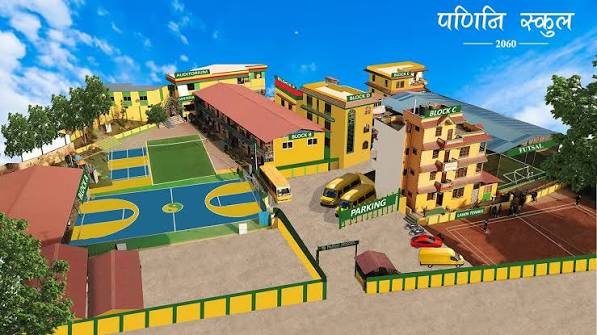
Located in Khahare, Kageshwori Manohara-9, Kathmandu, Panini School is a private educational institution offering programmes from pre-primary to Grade 10. Established in 2060 B.S., the school describes itself as Nepal's first Neo-Sanskritized Progressive School, following an educational philosophy that integrates Eastern knowledge traditions with modern scientific learning and technological advancement.
The school's educational approach is built around the concept of Neo-Sanskritization, which seeks to connect traditional knowledge, cultural values and philosophical understanding with contemporary education. Its learning environment combines Sanskrit education, Vedic philosophy, Bhagavad Gita lessons, yoga and meditation with STEAM education, inquiry-based learning, sports and creative activities.
Panini School offers Montessori education for children aged 2½ to 5 years, basic-level education from Grades 1 to 8 and secondary-level education from Grades 9 to 10. Alongside its academic programmes, the school emphasizes day boarding, practical learning, agro-friendly activities, reading habits and opportunities for students to develop their individual abilities.
Academic Programmes: From Montessori to Secondary Education
Panini School provides educational opportunities across different stages of school education, with programmes designed to address students' developmental and academic needs.
Montessori Programme (Pre-Primary: 2½–5 Years)
The Montessori programme focuses on early childhood development through play-based and activity-oriented learning. It introduces children to foundational literacy, numeracy, communication and social interaction in an environment designed to encourage curiosity and independence.
The programme incorporates Montessori learning materials, Sanskrit rhymes, storytelling and value-based activities. These experiences are intended to help young learners develop basic academic abilities while becoming familiar with cultural traditions and positive social values.
Basic Education (Grades 1–8)
The basic-level programme combines inquiry-based learning with classroom instruction and practical activities. Students are encouraged to ask questions, explore ideas and participate actively in the learning process.
The school integrates Sanskrit and Bhagavad Gita lessons, daily yoga and meditation, STEAM education and co-curricular activities into its broader learning approach.
Secondary Education (Grades 9–10)
At the secondary level, the school focuses on academic preparation, subject-based learning and the development of independent thinking.
Its programme highlights research and project-based learning, advanced subject choices, leadership development and career guidance. These components are intended to help students prepare for the Secondary Education Examination (SEE) and make informed decisions about their future academic pathways.
The Panini Curriculum: Connecting Eastern Wisdom with Modern Knowledge
One of the distinctive features of Panini School is its educational philosophy, which brings together Eastern intellectual traditions and contemporary scientific knowledge.
The school refers to this approach as the Panini Curriculum, inspired by Maharshi Panini, the renowned ancient Sanskrit grammarian whose systematic approach to language and grammar continues to influence linguistic studies.
The curriculum is based on inquiry, reflection and collaboration. Rather than emphasizing passive classroom instruction, it encourages students to observe, investigate, question and develop their understanding through structured learning experiences.
The curriculum has two broad intellectual foundations:
Eastern Wisdom: Includes Vedic philosophy, Upanishadic knowledge, moral education, Dharma and Niti-Shastra. These areas encourage students to reflect on ethical questions, cultural values, human relationships and responsibilities.
Western Knowledge: Includes science, mathematics, information and communication technology (ICT) and social studies. These subjects encourage empirical investigation, logical reasoning, problem-solving and the use of modern technology.
The school also incorporates STEAM pedagogy, covering Science, Technology, Engineering, Arts and Mathematics. This approach connects different academic disciplines through creative activities, practical investigation and problem-solving.
Through this combination, Panini School seeks to provide an educational experience in which traditional knowledge and modern innovation complement one another.
Teaching and Learning Approach
Panini School emphasizes student-centred and activity-based teaching methods. Its educational approach includes Inquiry-Based Learning (IBL), Activity-Based Learning (ABL) and Project-Based Learning (PBL).
These methods encourage students to participate in classroom discussions, explore problems, work collaboratively and apply theoretical knowledge in practical situations.
The school describes teachers as mentors and facilitators who guide students through planned lessons and interactive learning activities. Its approach also emphasizes a child-friendly environment, with the institution stating that it does not use corporal punishment or verbal humiliation.
A notable component of its learning approach is the five-stage pedagogical cycle of inquiry:
Engage: Introduce a topic and connect it with students' existing knowledge.
Explore: Encourage investigation through experiments, activities and collaborative work.
Explain: Help students communicate their findings and understanding.
Elaborate: Encourage the application of knowledge to new situations.
Evaluate: Assess students' understanding and learning progress.
This approach aims to develop curiosity, critical thinking, communication and independent learning abilities.
Sanskrit Education, Vedic Values and Spiritual Development
Sanskrit education and Eastern philosophical traditions occupy an important place in Panini School's educational philosophy.
The school incorporates Sanskrit language learning, Bhagavad Gita lessons, Vedic philosophy, moral education and yoga into its programmes. These activities are intended to introduce students to cultural heritage, ethical thinking, discipline and mindfulness.
Its concept of spiritual schooling focuses on developing moral awareness, concentration, compassion and emotional balance. The school also states that it teaches the essence of different religions with equal respect, encouraging mutual understanding and a broader outlook.
Daily yoga and meditation are among the activities highlighted by the institution. Through these practices, students are encouraged to develop physical awareness, mindfulness and self-discipline alongside academic learning.
Learning Beyond the Classroom
Panini School places considerable emphasis on experiential learning, extending educational activities beyond conventional classroom instruction.
One of its distinctive initiatives is its agro-friendly learning approach. The school provides students with opportunities to engage in farming activities, including planting, nurturing and harvesting fruits and vegetables.
According to the institution, it operates a seven-acre agricultural field, where students can experience different aspects of agriculture and connect their learning with nature, food production and environmental awareness.
Educational excursions and tours are also included in the school's learning activities. The institution highlights monthly need-based excursions and national and international exposure as opportunities for students to learn through observation and real-world experiences.
Mechanical workshops, practical activities and technology-based learning further contribute to its experiential approach.
Library, Reading Habits and Academic Resources
Developing regular reading habits is another area emphasized by Panini School.
The institution conducts a daily reading session called DEAR Time, which stands for Drop Everything and Read. During this session, students are encouraged to spend dedicated time reading books of their choice.
The activity is intended to strengthen vocabulary, concentration, creativity and an interest in independent reading.
The school also highlights spacious classrooms, science laboratories and computer laboratories among its academic facilities. Technology integration, including digital learning tools, tablets and interactive educational activities, forms part of its modern learning approach.
These resources are intended to support classroom instruction, practical investigation and students' engagement with different areas of knowledge.
Sports, Co-Curricular Activities and Student Life
At Panini School, student development extends beyond academic instruction. The institution offers a range of sports, creative activities and programmes designed to encourage participation, teamwork and personal interests.
Its listed sports and physical activities include:
Futsal
Basketball
Volleyball
Cricket
Taekwondo
Lawn tennis
Table tennis
Badminton
Swimming
Other ball games
The school also highlights several co-curricular activities, including:
Art and craft
Music and dance
Drama and theatrical arts
Public speaking
Scouts and leadership activities
Abacus
Robotics
Creative writing
Science club
These activities provide students with opportunities to explore their interests, develop confidence and participate in collaborative experiences.
The school's approach to extracurricular education also includes cultural programmes, celebrations and outdoor activities. Such experiences can help students develop communication, creativity, leadership and social skills.
Day Boarding, Meals and Student Well-being
Panini School describes itself as a complete day boarding or semi-residential school, with an emphasis on providing a supportive environment for students throughout the school day.
One of its highlighted provisions is a four-meal daily arrangement. According to the institution, meals include fresh vegetarian food prepared using produce from its own agricultural land.
The school also emphasizes student safety through 24-hour CCTV surveillance, secure entry arrangements and trained staff.
Its contact information lists transportation services covering Kathmandu, Lalitpur and Bhaktapur. The school also highlights trained transport personnel and safety arrangements for student pickup and drop-off.
The institution further identifies its buildings as earthquake-resistant and mentions campus security and hygienic facilities among its student support provisions.
Institutional Leadership and Educational Vision
Panini School's educational direction is guided by a leadership team comprising representatives from institutional management, academic administration and educational development.
The school identifies Mr. Badri Bahadur Karki as its Chairman, Mr. Prakash Chandra Khadka as its Principal and Ms. Rakshya Gautam as its Director.
Its stated vision is to develop an educational institution that harmoniously combines Eastern wisdom and Western innovation. The school aims to nurture learners who are knowledgeable, compassionate, critical and innovative, with a sense of integrity and global responsibility.
Its mission emphasizes holistic education through the integration of values, language, logic, STEAM learning and ethical inquiry.
Through its academic programmes, cultural education, practical activities and student development initiatives, Panini School seeks to create a learning environment that connects intellectual growth with personal values and real-world experiences.
Panini School at a Glance
Particulars | Details |
|---|---|
School Name | Panini School |
Established | 2060 B.S. |
Location | Khahare, Kageshwori Manohara-9, Kathmandu |
Institution Type | Private |
Academic Levels | Pre-Primary to Grade 10 |
Montessori Programme | 2½–5 Years |
Basic-Level Programme | Grades 1–8 |
Secondary-Level Programme | Grades 9–10 |
Educational Philosophy | Neo-Sanskritization |
Teaching Approaches | Inquiry-Based, Activity-Based and Project-Based Learning |
Curriculum Highlights | Sanskrit, Vedic Philosophy, Bhagavad Gita, STEAM Education |
Learning Facilities | Spacious Classrooms, Science Lab, Computer Lab |
Special Programmes | Daily Yoga, Meditation, DEAR Time and Agro-Friendly Learning |
Sports and Activities | Basketball, Futsal, Cricket, Tennis, Swimming, Taekwondo and Others |
Student Support | Day Boarding, Four Meals Daily and Transportation |
Leadership | Chairman: Badri Bahadur Karki; Principal: Prakash Chandra Khadka; Director: Rakshya Gautam |
Contact & Leadership
Leadership
Badri Bahadur Karki
Chairman
Prakash Chandra Khadka
Principal
Latest from Panini School
Nothing published for this institution yet.