

Tri-Jyoti Secondary School
Love, Learn, Lead
0
Stories
0
Activities
0
Events
0
Photos
About Tri-Jyoti Secondary School
About Tri-Jyoti Secondary School
Education plays a vital role in shaping not only a student's academic abilities but also their character, values and understanding of society. A meaningful educational experience encourages children to develop curiosity, think independently, respect others and use their knowledge responsibly.
Tri-Jyoti Secondary School, located in Kapan, Budhanilkantha-12, Kathmandu, is a private, co-educational institution established in 1994 (2051 B.S.). The school provides education from early childhood through the secondary level, aiming to create an environment where students can develop academically, socially, emotionally and personally.
The institution follows a value-based and practical approach to education. Its philosophy focuses on transforming learning into practice and encouraging students to develop a natural interest in knowledge. Rather than limiting education to textbook instruction, the school emphasises the importance of intellectual curiosity, personal responsibility, social values and participation in different learning activities.
The school's motto, “Love, Learn, Lead,” represents its three central educational principles. Love encourages appreciation, kindness and respect for others; Learn promotes curiosity and the continuous pursuit of knowledge; and Lead inspires students to become responsible individuals who set positive examples through their actions.
Tri-Jyoti follows an integrated curriculum based on the government-prescribed curriculum, complemented by co-curricular and extracurricular activities. Its educational approach seeks to maintain a balance between academic achievement and the overall development of each child.
Academic Programmes
Early Childhood Education: Developing Curiosity and Confidence
Early childhood education provides the foundation for a child's intellectual, emotional, social and physical development. It is an important stage during which children begin to understand their surroundings, develop communication abilities and establish habits that influence their future learning.
Tri-Jyoti Secondary School includes early childhood education in its academic structure, providing learning opportunities for young children before they enter formal primary education.
At this stage, a supportive and engaging environment can help children develop curiosity, confidence, social interaction and basic learning abilities. Activities involving observation, communication, creativity and participation help introduce young learners to structured education.
The school's broader educational philosophy emphasises the holistic development of children, recognising the importance of nurturing their individual abilities alongside early academic learning.
Primary Education: Building Essential Knowledge and Skills
Primary education establishes the foundation for a student's academic journey. During these years, children develop essential abilities in reading, writing, mathematics, communication and problem-solving.
Tri-Jyoti Secondary School provides primary-level education as part of its school programme. Its integrated curriculum combines government-prescribed academic content with additional learning activities designed to encourage students' intellectual and personal development.
The school's emphasis on practical education seeks to help students connect classroom knowledge with everyday experiences. Co-curricular participation and creative learning opportunities further support the development of communication, cooperation and independent thinking.
The institution's educational philosophy also gives importance to appreciation, respect and positive relationships, helping students develop appropriate social behaviour alongside academic knowledge.
Lower Secondary Education: Encouraging Independent Learning
As students progress to the lower secondary level, they encounter more advanced academic concepts and develop a greater capacity for independent thinking.
Tri-Jyoti's educational approach aims to stimulate intellectual curiosity and scholarly interests while helping students become proficient in their chosen subjects.
At this stage, students benefit from opportunities to participate in academic assignments, collaborative activities, discussions and practical learning experiences. Such activities can strengthen their analytical abilities, communication skills and confidence.
The school's integrated curriculum and emphasis on co-curricular engagement provide additional opportunities for students to explore their interests beyond conventional classroom instruction.
Secondary Education: Preparing for Higher Studies
Secondary education is an important stage in which students consolidate their academic knowledge and prepare for the Secondary Education Examination (SEE).
Tri-Jyoti Secondary School offers education through Grade 10, with an emphasis on academic development, practical understanding and the cultivation of responsible attitudes.
The school's educational philosophy seeks to encourage students to develop proficiency in their subjects and apply their knowledge in practical situations.
The institution also recognises the importance of activities beyond classroom learning. Participation in sports, cultural programmes, leadership activities and community-oriented initiatives can help students develop confidence, teamwork and a broader understanding of society.
Successful completion of Grade 10 prepares students to explore higher-secondary education in different academic disciplines according to their interests and future aspirations.
Teaching and Learning Approach
Tri-Jyoti Secondary School follows a value-based and pragmatic educational approach that aims to make learning relevant to students' lives.
Its integrated curriculum is based on the government-prescribed academic framework and complemented by a range of co-curricular and extracurricular activities. The school seeks to stimulate intellectual curiosity and encourage students to develop both subject knowledge and practical competence.
The institution places importance on the holistic development of children, considering their physical, cognitive, social, emotional and spiritual growth.
Its educational philosophy also emphasises positive relationships, appreciation of others, responsible behaviour and learning through examples.
The school aims to maintain a manageable learning environment in which academic courses and activities can be continuously updated in response to changes in society and educational needs.
Academic Environment and Learning Facilities
A supportive school environment contributes significantly to students' academic progress and overall development. Alongside qualified teaching staff and an appropriate curriculum, physical learning facilities provide important opportunities for students to explore knowledge and develop practical skills.
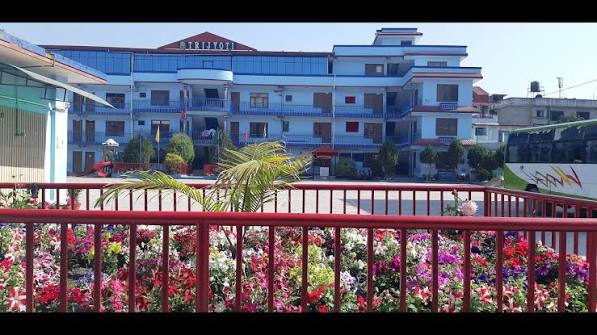
Tri-Jyoti Secondary School highlights its garden and maintained school grounds as part of its learning environment. The school considers the garden an important space where students can enjoy natural surroundings and experience a more welcoming educational atmosphere.
Its published institutional information and education directories identify the following facilities:
Library: Provides access to reading materials and learning resources, encouraging students to develop reading habits and independent learning skills.
Science Laboratory: Supports practical science education and provides opportunities to understand scientific concepts through observation and experimentation.
Computer Laboratory: Introduces students to computer-based learning and information technology, helping them develop essential digital skills.
Cafeteria: Provides a designated space for students to access food and refreshments during school hours.
Sports and Games Facilities: Support physical development, teamwork and participation in recreational and competitive activities.
Multimedia Learning: Digital and multimedia resources can support classroom instruction and make lessons more interactive.
School Garden and Grounds: The school's garden and maintained grounds provide a natural setting for relaxation and an opportunity to develop an appreciation for the environment.
Parents are encouraged to contact the school to confirm the availability and current arrangements of individual facilities.
Co-curricular and Extracurricular Activities
Education extends beyond academic lessons. Activities outside the classroom help students discover their interests, develop practical abilities and build confidence through participation.
Tri-Jyoti Secondary School incorporates co-curricular and extracurricular activities into its educational philosophy. The school encourages students to participate in cultural, artistic, literary, sporting and community-oriented programmes.
Its 2082 B.S. school newsletter documents a variety of activities conducted during the first quarter of the academic year.
These include drawing, handwriting competitions, book reviews, poetry, dance performances, environmental art and creative initiatives such as Waste to Wonder. Such activities provide opportunities for students to express ideas, develop artistic abilities and learn through practical experiences.
The school also organises educational visits and exposure programmes. Activities documented in its newsletter include visits to the Election Commission, Kathmandu District Court and Devkota Museum. These experiences help students connect classroom learning with public institutions, history, culture and society.
Cultural and national occasions, including Buddha Jayanti, Republic Day and World Environment Day, are also observed through student participation in creative and educational programmes.
Sports and Physical Development
Physical education and sports are important components of a balanced school experience. Participation in sports helps students develop physical fitness, teamwork, discipline and a healthy competitive spirit.
Tri-Jyoti Secondary School encourages students to participate in different sporting activities and inter-school competitions.
Its published school newsletter documents participation and achievements in basketball and futsal competitions. The school's teams secured runner-up positions in the 2025 Budhanilkantha Municipality Ward No. 12 Inter-School Futsal Competition and the ninth SCIBS Cup Basketball Tournament in the senior girls' category.
The school has also reported achievements in the 3x3 first Maha Manjushree Basketball Tournament.
Alongside external competitions, internal football and basketball tournaments provide students with opportunities to demonstrate their abilities, work collaboratively and develop sportsmanship.
These activities contribute to students' physical development while reinforcing the values of cooperation, commitment and perseverance.
Leadership and Character Development
Leadership development is an important part of preparing students for responsible participation in society. Schools can provide meaningful opportunities for young people to understand responsibility, teamwork, decision-making and democratic participation.
Tri-Jyoti Secondary School conducts student leadership elections and an investiture ceremony to introduce students to leadership responsibilities.
Its 2082 B.S. newsletter documents the election of student representatives followed by an oath-taking and investiture ceremony. Through these activities, students are encouraged to understand the responsibilities associated with leadership and contribute positively to the school community.
The school's motto, “Love, Learn, Lead,” also reflects its emphasis on character development and role modelling.
By encouraging students to lead through positive examples, the institution seeks to develop individuals who can demonstrate respect, responsibility and confidence in different social settings.
Cultural Awareness and Global Learning
Exposure to different cultures and traditions can broaden students' understanding of the world and encourage appreciation of diversity.
Tri-Jyoti Secondary School has organised cultural learning activities and exchange programmes as part of its broader educational engagement.
According to its 2082 B.S. newsletter, the school conducted a cultural exchange programme in collaboration with the Russian House of Nepal. Students had opportunities to explore Russian language and culture, providing an additional dimension to their learning experience.
Such initiatives introduce students to international perspectives and encourage curiosity about different societies, languages and cultural traditions.
The school also organises cultural programmes in which students participate in music, dance, poetry and other forms of artistic expression. These activities help learners appreciate their own cultural heritage while developing an understanding of cultural diversity.
Student Achievements and Recognition
Recognising students' academic and extracurricular achievements can encourage them to pursue excellence and develop confidence in their abilities.
Tri-Jyoti Secondary School regularly acknowledges student achievements through academic recognition, school programmes and participation in competitions.
The school's published 2082 B.S. newsletter highlights the performance of its SEE graduates from the 2081 examination.
Among the reported achievements, Jaya Shree Aryal secured a GPA of 3.96, while other students also recorded strong academic results.
The school also documents students' achievements in basketball and futsal competitions, reflecting its emphasis on recognising talent in both academic and extracurricular fields.
Such recognition can motivate students to continue developing their abilities and contribute to a culture of participation, discipline and achievement.
Scholarships and Student Support
Access to education and appropriate academic support are important considerations for students and their families.
Tri-Jyoti Secondary School is listed in educational directories as providing scholarship opportunities for deserving students. However, the current scholarship categories, eligibility criteria, coverage and application procedures should be confirmed directly with the school.
The institution's educational philosophy also emphasises the holistic development of students, recognising that learning involves more than academic performance alone.
Parents and guardians are advised to contact the administration for details about available scholarships, financial assistance, student counselling and other support arrangements.
Admission Procedure
Admission to Tri-Jyoti Secondary School is available across different levels of school education, subject to the institution's admission requirements and availability of seats.
Families considering admission are encouraged to contact the school administration to obtain current information about:
Available classes and admission vacancies.
Age requirements for early childhood and primary-level admission.
Entrance assessments and admission interviews, where applicable.
Required academic and personal documents.
Tuition fees and other applicable charges.
Scholarship opportunities and eligibility criteria.
School transportation and other facilities.
The school should be contacted directly for the latest admission schedule, application procedure and fee details for the relevant academic session.
Preparing Students for the Future
The purpose of school education extends beyond academic qualifications. Students also need values, practical abilities, communication skills, creativity and the confidence to make responsible decisions.
Tri-Jyoti Secondary School's educational philosophy places importance on developing these qualities through an integrated curriculum, co-curricular engagement, practical learning and student participation.
Its motto, “Love, Learn, Lead,” provides a simple expression of the institution's broader educational vision. By encouraging appreciation and respect, promoting curiosity and supporting responsible leadership, the school seeks to prepare students for the opportunities and responsibilities of the future.
Its documented activities in sports, cultural exchange, environmental awareness, educational visits and student leadership reflect an effort to connect classroom education with wider experiences.
For parents considering the institution, its value-based educational philosophy, academic structure, extracurricular opportunities and learning environment are useful factors to explore when assessing whether the school meets their children's educational needs.
Tri-Jyoti Secondary School at a Glance
Particulars | Details |
|---|---|
Institution | Tri-Jyoti Secondary School |
Institution Type | Private |
Established | 1994 A.D. (2051 B.S.) |
Location | Kapan, Budhanilkantha-12, Kathmandu, Nepal |
Education Level | Early Childhood to Grade 10 |
Medium of Instruction | Confirm with the school |
Gender | Co-educational |
Boarding Status | Day Scholars |
Total Students | 879 (2081/82 IEMIS report) |
Curriculum | Government-prescribed curriculum with integrated co-curricular activities |
Educational Approach | Value-based and practical education |
School Motto | Love, Learn, Lead |
Academic Facilities | Library, science laboratory, computer laboratory and multimedia facilities |
Other Facilities | Cafeteria, sports facilities, garden and school grounds |
Student Activities | Sports, cultural programmes, literary activities and educational visits |
Leadership Activities | Student leadership elections and investiture programmes |
Scholarships | Opportunities for deserving students, subject to current school policy |
+2 Programme | Management listed in external educational directories; current availability to be confirmed |
Contact & Leadership
Latest from Tri-Jyoti Secondary School
Nothing published for this institution yet.