
Kathmandu University (KU)
Programs, Schools and Academic Profile
0
Stories
0
Activities
0
Events
0
Photos
About Kathmandu University (KU)
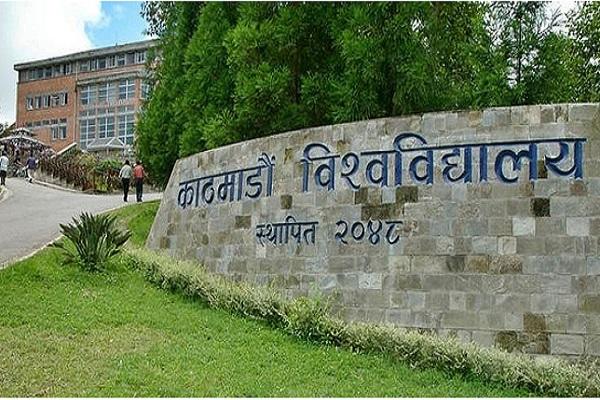
Kathmandu University (KU) is an autonomous, not-for-profit public university established by an Act of Parliament in 1991. Based in Dhulikhel, Kavre, KU has developed into a multidisciplinary university offering programmes in science, engineering, medicine, management, education, law, arts and social sciences.
With its emphasis on academic quality, research, innovation and professional education, KU has become an important part of Nepal’s higher-education landscape.
KU at a Glance
Particular | Details |
Established | 1991 |
Location | Dhulikhel, Kavre |
Type | Public, autonomous, not-for-profit |
Schools | 7 |
Academic Levels | Undergraduate to PhD |
Academic Programmes | 200+ long- and short-term programmes/courses |
Main Campus | Dhulikhel |
Affiliated/Extended Programmes | Available in selected institutions |
Official Website |
KU currently operates through seven schools and offers academic programmes ranging from undergraduate studies to doctoral research.
Seven Schools of Kathmandu University
KU organises its academic programmes through seven schools:
School of Arts
School of Education
School of Engineering
School of Law
School of Management
School of Medical Sciences
School of Science
This structure allows KU to cover both traditional academic disciplines and specialised professional programmes.
School of Arts
The School of Arts offers programmes in areas such as development studies, economics, media and communication, languages, music, arts and design.
Its programmes include:
Bachelor of Media Studies
Bachelor of Arts in English and Mass Communication and Journalism
Bachelor in Economics
Bachelor of Fine Arts
Bachelor of Craft and Design
Bachelor in Ethnomusicology
Master in Development Studies
Master in Media Studies
Master in Film Studies
Master in Economics
MPhil and PhD programmes
The school also offers programmes in community development, social work, environment studies, Korean studies and related areas.
School of Education
The School of Education focuses on teacher education, educational leadership, language education, development education, inclusive education and STEAM education.
Programmes range from bachelor's and postgraduate diplomas to master's, MPhil and PhD levels. Areas include educational leadership, early childhood development, inclusive and special-needs education, language teaching, mathematics education and technical and vocational education.
School of Engineering
Engineering is one of KU's major academic areas. The school offers programmes in:
Civil Engineering
Computer Engineering
Electrical and Electronics Engineering
Mechanical Engineering
Environmental Engineering
Geomatics Engineering
Chemical Engineering
Architecture
Artificial Intelligence
Cybersecurity
Information Technology
It also offers master's, research and doctoral programmes in several engineering disciplines.
KU has also introduced specialised programmes in areas such as Artificial Intelligence, Cybersecurity, Health Informatics, energy systems and green infrastructure, reflecting the changing needs of technology and industry.
School of Law
The School of Law offers undergraduate and postgraduate legal education, including:
Bachelor of Economics and Bachelor of Law (BEc-LL.B)
Bachelor of Business Management and Bachelor of Law (BBM-LL.B)
LL.M in Corporate and Commercial Law
LL.M in Energy and Infrastructure Law
PhD in Law
School of Management
The School of Management offers programmes in business administration, management, business information systems, public policy and related areas.
Major programmes include:
Bachelor of Business Administration (BBA)
Bachelor of Business Information Systems (BBIS)
Bachelor in Professional Hospitality
MBA
Executive MBA
Master in Business and Economics
Master of Public Policy and Management
MPhil in Management
PhD in Management
KU's MBA programme, launched in 1993, was among the university's early postgraduate programmes.
School of Medical Sciences
The School of Medical Sciences represents KU's academic presence in medicine and health sciences. Its academic activities include medical, nursing, public health, pharmacy and other health-related disciplines.
KU has also developed specialised postgraduate and doctoral programmes in clinical and medical sciences. Its affiliated institutions include medical colleges and health institutions offering programmes such as MBBS, BDS and nursing.
School of Science
The School of Science offers programmes across a broad range of scientific disciplines, including:
Biotechnology
Bioinformatics
Environmental Science
Pharmacy
Physics
Mathematics
Computational Mathematics
Data Science
Chemistry
Both undergraduate and postgraduate programmes are available, along with MPhil, research and PhD opportunities in several disciplines.
Research and Innovation
Research is an important component of KU's academic system. The university offers MPhil and PhD programmes across several schools and disciplines.
Doctoral research areas include science, engineering, education, arts, management and medical sciences. KU's research programmes cover subjects ranging from mathematics, biotechnology and environmental science to computer science, engineering, management, education and clinical sciences.
Academic Approach
One of KU's distinctive features is its emphasis on professional and interdisciplinary education. The university has introduced a number of programmes that were among the first of their kind in Nepal, including programmes in pharmacy, biotechnology, environmental science, media studies, development studies, computer engineering, geomatics engineering and several specialised medical fields.
KU also describes its academic philosophy around taking knowledge and skills “from the campus to the community,” linking education with professional practice and social needs.
Scholarships and Student Support
KU provides scholarships and other forms of financial support to eligible students. According to the university's official profile, around 10% of students across different levels receive scholarships, alongside educational loan facilities and other sponsorship opportunities. Scholarship provisions and eligibility, however, vary by programme and admission cycle.
Admission to Kathmandu University
Admission requirements differ according to the school and programme. Undergraduate professional programmes may require entrance examinations and specific subject qualifications, while postgraduate and doctoral programmes have their own academic and selection requirements.
Students should therefore check the latest admission notice issued by the relevant KU school for:
Academic eligibility
Entrance examination
Application procedure
Admission deadline
Tuition and other fees
Scholarship provisions
The university maintains separate programme and school information for prospective students.
Why KU Matters to Students
Kathmandu University offers an unusually broad combination of professional education, science and technology, social sciences, management, law, medicine and research within a single university system.
For students, the choice is therefore not simply between KU and another university; the more important question is which school, programme and academic pathway best matches their interests and career plans.
Who Should Consider KU?
KU may be particularly relevant to students interested in:
Engineering and technology
Computer science, AI and cybersecurity
Science and biotechnology
Medicine and health sciences
Management and business
Law
Education
Media and communication
Development and social sciences
Arts, design and music
Academic research
Students should compare the specific programme's curriculum, admission requirements, fees, scholarship opportunities and career pathways before applying.
Kathmandu University: At a Glance
Category | Information |
University | Kathmandu University (KU) |
Established | 1991 |
Location | Dhulikhel, Kavre |
Type | Public, autonomous, not-for-profit |
Schools | 7 |
Academic Levels | Undergraduate, Master's, MPhil, PhD |
Major Areas | Arts, Education, Engineering, Law, Management, Medical Sciences, Science |
Academic Programmes | 200+ long- and short-term programmes/courses |
Main Campus | Dhulikhel |
Official Website |
Official information: Kathmandu University
Latest from Kathmandu University (KU)
Nothing published for this institution yet.